Monday, May 31, 2021

Choosing Characters by Priscilla Brown

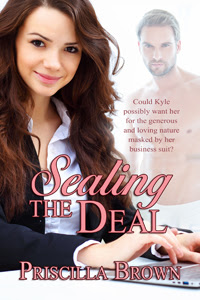
  Brown-SealingTheDeal-sm.jpg

Mayor Anna agonises over the parlous finances of both her alpaca stud and her country town.

 Is this sexy television producer financial salvation or major trouble?

https://books2read.com/Sealing-the-Deal


Several characters in my contemporary romantic fiction choose themselves. Sealing the Deal developed from a farmer sitting on a gate watching her alpaca stud; for Hot Ticket, I had noticed a woman looking in the window of a lingerie shop;  the ferry hand who managed to get me and my rental car aboard his tiny boat without a scratch won a place in Dancing the Reel.

As an author, I need to know my characters well, and ensure they and their actions are appropriately motivated and credible; my familiarity with them increases as the story progresses. I don't plot in advance, thus offering them a lot of freedom to change or augment their personalities, backgrounds, mindsets, actions. But they must always have a narrative purpose - the rationale behind their existences, earning their keep so to speak. Every character has strengths and weaknesses, which, among other ramifications, determine how this person will respond to obstacles and to the behaviour of others; basically to move the story along.

I often find this character development a challenge - for example, I may like a certain individual, but will the reader be sympathetic to her/him?  And when I introduce a villain into the story, will the reader judge this character as such, and, as I intend, worry about the connection with the main characters? In my romance stories, the 'villain' is frequently the person keeping the hero and heroine apart.

Although I do not plot at the start, I always need to keep my characters under control. It may sound crazy to a non-writer, but our fictitious people do take on a life of their own. I have to stop them from wandering into idiosyncrasies and behaviours that do not fit with my overall idea of their place. A couple of stories ago, one of my chosen secondary characters wandered out of the story and into one where he was more important, so choosing him like that for the length of a novel was not going to work. He's waiting for a story of his own.

Ultimately, by the time I have finished the drafts, I must be sure I have chosen the characters suitably, and that the tone, the mood, which I  impose on them are relevant both to what they have by now turned into a plot and to the genre; the whole narrative should coalesce into a pleasurable read. 

Enjoy your reading, best wishes, Priscilla

https://bwlpublishing.ca

https://priscillabrownauthor.com


Sunday, May 30, 2021

Author Readings by Eden Monroe


 Click here for Eden Monroe's BWL Author page and purchase information

“He felt for a pulse then grabbing his cell phone stabbed in Donna’s number ….

        “Yes, Dade!” answered Donna breathlessly. “What’s happening?”

        “We found Kerrah!” he all but shouted. “We’ve got her, but….”

        “But what?” shouted Donna. “How is she?”

        “I don’t know….” Dade faltered.

        “Dade, listen to me. Can you find a pulse?”

        “No … I can’t seem to find a pulse. She’s … cold. Oh my God!” he said, his voice breaking.”

                                                      A brief excerpt from Gold Digger Among Us


I was once asked by a hopeful novelist, about the importance of author readings; “whether anyone is actually interested in listening to an author drone on and on from their latest book. Aren’t readings the cure for insomnia?” she asked. She also stressed that when she got published she didn’t want to get “bogged down with what clearly doesn’t work.”


That person was attending a literary event at which I was among the fairly long list of reading authors. Ouch! I certainly tried to make my reading lively and interesting, but there’s always room for improvement. And my answer by the way was that author readings are extremely important, as is preparing for them.


So without meaning to be preachy, I decided to jot down a few tips I’ve learned along the way about author readings. These are pretty standard do’s and don’ts, but I enjoyed getting back in the zone and ready for when things start to open up again, post-pandemic. Of course this is old hat for most authors, those who have already mastered this skill, but might be helpful for the uninitiated.


Continue reading for the goose.


Reading aloud to an audience who could potentially purchase what it took us so many months to create, is a golden opportunity. Readers are fans, or at the very least potential fans, and aside from the budding novelist I mentioned earlier, come to hear what we have to say. This is our book; these are our words, given voice, our voice. We are the star of the performance, because that’s exactly what a reading is – a performance. We will bring our book to life.


No one knows our book better than we do, understands it better, so when we’re given the stage, we have to make the reading memorable - for the right reasons. It’s important to speak slowly – not race for the finish line, eager to be done. Instead, breathe, pace ourselves, and enjoy the ride. Most readings are about three to five minutes, so we must keep our reading short and bright; read with purpose and enthusiasm. We should approach each reading as an actor prepares for a role, really get into it – and above all, have fun.


It might be a good idea to print your chosen passage in a larger font for easy reading, we don’t necessarily have to read from the book (unless you want to showcase artwork, as in a children’s book) but do let the audience see your book. We must practice until we can read with ease. Rehearsal really is key, and preparation should never be left to the last minute, it’s simply too important not to be ready. We should practice until we feel comfortable enough to lift our eyes to engage the audience, because we must not ever forget our audience. Practicing in front of a mirror works, and definitely time ourselves so we can keep to the time designated by our host. For many author readings the mike is simply shut off once the allotted minutes are up (and that allotted time includes thanking the host and any introduction to what you’re about to read), so we have to be ready to end on cue and at the right moment to put our book in its best light. Make people glad they listened to us, it truly is so important that they leave with a favourable impression, and ideally with one of our books tucked under their arm.


The selection we choose to read should contain dialogue and action, and it’s preferable to include only two characters, certainly not more than three, so as not to confuse people. Show conflict. The passage should best represent the book, without giving the key parts away, and it’s great to leave our audience on a cliffhanger; give them a reason to buy the book. Make them want more. For a children’s picture book, the reading would logically include the entire book, but whatever the genre, we have to make our characters real; make our subject matter real - relatable.


A ho hum reading will make for an audience that’s anxious to have it end because it’s painful to listen to. Boring. If we as authors don’t seem interested enough to do a standout reading, no one else will be interested either. If we’re nervous, and most everyone is, there’s nothing to be gained by sharing that with our audience; it’s best kept to ourselves. A nervous presenter can make for a nervous audience. Not good. Fake confidence and it will come. I’ve had authors at events that I’ve helped organize, insist that they’re just not good at readings. Well maybe that’s true at first, but we can get good at them if we try, because readings are a key selling tool. Also, we learn best by watching others – both what they do wrong and what they do right. Public readings are all part of the author journey. If we take every reading opportunity that comes along, we’ll eventually tame those butterflies and continue to improve.


Before we begin to read it’s a good idea to quickly brief our audience about the story, if we’re not starting at the beginning, and end the reading professionally, not just stop abruptly and hurry back to your seat relieved that it’s over. Take questions if we’ve been given the OK to do so, but even if it’s only a reading, save enough time to let the audience know where the book is available and remember to thank our host – onstage. We should also publicize the event ahead of time, and equally important is finding out, prior to the event, what the set-up will be. Will you be standing at a podium? Will there be a microphone? How much time is allotted per reading?


Above all, we have to get excited about our reading. If we’re excited and enthusiastic about our book, that excitement and enthusiasm will be contagious. We have to light a fire! Stand out from the crowd! Be original.


And now for the goose….


Another memorable event I attended included a reading from a children’s book about a goose. One of the authors, complete with brown leather aviator helmet and goggles, flew around the room (on foot with arms extended, goose-like), while reading. She immediately got and held everyone’s attention, and that reading is as vivid in my mind today as it was those several years ago. I don’t seem to remember the others….

Saturday, May 29, 2021

Old Friends & Flowers on Memorial Day


Juliet Waldron's website

Books @ Kobo

Books @ Smashwords

Books @ Barnes & Noble

Books @ Amazon


Perennials are my favorites. I can't claim to be a master gardener, but I do love to put my hands in the dirt and grow things.

Walking around the yard this spring, I'm pleased with all the color. We're past even the latest daffodils here in PA, but it's Memorial Day now and so the peonies are going great guns, as well as the irises and various other plants whose names my brain has misfiled. Perhaps I have forgotten the names, but I know that they come back reliably this time of year and that they have a delicate fragrance that I enjoy when I'm sitting on the porch. 


Many of my plants were gifts but ever so many of the givers are now dead. Each time I gaze at those  plants, blooming away with all their might, I think of the nice folks who shared them with me and I am grateful. 

Emily was one of the prolific givers. An athletic, charismatic red head, she and her equally good-looking husband Ray had a lovely down-a-country-road property. Over the years, Emily, who undertook nothing she did by halves, had turned their surroundings into a show place, with a stellar Koi pond surrounded by and ornamented with plants. There were the expected cattails and water lilies, but the papyrus she brought home from the nursery was a revelation, as I'd never actually seen a living breathing specimen before.

Over the years all the local wildlife found the pond, from deer to leopard frogs and tree toads. These little guys hatched in the water, then climbed, for the next part of their life cycle, into the nearby trees. They filled spring twilight evenings with their sweet quivering choruses. Herons came too, enraging Emily because they didn't just eat the frogs out of the pond, but her enormous Koi. 

We were visiting one night, enjoying their company on the deck--they worked together in their auto dealership and had a big supply of "people are crazy" stories--when suddenly Emily shouted, leapt up and ran, an Amazon screaming curses, towards the pond. It was all explained in a flash, when an enormous blue heron, his long, yellow landing gear still dangling, executed an emergency take-off. I'd never seen one of these big birds so close, and certainly never one with a large, flapping red and white Koi in his narrow beak!


These peonies came from Emily, who told me a long story about her favorite Aunt Pard, whose flower garden and warm presence she remembered with equal pleasure. These were the old-fashioned kind of peony, no ginormous blooms, but, instead, a fragrance you don't often find in modern cultivars. These peonies were not happy in her yard, but, for some inexplicable reason they loved mine. Consequently, over the years, I've split them many times. Now they perform their brief, bright celebration of May in many groupings all over my yard--and they do smell sweet! 

Today, enjoying the flowers, I remembered this couple, their out doors parties--blazing fires under 60 foot oaks, and barbecue-potlucks that lasted all night, their hunter's venison feasts and the annual trout opening day Bacchanalia begun before dawn, just behind their house on the rushing, brown Quittaphilia. So many laughter-filled, good-company evenings with them! 

Now, astonishingly, these active, vital people are both gone. Like many long-married couples, Ray followed his Em to the grave within 6 months. Although they are no more, I have these lovely peonies to always remind me of them both.


~~Juliet Waldron

Where to buy Mozart's Wife

Popular Posts

Books We Love Insider Blog

Blog Archive