![]() |
| ANGEL SHIP, Book One of the Blue Phantom series is an October 2022 release from BWL Publishing Universal link to your favorite online retailer HERE |
![]() |
| amazon - B&N - Smashwords - Kobo |
![]() |
| amazon - B&N - Smashwords - Kobo |
![]() |
| ANGEL SHIP, Book One of the Blue Phantom series is an October 2022 release from BWL Publishing Universal link to your favorite online retailer HERE |
![]() |
| amazon - B&N - Smashwords - Kobo |
![]() |
| amazon - B&N - Smashwords - Kobo |
![]() |
| Find all my books on my BWL author page here. |
As we move
into a new era after the passing of our beloved Queen Elizabeth who lies in
state as I write, prior to her funeral in a few days’ time, my thoughts
returned to another long serving Monarch. Until her death in 1901 Queen Victoria’s
reign of 63 years and 7 months was longer than that of any previous British
Monarch. What was known as the Victorian Era was a period of industrial,
political and scientific, not to mention military change within the United
Kingdom. This era was marked by a great expansion of the British Empire and in
1876 the British Parliament voted to grant Queen Victoria the additional title
of Empress of India.
Victoria was
the daughter of Prince Edward, Duke of Kent and Strathearn who was the 4th
son of King George111 and Princess Victoria of Saxe-Coburg-Saalfeld. Raised
under the close supervision of her mother and comptroller John Conroy, Victoria
did not have a particularly happy childhood. Inheriting the throne at the age
of 18 she attempted to influence government policy and ministerial
appointments. She was identified as having strict standards of personal
morality. In later years Victoria described her childhood as melancholy under
her mother’s set of rules and protocols devised along with the Duchess by Sir
John who was rumoured to be the Duchess’s lover. Their main aim was to render
her totally dependent on them.
Victoria married her first cousin Prince Albert of Saxe-Coburg and Gotha on 10th February 1840 in the Chapel Royal of St James’s Palace and was apparently completely love-struck. She wrote in her diary the evening after their wedding: “I Never, never spent such an evening! My dearest dear Albert—his excessive love and affection gave me feelings of heavenly love and happiness I never could have hoped to have felt before. He clasped me in his arms and we kissed each other again and again. His beauty, his sweetness and gentleness—really how can I ever be thankful enough to have such a husband! To be called by names of tenderness I have never yet heard used to me before was bliss beyond belief. Oh! This was the happiest day of my life.”
During Victoria's first pregnancy in 1840, in the first few months of the marriage, 18-year-old Edward Oxford attempted to assassinate her while she was riding in a carriage with Prince Albert on her way to visit her mother. Oxford fired twice, but either both bullets missed or, as he later claimed, the guns had no shot. He was tried for high treason, found not guilty by reason of insanity, committed to an insane asylum indefinitely, and later sent to live in Australia.
Her first daughter, also named Victoria, was born in November 1840. The Queen apparently hated being pregnant, viewed breast-feeding with disgust, and thought new born babies were ugly. Nevertheless, over the following seventeen years, she and Albert had a further eight children: Albert, Alice, Alfred, Helena, Louise, Arthur, Leopold and Beatrice.
More
information of her long and eventful life can be found here:
https://en.wikipedia.org/wiki/Queen_Victoria
![]() |
| Tricia McGill Web page |
The Queen
Only two days earlier, she had been photographed asking our
new Prime Minister to form a government. True, she looked frail, but we still
didn’t expect her to die two days later.
For the majority of people, she was the only sovereign they
had ever known. I am actually in the minority, as I do remember her father,
King George VI. The Brownie ‘Promise’ I made when I was seven included the
words “To serve The King and my country.” About a year later, the head teacher
came into my school classroom to inform us that the King had died. I only
remember seeing black and white newspaper photos of his funeral.
The following year, there was great excitement about the Queen’s
Coronation. Streets were decorated, and street parties were held. My mother had
a wool shop and I helped her make a display for the window, with the Union Flag
in red, white and blue balls of wool surrounding a photograph of the young
Queen.
On the actual day people crowded into the homes of those who
actually owned a television, which were few and far between at that time. My
parents arranged for me to visit a friend of theirs who did have a television
set, and so I watched the Coronation on a black and white, nine-inch TV screen.
As a nine-year-old, I confess to becoming somewhat bored by the lengthy
ceremony, apart from the actual crowning when everyone shouted ‘God Save the
Queen’. After that a few friends and I went out to play in the garden, but we
were called back to watch the newly-crowned Queen return to Buckingham Palace
in the ornate state coach.
Ten days after the Coronation, we had a school trip to London, at that time a five-hour journey by train. I’m not sure how our teachers coped with about thirty excited youngsters, but we went to Westminster Abbey and also saw all the decorations in the streets, especially the huge arches in the Mall.
We were outside Buckingham Palace, where a lot of people
seemed to be congregating on the pavements. One of my teachers asked a
policeman what was happening, and was told the Queen and the Duke of Edinburgh
were due to arrive back from a visit to Greenwich. The policeman then allowed
us to climb into one of the VIP stands which had been erected outside the
Palace for the Coronation. As a result, we had a wonderful view of the Queen
when the open carriage came round the Victoria Memorial and entered the Palace
forecourt.
That was my first sight of Queen. Since then, I’ve seen her
three more times, and on one occasion I met and spoke to Prince (now King) Charles, but I’ll
tell you more next time!
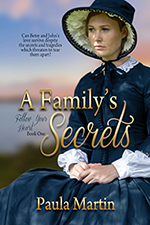
Find me on Facebook: www.facebook.com/paulamartinromances
Link to my Amazon author page: author.to/PMamazon
https://www.bookswelove.com/donaldson-yarmey-joan/
I began my writing career as a travel writer and I drove and camped through all of Alberta, British Columbia, and the Yukon and Alaska, writing about what there was to see and do in those provinces, and the territory and state. I learned a lot of history, saw a lot of beautiful scenery, and met a lot of wonderful people.
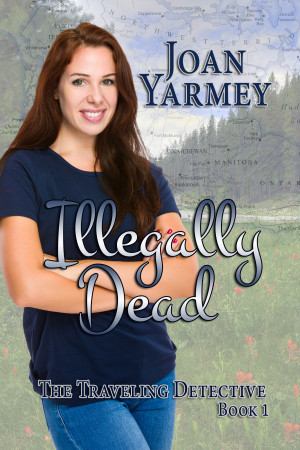
The following historical excerpt is about Fort Macleod, along the Crowsnest Highway, from my travel book the Backroads of Southern Alberta. Fort Macleod, coincidently, is the setting for the novel, Illegally Dead, the first book of my Travelling Detective Series.
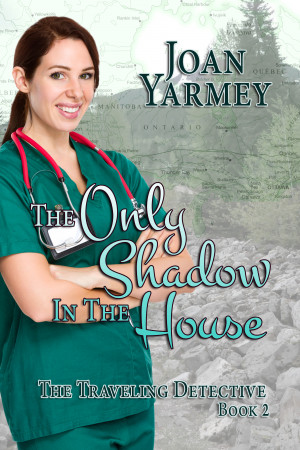
The Only Shadow in the House is set north and east of Edmonton, Alberta, and Whistler’s Murder takes place in Whistler, British Columbia.
After the Hudson's Bay Company sold Rupert's Land to the Canadian Government in 1869, fur traders from Fort Benton in Montana travelled north into present day Alberta and set up illegally trading posts called Whiskey Forts. They brought wagon loads of whiskey and guns to trade for furs with the natives. The watered down whiskey, laced with any or all of Tabasco, red pepper, tobacco, ginger, molasses, tea, sulphuric acid and ink, drove the natives wild and they brutalized and killed their own tribesmen, other bands, and some whitemen. Sir John A Macdonald, prime minister of Canada at the time declared that the area should be safe for settlers moving west and he formed the North West Mounted Police (NWMP) in 1874. They marched west and established Fort Macleod, which is southern Alberta's oldest settlement.
The downtown district, on 24th Street
between Second and Third Avenues, was declared Alberta's first provincial
historical site on May 14, 1984. There are many wood frame buildings that date
back to 1890s and some brick and sandstone ones from the early 1900s.
The Empress Theatre opened in 1912 and was used for vaudeville acts, minstrel
shows, silent films, political rallies and talking films. It has been
renovated, but the original pressed metal ceiling, double seats in every second
row, and the old radiators remain. The Empress Theatre Society presents movies
or live performances during the summer.
The present-day Fort Macleod is a reproduction, but some of the log buildings
inside the Fort Museum are original and house numerous historical native and
North West Mounted Police-Royal Canadian Mounted Police artifacts. A Musical
Ride is staged four times a day during July and August. Young men and women
dressed in replica North West Mounted Police uniforms present an exhibition of
horsemanship and precision, similar to the world famous Musical Ride.
Harry `Kanouse' Taylor, a former
whiskey fort owner, set up a hotel in Fort Macleod after the arrival of the
NWMP-the original name of the RCMP. Due to the changing times and transient
population, there had to be certain rules in his hotel. They were:
1. Guests will be provided with breakfast and dinner,
but must rustle their own lunch.
2. Spiked boots and spurs must be removed at night
before retiring.
3. Dogs are not allowed in bunks, but may sleep
underneath.
4. Towels are changed weekly; insect powder is for sale
at the bar.
5. Special rates for Gospel Grinders and the gambling
profession.
6. The bar will be open day and night. Every known fluid,
except water, for sale. No mixed drinks will be served
except in case of a death in the family. Only
registered guests allowed the privileges of sleeping
on the bar room floor.
7. No kicking regarding the food. Those who do not like
the provender will be put out. When guests find
themselves or their baggage thrown over the fence,
they may consider they have received notice to leave.
8. Baths furnished free down at the river, but bathers
must provide their own soap and towels.
9. Valuables will not be locked in the hotel safe, as
the hotel possesses no such ornament.
10. Guests are expected to rise at 6:00 a.m., as the
sheets are needed for tablecloths.
11. To attract the attention of waiters, shoot through
the door panel. Two shots for ice water, three for
a new deck of cards.
No Jawbone. In God We Trust; All Others Pay Cash.
I was born in New Westminster B.C. and raised in Edmonton.I have worked as a bartender, cashier, bank teller, bookkkeeper, printing press operator, meat wrapper, gold prospector, house renovator, and nursing attendant. I have had numerous travel and historical articles published and wrote seven travel books on Alberta, B.C. and the Yukon and Alaska that were published through Lone Pine Publishing in Edmonton.
One of my favourite pasttimes is reading especially mystery novels and I have now turned my writing skills to fiction. However, I have not ventured far from my writing roots. The main character in my Travelling Detective Series is a travel writer who somehow manages to get drawn into solving mysteries while she is researching her articles for travel magazines. This way, the reader is able to take the book on holidays and solve a mystery at the same time.
Illegally Dead is the first novel of the series and The Only Shadow In The House is the second. The third Whistler's Murder came out in August 2011 as an e-book through Books We Love. It can be purchased as an e-book and a paperback through Amazon.
i live on a small acreage in the Alberni Valley on Vancouver Island.
Of all the months of the year, September is my favourite month.
That might be because it is my birthday month. It is also the beginning of autumn, my favourite season. This, according to the poet John Keats, is the ‘Season of Mists and Mellow Fruitfulness.’ I love watching the leaves on the trees change colour from the green of spring and summer to gold and bronze, russet and red.
Cool, crisp mornings can be followed by clear blue skies and balmy sunshine. There may be a spell of Indian Summer, that dry, warm period that can occur after the first frost and before the cooler temperatures of October set in.
Or the mornings might shimmer with a gossamer-light mist draping late-season blackberries on theBut the weather, like fate, can be fickle. During my
first visit to Canada over thirty years ago, I went out in jeans and a t-shirt on
a beautiful sunny September morning. In the afternoon, the temperature plummeted,
and a blizzard blew in. I had to buy a jacket and boots and found traffic had ground to a halt which necessitated taking shelter for
the night in a hotel. These days I am prepared for any
eventuality.
Now the evenings are beginning to draw in, it's time to cozy up to the fire and start thinking about the next novel.
Victoria Chatham