Saturday, February 25, 2023

Six weeks in Australia


 https://bookswelove.net/martin-paula/ 


Six weeks in Australia

My apologies for not posting anything last month. I had just returned from my six weeks in Australia and suffered from brain fog after the long journey coupled with the inevitable jet lag. Adjusting to the cold weather in England after six weeks in sunshine and temperatures in the upper 70s and lower 80s was a shock too – we even had snow two days after I arrived home.

But anyway – Australia! Where to begin? People have asked me what was the highlight of my trip, and honestly, there were so many that it is impossible to pick out the top ten, let alone just one. Of course, it was wonderful to see my daughter and her partner again. They emigrated in 2019, with every intention of returning to visit the following year, but then Covid struck and Australia closed its borders, only opening them again to non-essential travellers at the beginning of 2022.
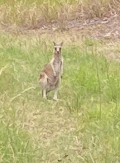

I had seen photos of their new home, but of course it was far better to see the ‘real’ thing, and also the surrounding neighbourhood – and I was very excited to see my first kangaroo at the side of a road nearby!

My daughter is a teacher, and her ‘summer holidays’ occur in December/January. I confess it seemed somewhat strange to see Christmas trees and other seasonal decorations in hot, sunny weather – and I did feel sorry for my UK friends who were in the midst of a cold snap with below freezing temperatures.


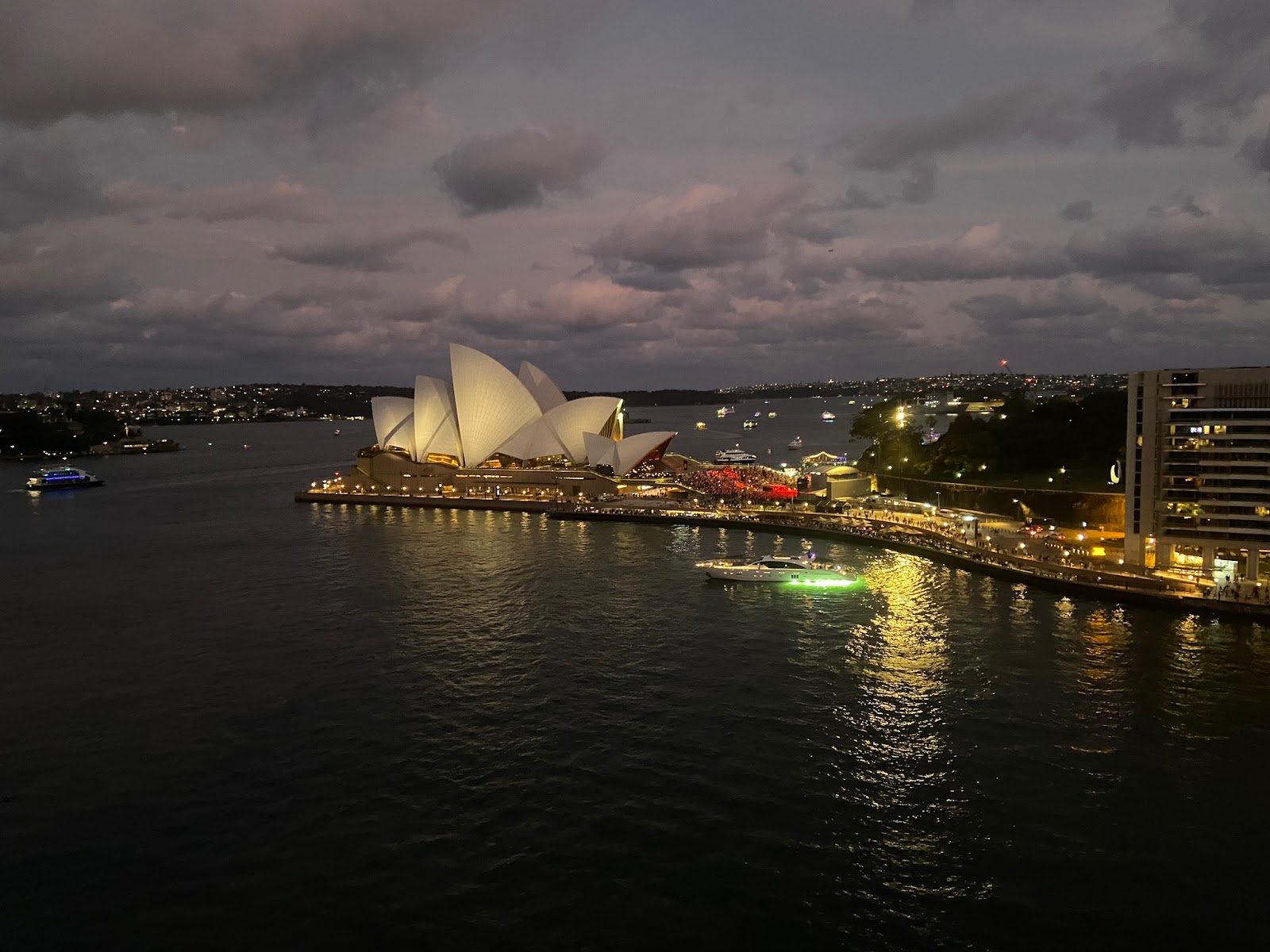
One highlight of my stay was a short cruise from Brisbane to Sydney with two days in Sydney itself. The first view of the famous Opera House and the bridge was unforgettable. It is such an iconic view and I must have taken dozens of photos from different angles, by day and also at night.

We visited several beaches and bays on the Gold Coast, south of Brisbane. Some, inevitably, were crowded and ‘touristy’, but others were beautifully quiet, with pale sand, turquoise sea, and white surf. I loved the mountain areas too, with lush rainforests and some amazing views.
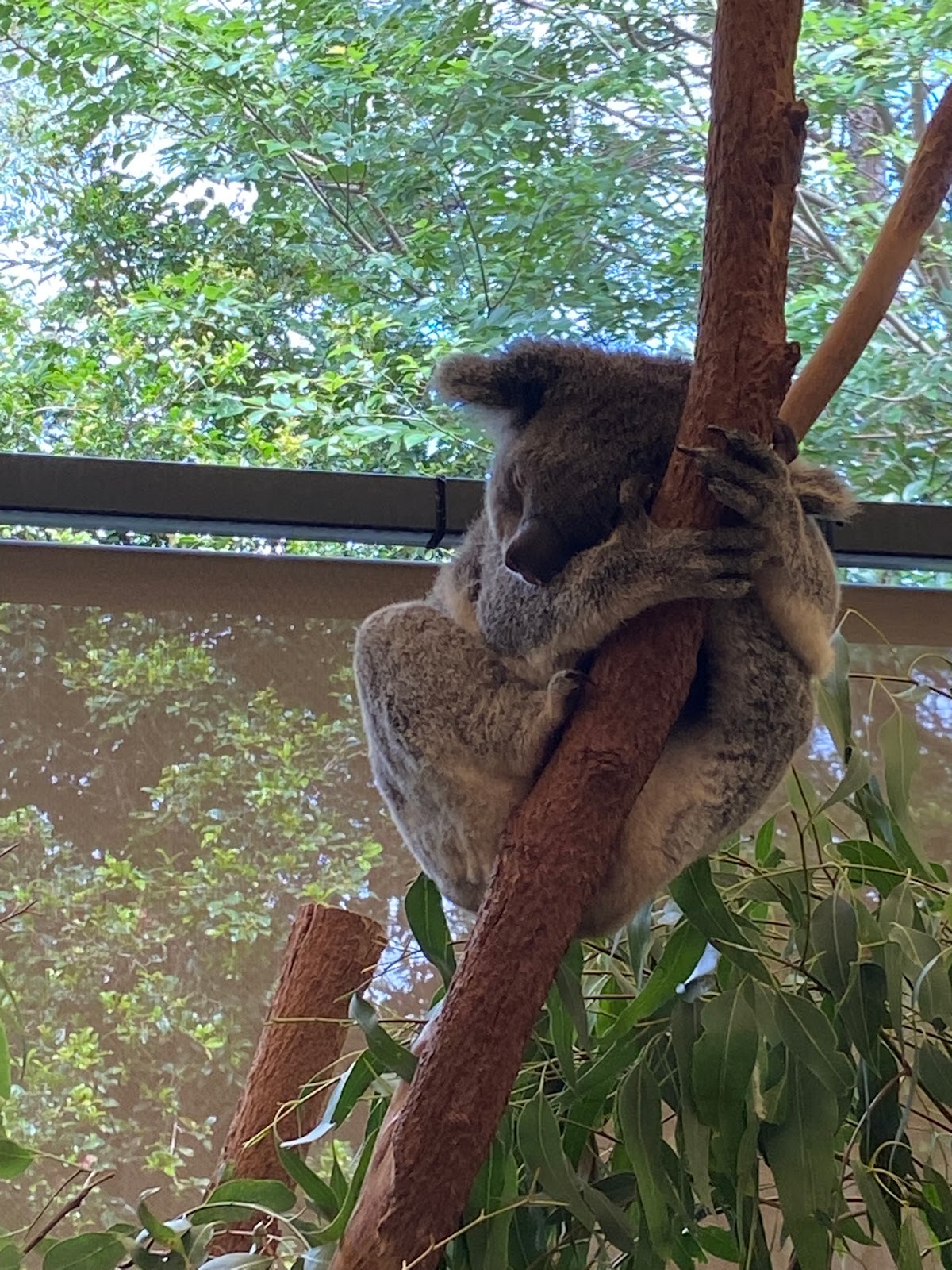
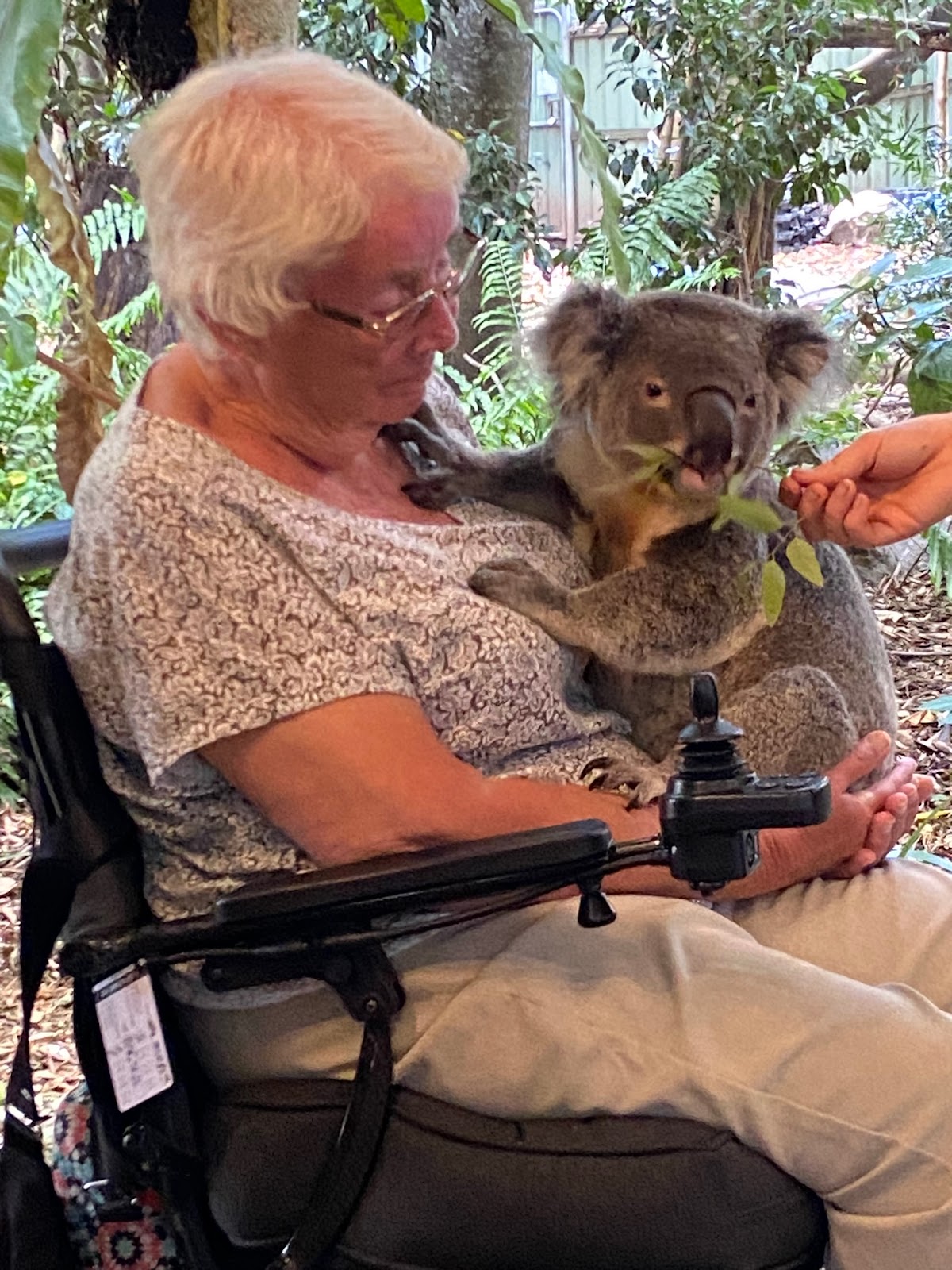


The koalas at a wildlife sanctuary were a delight – they seem to be able to sleep anywhere in their favourite gum trees but the one I held for a few minutes was very cuddly! 
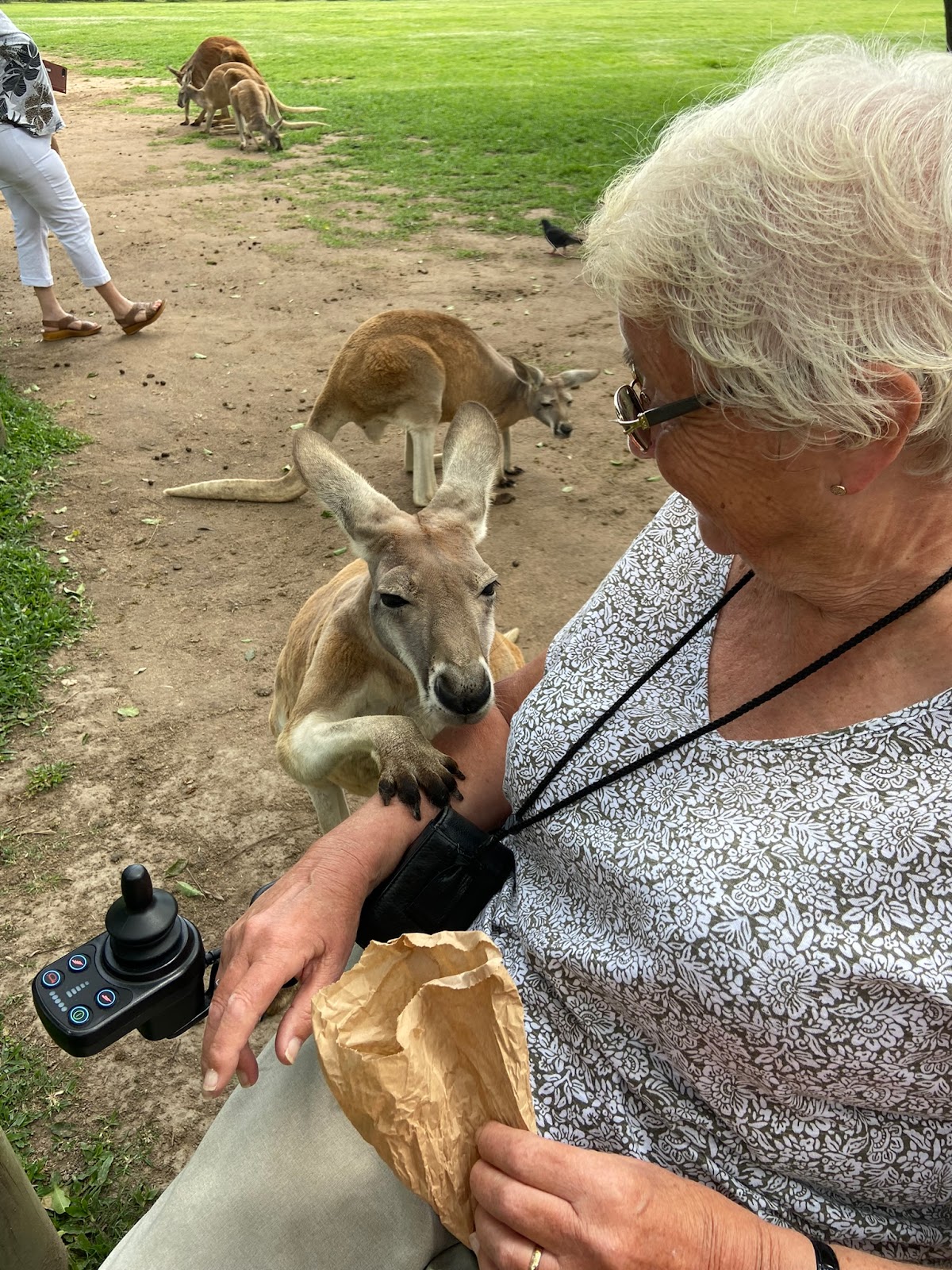

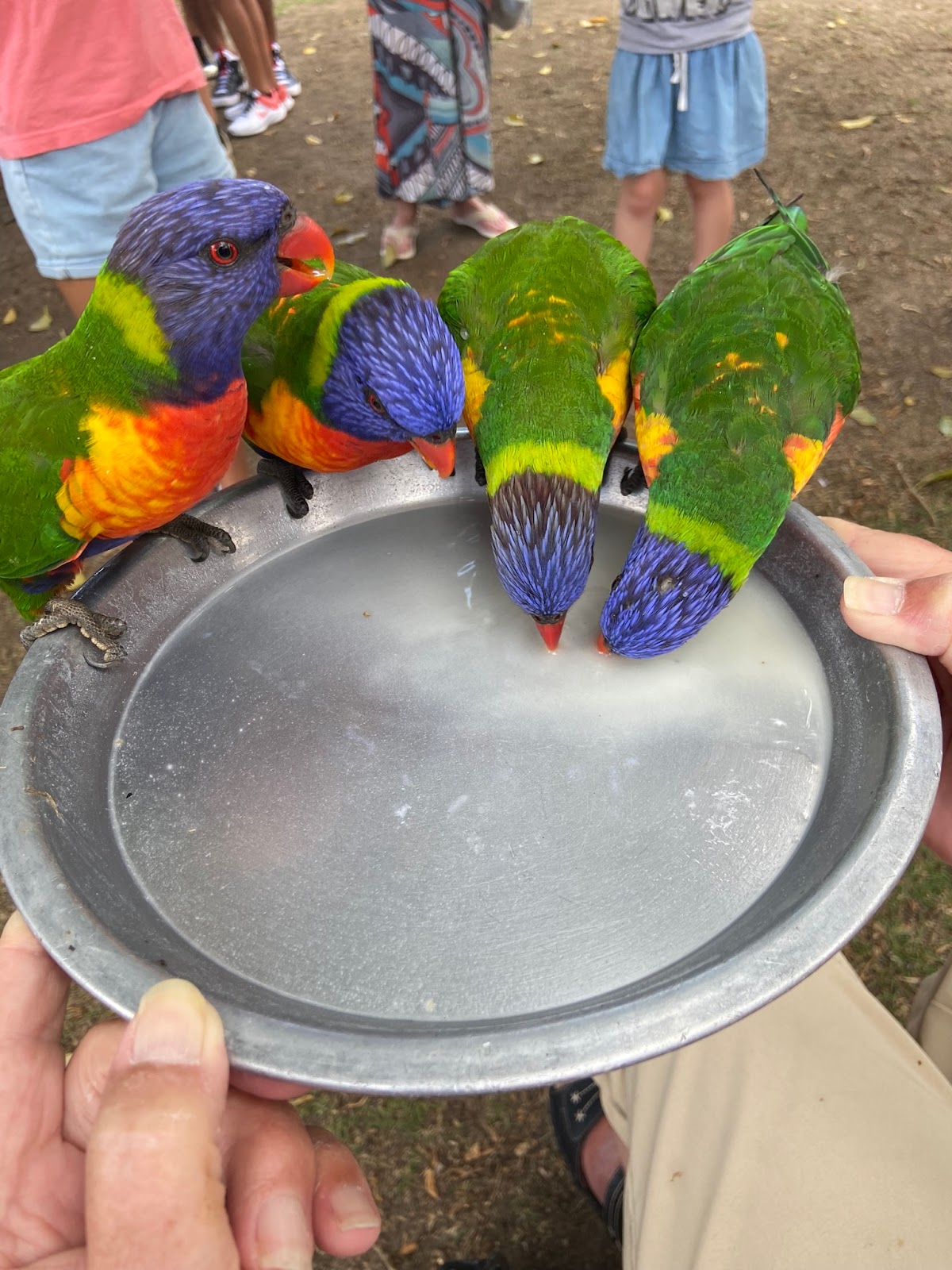
We also fed some very tame kangaroos, saw babies peeking out of their mothers pouches, and loved the way they bounced along on their very long back legs. At the same sanctuary, we saw other examples of Australian wildlife – a duckbilled platypus, Tasmanian devil, emu, kookaburra and dingoes. At another place, we fed the llamas, and also fed the beautiful rainbow lorikeets – who responded by pooping all over my top and pants!
I was sad when my visit eventually came to an end, but the memories will stay with me forever.

Find me on Facebook: www.facebook.com/paulamartinromances

Link to my Amazon author page:  author.to/PMamazon  


Friday, February 24, 2023

Canada's Coastline by Joan Donaldson-Yarmey


https://books2read.com/Romancing-the-Klondike


https://books2read.com/Rushing-the-Klondike 

https://www.bookswelove.com/donaldson-yarmey-joan/


Canada’s Coastline

I am a Canadian and all my mystery, historical, romance, and young adult novels are set in Canada. Canada is the second largest country in the world and has the world’s longest coastline. It is 243,792 km (151,485.326 mi in length and borders on the North Pacific, Arctic, and North Atlantic Oceans and includes the coasts of Newfoundland, Prince Edward Island, and Cape Breton island, as well as, thousands of off-shore islands. The next closest country is Indonesia with 54,716 km (33,999 mi). The sovereign country of Monaco has 5.6 km (3.5 mi) of coastline.

Part of Canada’s coastline encompasses Hudson Bay which, even though it is saltwater, is sometimes considered a marginal sea of the Arctic Ocean. While politically it is considered part of Nunavut, it borders on Ontario, Manitoba, Quebec, and Nunavut. Hudson Bay is famous for the fur trade between Europeans and Indigenous peoples from the 1600s to the 1900s.

Canada has ten provinces and three territories. Two of the provinces, Alberta and Saskatchewan, are land locked. The others plus the territories all have some part of their coast on saltwater. The province of British Columbia has the most with 25,725 km (15,985 mi) on the Pacific Ocean, while the Yukon Territory has only 343 km (213 mi) along the Arctic Ocean.

The government of Canada has set aside five key ecosystems of Canada’s coastline as Large Ocean Management Areas (LOMA) for conservation, planning, and management. The Pacific North Coast comprises one-quarter of the Canadian Pacific ocean waters. This area is home to sea lions, dolphins, seals, porpoises, and twenty-seven different whale species. It is also the habitat of 80% of the global population of Cassin’s Auklet plus a number of other seabirds. The glass sponge reef along the coast dates back 9,000 years.

The people around the Eastern Scotian shelf rely on fishing and petroleum exploration for their livelihood to the detriment of the region and the number of marine animals that live there. LOMA is trying to improve the area. Although, shore around the Placentia Bay area off the coast of Newfound and Labrador  is degrading due to economic development, it is still the habitat for 49 bird species, 14 marine animal species, and 23 fish species. There are also a number of plant species.

The Beaufort Sea is a marginal sea (a division of water separated from an ocean by islands, peninsulas, or archipelagos) in the Arctic Ocean off the shore of the Yukon and Northwest Territories. This LOMA is a complex a marine system because of the short summer free of ice, the freshwater flowing into the sea during the spring and summer and the increased dropping of sediment. It has been an important area for humans who have hunted and fished for centuries. Six communities oversea the management of the LOMA and by doing so are able to pass on their harvesting skills to future generations.

The fifth LOMA protected area is the Gulf of St Lawrence which sits at the mouth of the St Lawrence River and covers 155,000 sq km (60,000 sq mi). Some of the species that inhabit the waters are Greenland shark, the St. Lawrence beluga, giant whales, seals, tiny pink crustaceans called krill that are near the bottom of the food chain, sea ducks, and geese. It is a very productive and diverse estuary along the coasts of Quebec, New Brunswick, Prince Edward Island, Nova Scotia, and Newfound land and Labrador.


Thursday, February 23, 2023

Colour in Winter by Victoria Chatham


AVAILABLE HERE


I am not a winter person. Never have been, never will be. When my children were small, and an English winter produced enough snow, their dad took them sledding and snowballing. I stayed home making cookies and hot chocolate for when they returned. Jump forward many years, and here I am in Canada, a move my children still cannot fathom as there is so much winter here. What can I say? It was all for love.

But it’s snowing again. Rather than ponder on the bleak view beyond the window, I have happy memories of sunshine and colour in Mexico. Here are a few photographs which I hope brighten up your day too.

Most of my Mexican vacations have been in and around Puerto Vallarta.  I'm fascinated by the wonderful sculptures along the Malecon, especially these surreal figures found on the corner of Aldama and the Malecon. The dozen or so sculptures form The Rotunda of the Sea by Alejandro Colunga from Guadalajara. The bronze chairs have been worn smooth by the many tourists who either take a rest or pose to have their photograph taken.


Farther along the coast from Puerto Vallarta is the village of La Penita, with its colourful and crowded market.The first thing that caught my eye were these beautiful rugs. I would have been very happy to have brought one home, but thought if I ever had one I would want to go to Oaxaca where they were produced and buy it there. Oaxaca is well known for its lively arts and crafts scene but was too far away for us to fit into this particular trip.


It wasn't just the rugs that caught my eye, but this very busy ceramics shop. There was so much to look at, the vibrant colours alone made me smile.  Mindful of what I had to pack in my suitcase, I bought only one small piece, a dish which now holds paperclips.


Many of the buildings were as colourful as the wares they housed, but no one could miss this striking apartment building in Rincon de Guayabitos.


One of my favourite places to visit is the Botanical Gardens a handy bus ride south of Puerto Vallarta. It is easy to spend the day browsing through the tropical gardens and lush jungle, take the walk down to the river, and enjoy the restaurant when you return. The bright spot for me is the orchid house, but these massive datura blooms also caught my eye.


So now, after having whined about the wintery view beyond my window, it has stopped snowing, the cloud cover has cleared, and the sun is shining. As it is only twenty-eight days to spring, I guess I can handle it.


Victoria Chatham


Wednesday, February 22, 2023

Writing for Goldilocks


At the conclusion of a book club meeting, a woman stopped the discussion. "Dean, you struck the right balance when describing the scenes and characters. I finished another author's bestseller in one evening. The author spent so much time describing meaningless details that I skipped over pages to find the story's meat. I don't care what shape a cloud is or what shade green a room has been painted. I want the plot to move ahead."

Another reader added, "Yes, you give us enough description so we can form an image of the characters and place in our minds without putting us to sleep. You hit the Goldilocks spot."

Those comments made me reflect a couple of things. Twenty years ago, I contacted a literary agent about representing me. I send her a manuscript. It came back a week later with the first twenty pages marked up with red ink like a term paper. She said, "I quit after twenty pages because you aren't giving me enough character and place description. You need to open every scene with at least one page describing the scene, the characters, and how they're dressed. Send this back after you've done that."

I declined her advice. and we parted ways. I'm sure she's representing some best-selling author who fills his/her books with flowery descriptions. I'm very plot driven. After some minimalist description, I want the readers to create their own images of the characters and locations. Jill Fletcher is slender, doesn't wear makeup, and is hung up about her figure. Doug is middle-aged and ruggedly handsome.

That approach has led to some interesting discussions. A reader approached me after a book event and said, "I know just what the killer looks like. He's Garrison Keillor's twin brother."

I've read authors who spend a great deal of the book painting verbal images for the readers. I started reading a book by famous British author. She spent the first three pages of a book describing a dingy dormitory hallway as her protagonist walked to her room. It was wonderfully detailed, right down to the description of the different shades of lipstick on the cigarette butts in the sand outside the doorway. The problem was, I didn't care. I wanted a hook to pull me into the story.

At a recent Mystery Writers of America conference, a famous author spoke about the process of his best-selling book becoming a movie. He sold the movie rights to a film studio. The studio hired a screenwriter (a whole different skillset than writing a mystery). The book's author received a copy of the screenplay (for his approval). He was appalled that the opening scene, a man walking into a room where his wife was decorating their Christmas tree, had been boiled down from three pages to "Man enters room where wife is decorating Christmas tree." He called the producer, who explained that they had set and costume designers who would create the room and dress the characters. It was at that point that the book's author realized that he'd sold the rights to his characters and a rough plot. The screenwriter, producer, director, and actors would modify it as they saw fit. His input was neither wanted nor appreciated.

Back to Goldilocks. I try to walk a fine line. I got two conflicting bits of feedback on Dead End Trail. A female friend, who attended Catholic schools in a small town where all the children were immaculately conceived because no one in her town had ever had sex, called. "Dean (sigh) I was disappointed by the extreme amount of sex in your recent book." I seized up, trying to recall ANY sex in the book. Eventually, I replied, "My characters went into their motel room and closed the door a few times. I moved to another scene once the door closed." She replied, "But I KNEW what they were doing, Dean!"

A different reader spoke to me about the same topic, in the same book. "Dean, you break away from the romance scenes just when they're getting interesting." After a deep sigh, I replied, "I leave what happens next to your imagination." After a pause the reader replied, "My imagination might not be as good as yours. Keep the scene going next time."

Having decided NOT to write erotica, I prefer to leave Jill and Doug's romance scenes behind a closed door. Use your imagination. They're married and in love. I'm sure that's how Goldilocks would want it. Not too little. Not too much. Just right.

Check out "The Last Rodeo" and my other Doug Fletcher books at: 

Hovey, Dean - BWL Publishing Inc. (bookswelove.com)

I hope I hit the Goldilocks spot for you.

Tuesday, February 21, 2023

Apple Peels and Snails to Snare a Husband in the Eighteenth Century, by Diane Scott Lewis


To purchase my historical novels, click HERE

To celebrate February, the month of love, with Valentine's Day, I delved into the superstitions of the past when a village lass searched for her one true love.

Folklore abounds in the villages of England around the single girl’s search for a husband—as in the eighteenth century marriage was what most young women had to look forward to, or they’d be ridiculed and regulated to spinsters, farmed out as governesses, or forced to live on the charity of their family.

Most of these search-for-true-love customs revolved around the seasons.


At the ruined Abbey of Cerne Abbas in Dorsetshire, girls flocked around the wishing-well in all seasons. To obtain their heart’s desire, they’d pluck a leaf from a nearby laurel bush, make a cup of it, dip this in the well, then turn and face the church. The girl would then “wish” for presumably a man she already has in mind, but must keep this wish a secret or it wouldn’t come true.

Other customs included, in Somersetshire on May Day Eve or St. John’s Eve, a lass putting a snail on a pewter plate. As the snail slithered across the plate it would mark out the future husband’s initials.


On another ritual to this end, writer Daniel Defoe remarked by saying: “I hope that the next twenty-ninth of June, which is St. John the Baptist’s Day, I shall not see the pastures adjacent to the metropolis thronged as they were the last year with well-dressed young ladies crawling up and down upon their knees as if they were a parcel of weeders, when all the business is to hunt superstitiously after a coal under the root of a plantain to put under their heads that night that they may dream who should be their husbands.”

Throwing an apple peel over the left shoulder was also employed in the hopes the paring would fall into the shape of the future husband’s initials. When done on St. Simon and St. Jude’s Day, the girls would recite the following rhyme as they tossed the peel: St. Simon and St. Jude, on you I intrude, By this paring I hold to discover, without any delay please tell me this day, the first letter of him, my true lover.


On St. John’s Eve, his flower, the St. John’s Wort, would be hung over doors and windows to keep off evil spirits, and the girls who weren’t off searching for snails in the pastures, would be preparing the dumb cake. Two girls made the cake, two baked it, and two broke it. A third person would put the cake pieces under the pillows of the other six. This entire ritual must be performed in dead silence-or it would fail. The girls would then go to bed to dream of their future husbands.

On the eve of St. Mary Magdalene’s Day, a spring of rosemary would be dipped into a mixture of wine, rum, gin, vinegar, and water. The girls, who must be under twenty-one, fastened the sprigs to their gowns, drink three sips of the concoction, then would go to sleep in silence and dream of future husbands.


On Halloween, a girl going out alone might meet her true lover. One tale has it that a young servant-maid who went out for this purpose encountered her master coming home from market instead of a single boy. She ran home to tell her mistress, who was already ill. The mistress implored the maid to be kind to her children, then this wife died. Later on, the master did marry his serving-maid.

Myths and customs were long a part of village life when it came to match-making.


Source: English Country Life in the Eighteenth Century, by Rosamond Bayne-Powell, 1935.

Diane lives in Western Pennsylvania with her husband and one naughty dachshund. 


Popular Posts

Books We Love Insider Blog

Blog Archive