Tuesday, February 28, 2023

Why Does Writing a Novel Remind Me of Pizza? By Connie Vines #BWLAuthorBlog,

My creation!
Like most writers, I get excited about beginning a new project.

I select my favorite pens, a fresh college line notebook, 3 x 5 lined cards, and my 'new favorite coffee mug. I even set up my playlist for the main characters (music he/she like listening to).  I might even have a rough draft of my book trailer in place.

Then I sit down at my laptop (yes, I'm still a hardcore PC person), however, my laptop has a dictation feature which seems to work well for free-flow thought.

Why do I think about pizza 🍕?

You begin with a blank computer screen white piece of paper. And as I stated in my opening paragraph I have everything in order.


To begin your pizza dough you arrange your ingredients: Yeast, Water, Flour, Oil, Sugar, Salt, and Cornmeal (for dusting the bottom of the crust). You may even wish to add garlic or Italian seasoning to the flour.

You will have your favorite bowl handy. 

Like a novel, pizza dough will require kneading, resting, and kneading again.

Your pizza dough should be shaggy and lumpy, to begin with, but if you've kneaded it for a while it should be slightly tacky to the touch. If your dough doesn't ooze or sag when you hold it up, it's another sign it is well kneaded.

It's not unusual for my plot and opening scene to be a little lumpy at the beginning. However, with work, an unending supply of hot coffee, and pacing, my story takes shape. 

I may take a day or two off to let the ideas rise to the surface. Then I'm back at the computer again.

A couple of chapters later I realized my story may need a bit of extra seasoning, and several new toppings or I may need to toss out the pie and start again.

But hopefully, like the glutamate in pizza toppings, my stories cause my readers' brains to get excited--and crave more of my novels!


Happy Reading and "gustare la pizza",

Connie


https://bookswelove.net/vines-connie/

My books are on SALE until March 3rd (at Smashwords) click the link above :-)


Monday, February 27, 2023

Moving on from grief to joy - I adopted a new furry companion - by Vijaya Schartz

Visit my author page on BWL Publishing HERE


After the loss of my little Jasmine just after the holidays, I thought I shouldn't wait too long before adopting a new furry companion. 


Here he is, I renamed him Pasha (which is a spoiled mid-eastern king, usually fat and spoiled). Pasha is seven-years-old. He was rescued in November by Cat's World Rescue from a family where he'd been abused by children and used as target practice by mean men. The vet had to dig several BBs out of his body.


Needless to say, this little thing was spooked. He hates children and men. He couldn't be touched, even less petted. So, his case was special, and adoption would be difficult, since he couldn't be adopted by a family.


As it often happens, the right connection at the right time (I was browsing at Petsmart) put both of us on a collision course. I believe in the energy of the universe solving problems. I always keep an open mind. And as it happened, I was there, ready to adopt when he was in need of a home.


In a very short time, Pasha understood he was safe in my home. He really is the king of his domain and now lets me pet him and even pick him up. He jumps in my lap and purrs and even let me brush his tummy. 


I think this is the perfect pairing. An author needs a quiet furry companion to sleep and purr on the desk while the inspiration strikes. I believe cats help inspiration, especially for my books, where you will often find cat characters... sometimes small, sometimes very big, but always brave.

Here are some of my titles that include cats:


amazon B&N - Smashwords - Kobo


Happy reading!


Vijaya Schartz, award-winning author
Strong Heroines, Brave Heroes, cats


Sunday, February 26, 2023

Of Myth and Legend—Tricia McGill

Find all my books with buy links on my BWL Author page

Many well-known legends throughout history have been well documented. One thing I enjoy about researching at the start of a new book is finding facts about certain obscure characters throughout history that I haven’t come across before. Doesn’t mean that they are not just as famous. My next task when starting a new story, after deciding on the setting, is to find names for my protagonists. Once I have that clear in my head, I can more easily build their individual character traits (this part I love, so therefore spend a lot of time on). 

I wanted my convict hero to be of Irish descent, and so found the name of Finn easily enough. What I didn’t know was that this name was derived from an Irish legend known as the Fionn (or Fenian) Cycle. This original Finn was the son of one Cumhail who led a band of warriors who were chosen for their bravery and strength. They took an oath to fight for the king and defend Ireland from attack. When younger Finn took over leadership of the Fianna he was known as the greatest warrior of all. What a wonderful story for my character Finn to relate when explaining where his unusual name came from. Actually, Finn does not know if this is true of course, and who knows he might have made that name up for himself knowing it might make him appear braver.

As my story is set in Australia (Tasmania to be exact), it seemed right to be researching the county’s legends more thoroughly. Everyone more or less has heard of Ned Kelly (certainly all Aussies know his saga well) but there are many other bushrangers and criminals who are just as famous here. I came across some previously unknown to me colourful facts about a bushranger named Martin Cash (1808-1877). Also born in Ireland (County Wexford) Cash was convicted in 1827 of housebreaking and was eventually transported to Sydney to serve his seven years, as many others were in those days. Cash’s story was that in a fit of jealousy he shot at a man who was embracing his (Cash’s) mistress. He claimed the ball wounded his rival in the backside.

Assigned to a George Bowman, Cash continued to work for him after receiving his ticket-of-leave. Once able to go wherever he wished he left for Van Diemen’s Land (Tasmania) along with one Bessie Clifford. Two years later he was accused of larceny and again sentenced to seven years (Some people never learn that crime does not pay!). He escaped three times, at one stage evading capture for almost two years. He was returned to Port Arthur, Tas (where my story is set) with another four years added to his sentence. He soon eluded two guards with the help of two bushmen, Kavenagh and Jones, and the three began their bushranging career, robbing inns and the homes of well-to-do settlers. They used no unnecessary violence and thus earned the title of ‘gentlemen bushrangers’. 

Cash heard that his love Bessie had deserted him for another man so risked a visit to Hobart Town, where he was once again tried for killing a pursuer. A former attorney-general, Edward Macdowell was secured for his defense but Cash nevertheless was sentenced to death. At the 11th hour the decision was reconsidered and he then was transported to Norfolk Island for ten years.

His story did not end there by any means and before his death he narrated his life story to James Lester Burke whose edited version published in 1870 was perhaps more colourful than the truth and has been reprinted many times since.

https://www.amazon.com/Uncensored-Martin-Australian-Bushranger-Lester/dp/0949459437 

More on Martin Cash: https://adb.anu.edu.au/biography/cash-martin-1885

Saturday, February 25, 2023

Six weeks in Australia


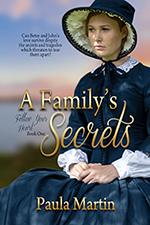
 https://bookswelove.net/martin-paula/ 


Six weeks in Australia

My apologies for not posting anything last month. I had just returned from my six weeks in Australia and suffered from brain fog after the long journey coupled with the inevitable jet lag. Adjusting to the cold weather in England after six weeks in sunshine and temperatures in the upper 70s and lower 80s was a shock too – we even had snow two days after I arrived home.

But anyway – Australia! Where to begin? People have asked me what was the highlight of my trip, and honestly, there were so many that it is impossible to pick out the top ten, let alone just one. Of course, it was wonderful to see my daughter and her partner again. They emigrated in 2019, with every intention of returning to visit the following year, but then Covid struck and Australia closed its borders, only opening them again to non-essential travellers at the beginning of 2022.


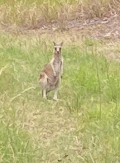
I had seen photos of their new home, but of course it was far better to see the ‘real’ thing, and also the surrounding neighbourhood – and I was very excited to see my first kangaroo at the side of a road nearby!

My daughter is a teacher, and her ‘summer holidays’ occur in December/January. I confess it seemed somewhat strange to see Christmas trees and other seasonal decorations in hot, sunny weather – and I did feel sorry for my UK friends who were in the midst of a cold snap with below freezing temperatures.


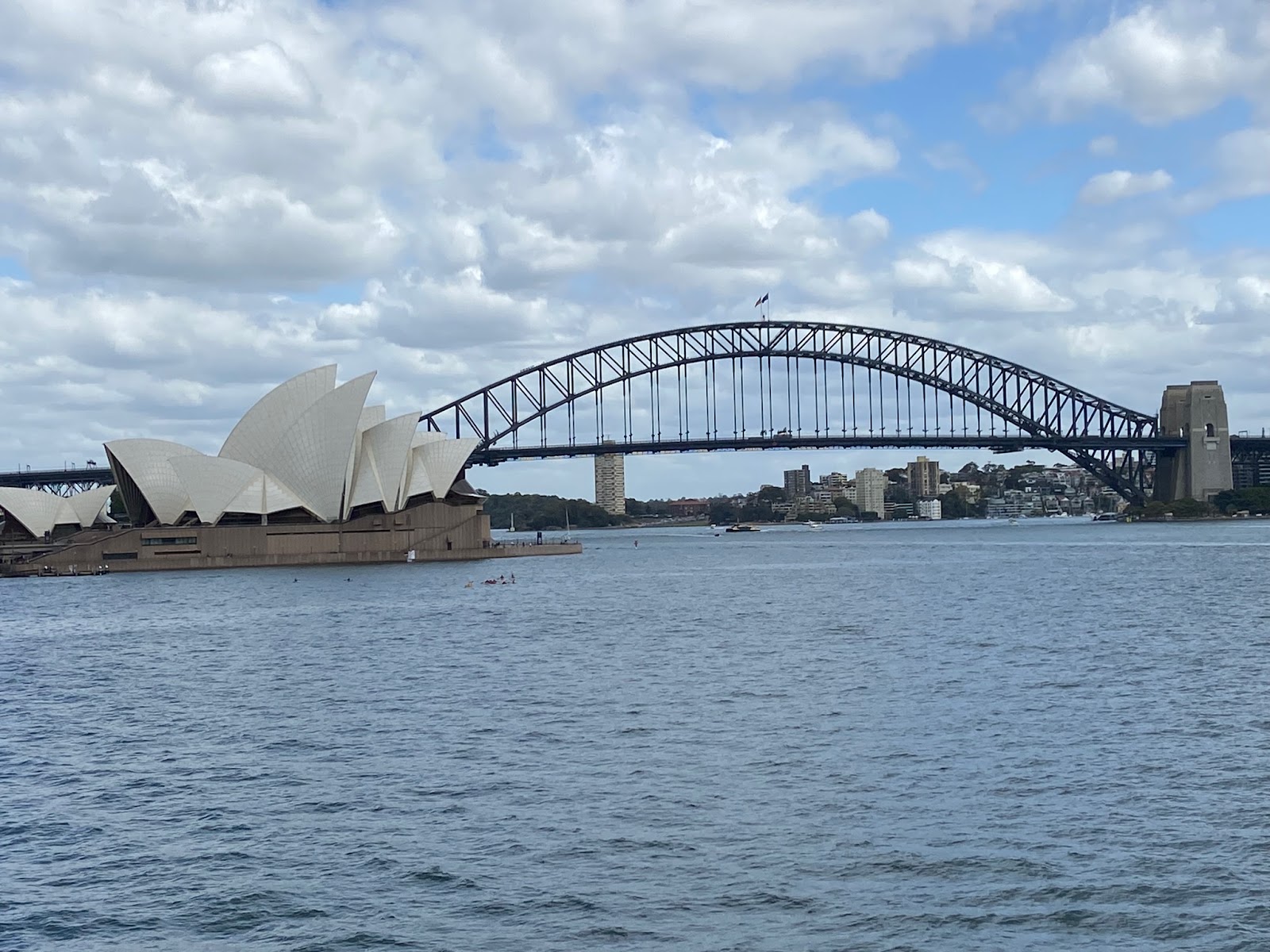
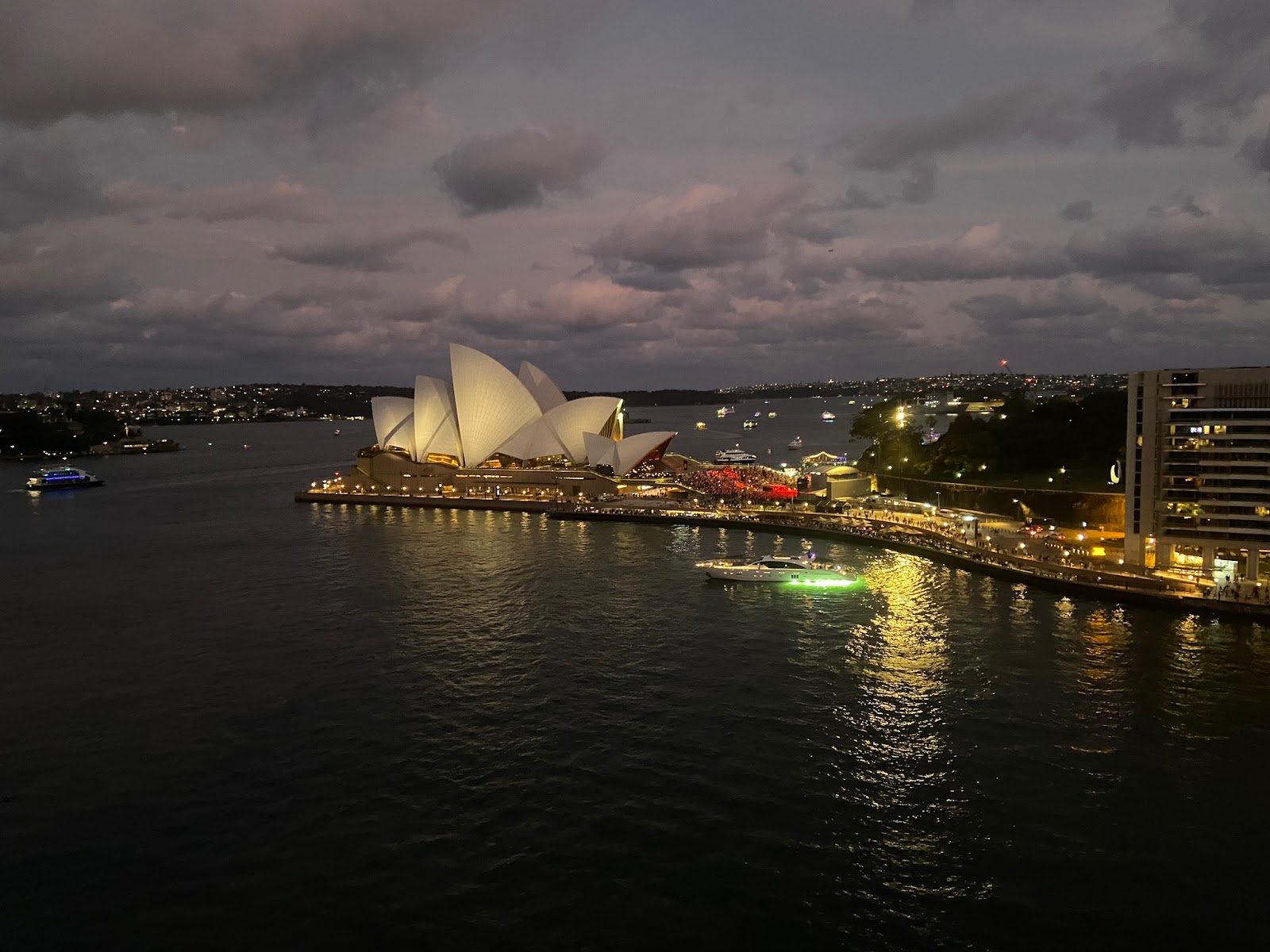
One highlight of my stay was a short cruise from Brisbane to Sydney with two days in Sydney itself. The first view of the famous Opera House and the bridge was unforgettable. It is such an iconic view and I must have taken dozens of photos from different angles, by day and also at night.


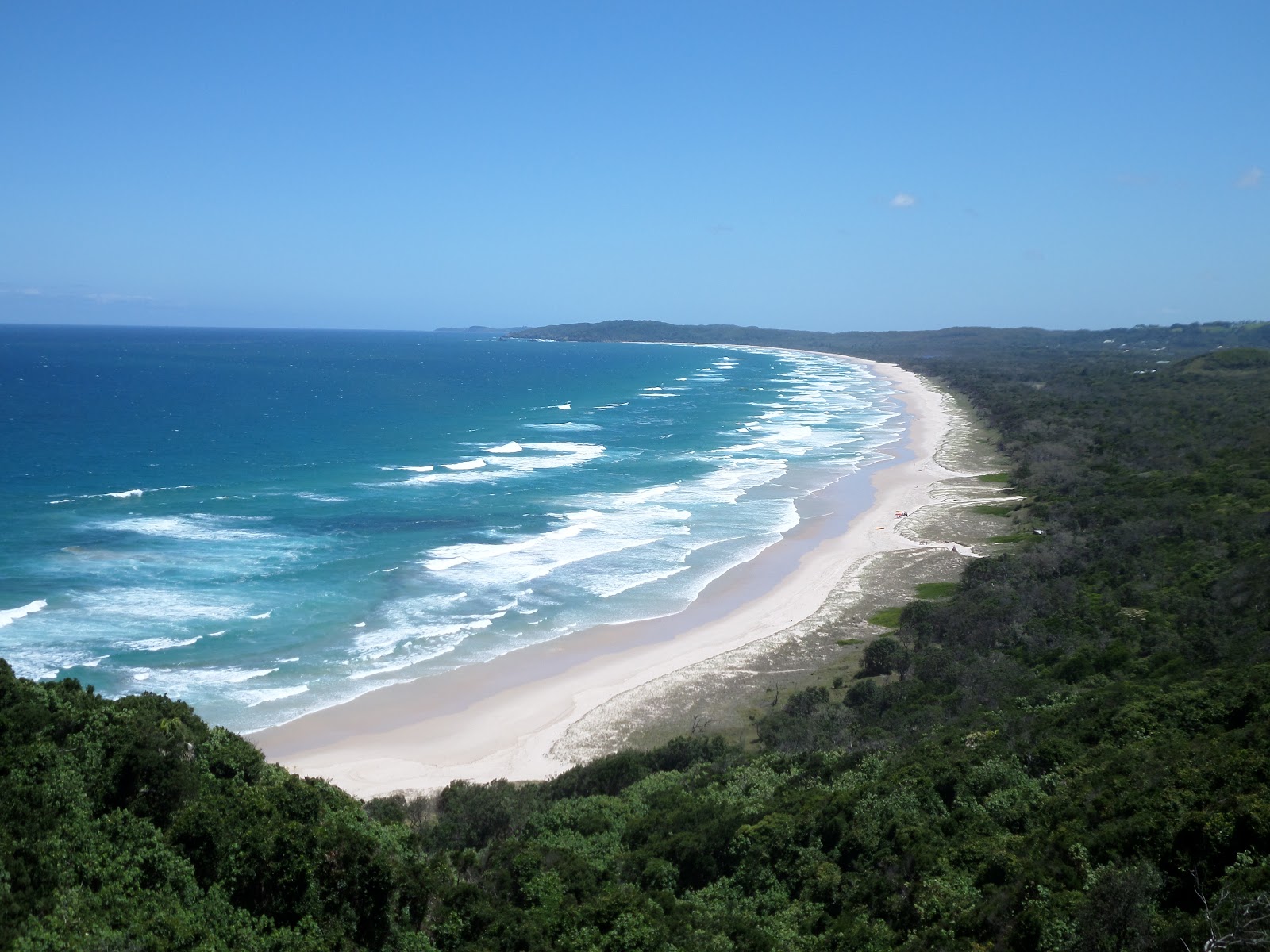
We visited several beaches and bays on the Gold Coast, south of Brisbane. Some, inevitably, were crowded and ‘touristy’, but others were beautifully quiet, with pale sand, turquoise sea, and white surf. I loved the mountain areas too, with lush rainforests and some amazing views.


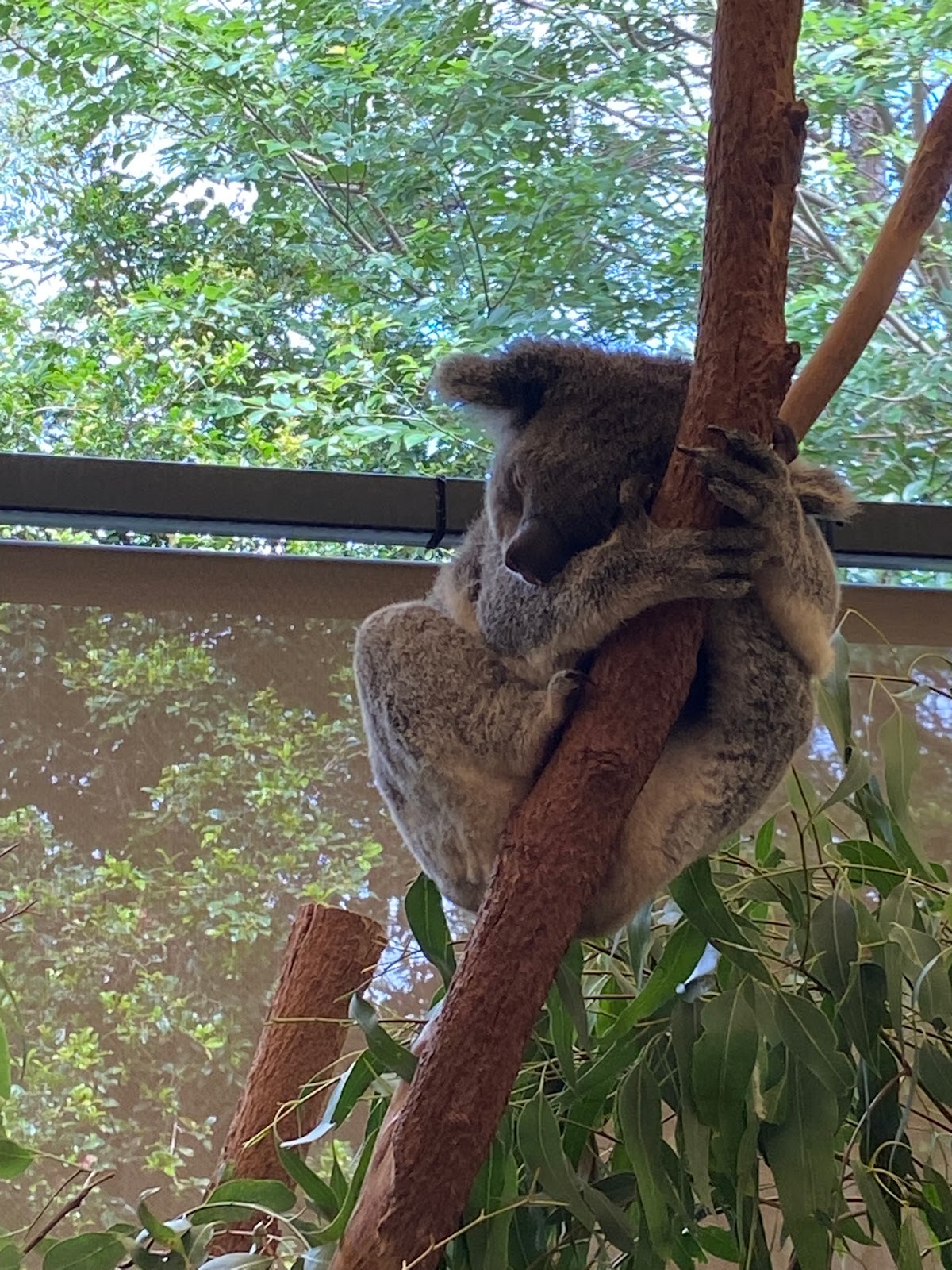
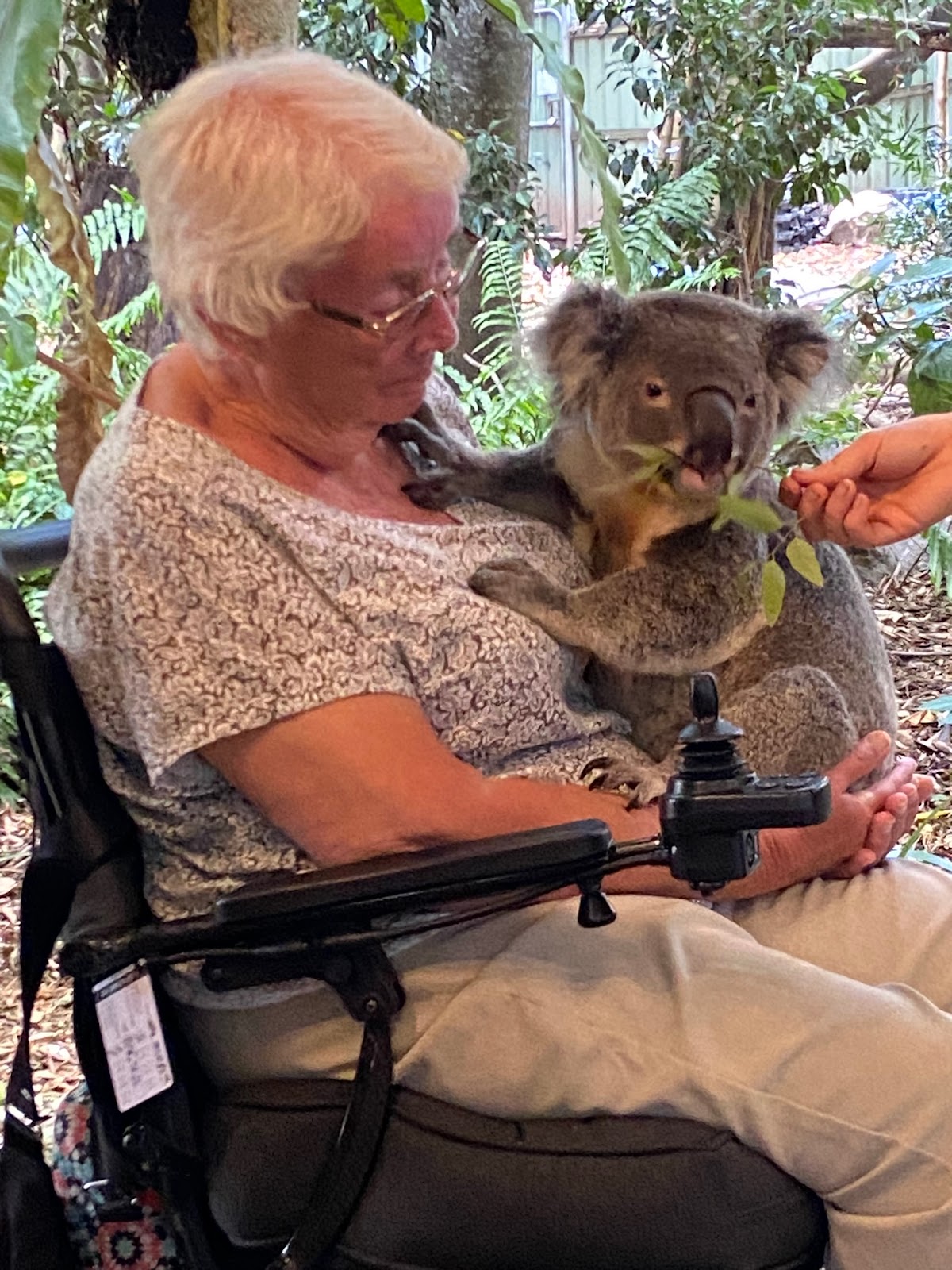
The koalas at a wildlife sanctuary were a delight – they seem to be able to sleep anywhere in their favourite gum trees but the one I held for a few minutes was very cuddly! 


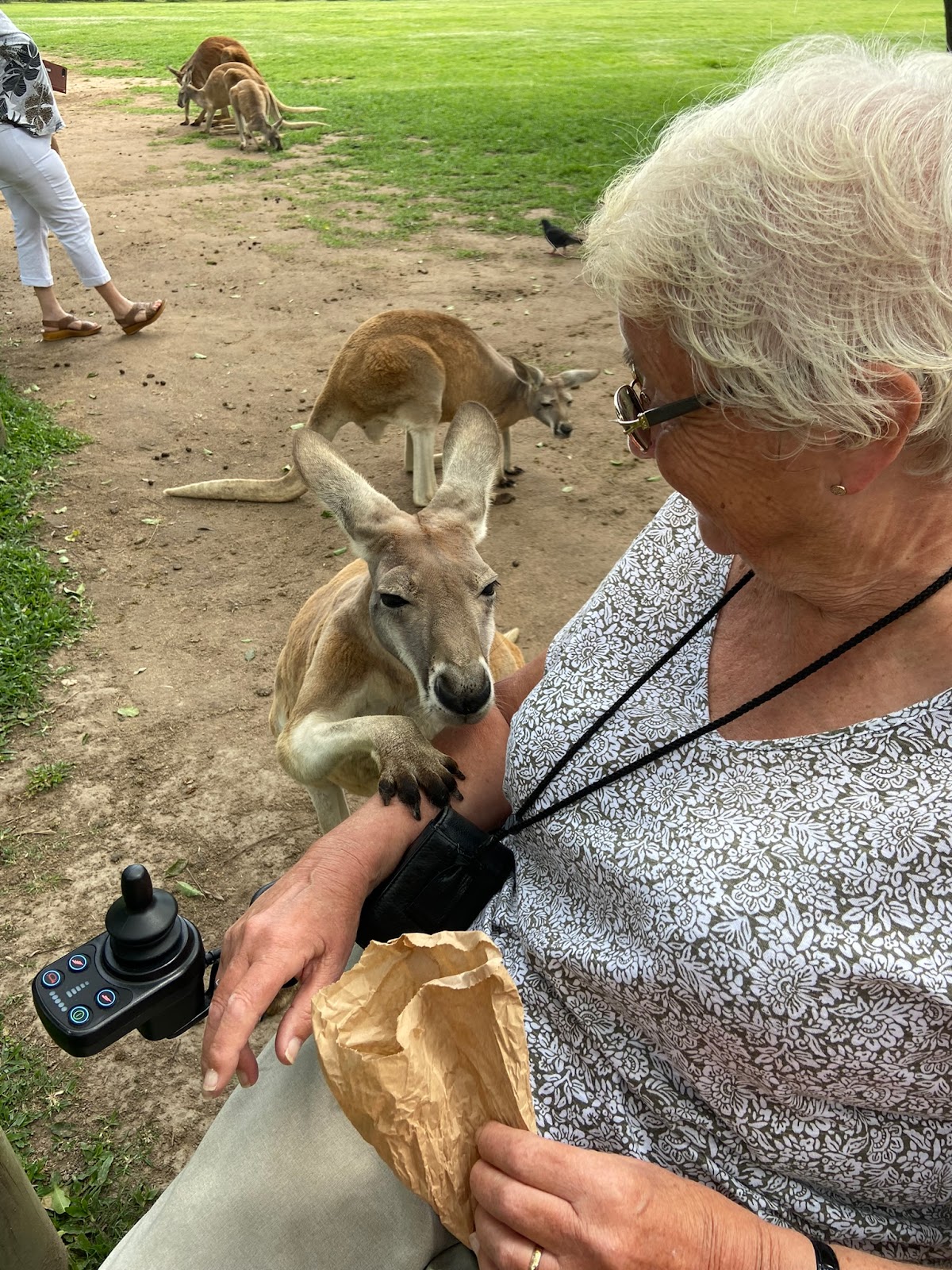
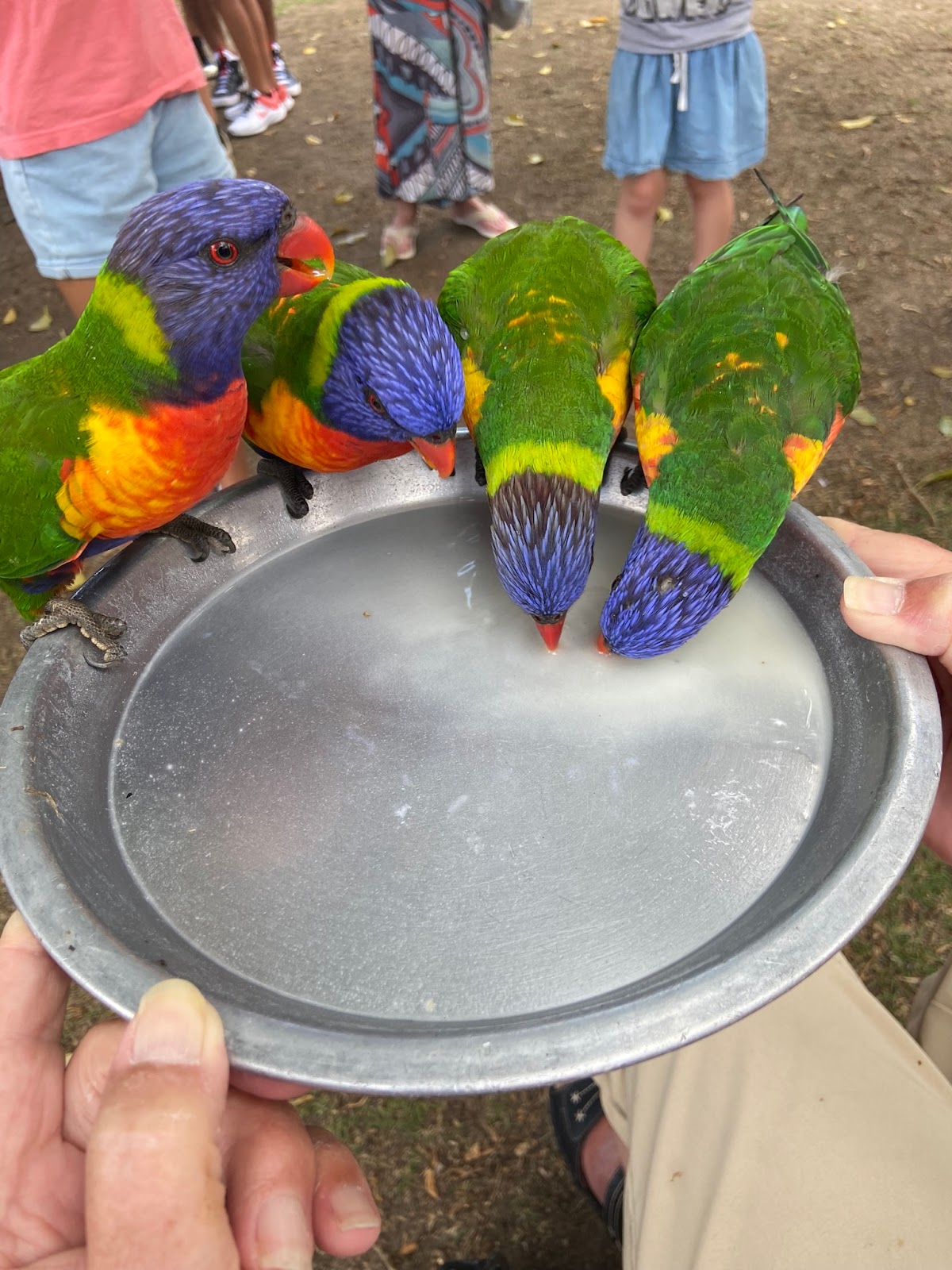
We also fed some very tame kangaroos, saw babies peeking out of their mothers pouches, and loved the way they bounced along on their very long back legs. At the same sanctuary, we saw other examples of Australian wildlife – a duckbilled platypus, Tasmanian devil, emu, kookaburra and dingoes. At another place, we fed the llamas, and also fed the beautiful rainbow lorikeets – who responded by pooping all over my top and pants!

I was sad when my visit eventually came to an end, but the memories will stay with me forever.

Find me on Facebook: www.facebook.com/paulamartinromances

Link to my Amazon author page:  author.to/PMamazon  


Friday, February 24, 2023

Canada's Coastline by Joan Donaldson-Yarmey


https://books2read.com/Romancing-the-Klondike


https://books2read.com/Rushing-the-Klondike 

https://www.bookswelove.com/donaldson-yarmey-joan/


Canada’s Coastline

I am a Canadian and all my mystery, historical, romance, and young adult novels are set in Canada. Canada is the second largest country in the world and has the world’s longest coastline. It is 243,792 km (151,485.326 mi in length and borders on the North Pacific, Arctic, and North Atlantic Oceans and includes the coasts of Newfoundland, Prince Edward Island, and Cape Breton island, as well as, thousands of off-shore islands. The next closest country is Indonesia with 54,716 km (33,999 mi). The sovereign country of Monaco has 5.6 km (3.5 mi) of coastline.

Part of Canada’s coastline encompasses Hudson Bay which, even though it is saltwater, is sometimes considered a marginal sea of the Arctic Ocean. While politically it is considered part of Nunavut, it borders on Ontario, Manitoba, Quebec, and Nunavut. Hudson Bay is famous for the fur trade between Europeans and Indigenous peoples from the 1600s to the 1900s.

Canada has ten provinces and three territories. Two of the provinces, Alberta and Saskatchewan, are land locked. The others plus the territories all have some part of their coast on saltwater. The province of British Columbia has the most with 25,725 km (15,985 mi) on the Pacific Ocean, while the Yukon Territory has only 343 km (213 mi) along the Arctic Ocean.

The government of Canada has set aside five key ecosystems of Canada’s coastline as Large Ocean Management Areas (LOMA) for conservation, planning, and management. The Pacific North Coast comprises one-quarter of the Canadian Pacific ocean waters. This area is home to sea lions, dolphins, seals, porpoises, and twenty-seven different whale species. It is also the habitat of 80% of the global population of Cassin’s Auklet plus a number of other seabirds. The glass sponge reef along the coast dates back 9,000 years.

The people around the Eastern Scotian shelf rely on fishing and petroleum exploration for their livelihood to the detriment of the region and the number of marine animals that live there. LOMA is trying to improve the area. Although, shore around the Placentia Bay area off the coast of Newfound and Labrador  is degrading due to economic development, it is still the habitat for 49 bird species, 14 marine animal species, and 23 fish species. There are also a number of plant species.

The Beaufort Sea is a marginal sea (a division of water separated from an ocean by islands, peninsulas, or archipelagos) in the Arctic Ocean off the shore of the Yukon and Northwest Territories. This LOMA is a complex a marine system because of the short summer free of ice, the freshwater flowing into the sea during the spring and summer and the increased dropping of sediment. It has been an important area for humans who have hunted and fished for centuries. Six communities oversea the management of the LOMA and by doing so are able to pass on their harvesting skills to future generations.

The fifth LOMA protected area is the Gulf of St Lawrence which sits at the mouth of the St Lawrence River and covers 155,000 sq km (60,000 sq mi). Some of the species that inhabit the waters are Greenland shark, the St. Lawrence beluga, giant whales, seals, tiny pink crustaceans called krill that are near the bottom of the food chain, sea ducks, and geese. It is a very productive and diverse estuary along the coasts of Quebec, New Brunswick, Prince Edward Island, Nova Scotia, and Newfound land and Labrador.


Popular Posts

Books We Love Insider Blog

Blog Archive