Saturday, May 31, 2025
Friday, May 30, 2025
Locked Up by Eden Monroe
https://www.bookswelove.com/monroe-eden/
Most
early jail cells were a horrifying experience.
For
one thing, those incarcerated faced grossly inadequate sanitation in dark,
squalid lockups, often relying on a slop bucket that ideally might be emptied once
a day. Not surprisingly, disease and the spread of vermin were all too often
the result of such conditions. But then poor sanitation was a widespread
problem in general in past centuries. Besides, human confinement, and the
treatment received while there, was seen as a form of degradation, no matter the
nature of the crime. During those times anything terrible suffered by an inmate
was deemed an appropriate deterrent to criminal behavior. That included unrelenting,
agonizing brutality meted out in any number of cruel ways, with devices
designed to inflict unimaginable suffering.
Says
Daily.jstor.org about the inhumanity of the justice system of 17th
and early 18th century colonial America:
“When
the time for punishment arrived, it took the form of physical abuse or societal
shaming. The stocks, whipping, pillory, and the ducking stool were common State
responses used for lessor offenses.
“If
someone was found guilty of thievery a letter ‘T’ would be branded on their
hand after completing their corporal punishment. Human character at that time
was perceived as permanent and immutable; a brand ensured the public would
always see this person for what they were, a thief. Public hanging was the
preferred punishment for a broad range of more serious offenses.”
Jail
rations were typically inadequate and often putrid. With perhaps few exceptions
(in some countries prisoners were required to pay if they wanted to eat at all),
the accepted rule was that those in prison were not worthy of any form of decency
or compassion, and in some jails, because of limited space, prisoners were not even
segregated. Men and women were thrown into the same cell.
And
whereas the wealthy often received more lenient consideration at the hands of a
prejudicial system, such as release upon payment of fines, the poor usually endured
much greater hardship. Because some facilities were inadequately constructed
and escape possible, prisoners were commonly kept in irons for the entire
duration of their stay. In most cases it could be years.
Debtors
were also considered to be criminals with legal action brought against them by
creditors, and jailed accordingly. Primarily during the 18th and 19th
centuries, debtors could easily make up the lion’s share of the prison
population. These were people, including tradespeople, who had simply fallen on
hard times, and release was incumbent upon the payment of any outstanding debt
against them. However, eventual overcrowding of prisons was actually in their
favour, as (UK) Parliament would have to occasionally intervene and discharge
many of these debtors on certain conditions.
A
lack of prison space was an ongoing challenge for authorities, and in addition
to small village lockups, castle cellars, underground dungeons and rusted cages,
decommissioned war ships, moored at London area docks, were also pressed into
service.
Says
Parliament,uk about the incarceration of prisoners on those ships: “What began
as a temporary measure became a permanent arrangement as prisoners were put to
hard labour on the docks and dredging the Thames.”
In
early Canada and the United States, debtors were also jailed locally awaiting due
process, and to address overcrowding in general, Canada’s first large prison began
receiving prisoners in June of 1835 at Kingston in Upper Canada (now Ontario).
According to Thecanadianencyclopedia.ca: “Kingston penitentiary, opened with
great hopes of solving the problem of crime and criminals, was plagued by
dissension, corruption and inhumanity from the beginning.
“The
first major investigation, the Brown Report (1849), is full of cases like that
of Peter Charboneau, an 11-year-old child committed to Kingston prison for 7
years in 1845. While in prison he was lashed 57 times in 8½ months
for offences in the jail, including staring, winking and laughing….”
It was the harsh
prison conditions witnessed by Elizabeth (Gurney) Fry in the UK’s “filthy and
disease-ridden” Newgate Prison that spurred her into action. She was outraged
that upwards of 300 women, along with their children, were packed into an
inhumanely small space. It was her activism that first saw male and female prisoners
properly segregated, also providing education for incarcerated women and
children as well as many other important reforms.
John Howard was also
an 18th century social reformer, and he dedicated his life to not
only improving prison conditions per se, but for better treatment of the prisoners
themselves. In Canada, Agnes Campbell Macphail was the first female Member of
Parliament in Canadian history, and also a fearless advocate for much-needed penal
reform in Canada. In the US, Thomas Mott Osborne, a former prison warden, took
up the fight for correctional improvements in his country, as did the
like-minded countryman, Austin MacCormick.
There were certainly
exceptions, where the gaol (early English spelling) keeper and his family lived
in an apartment that was part of the overall structure, and regular meals were provided
to prisoners.
Although
the incarceration experience today is vastly different from what it once was for
most in less enlightened times, and this too varies by country, public laws
must still be upheld and justice served. As indicated in statista.com, topping
the list of countries with the largest number of prisoners per 100,000 of the
national population as of February 2025, is El Salvador, the smallest country
in Central America. Last on that list is Belize, also located in Central
America. The United States comes in at number five.
And
while every country in the world has their own prison system to hold
lawbreakers accountable, Vatican City “… the world’s smallest fully independent
nation-state” according to Britannica.com, does not have a prison system as we
know it.
(ewtnvatican.com) “Firstly,
while the Vatican City State operates with its own judicial system and penal
code, it lacks a traditional prison. It possesses facilities for temporary
detention post-arrest, but these do not constitute a formal jail. Should
sentences become enforceable, the convicted individuals would serve their time
in Italy, as per the Lateran Pacts agreement. Secondly, the Vatican legislation
stipulates that if sentences do not exceed a certain threshold, they may be
suspended. Essentially, imprisonment only occurs if additional crimes are
committed within Vatican jurisdiction.”
Unfortunately, for any number
of reasons, countless innocent people have been wrongfully convicted and put to
death, others incarcerated for extended periods of time. This is the fate that
has befallen many (especially before fingerprinting and DNA analysis), the
longest in the US being, according to theguardian.com, Glynn Simmons. He spent more
than forty-eight years in prison before being exonerated for a murder he did
not commit.
And being framed for a crime,
including murder, is not just the unsettling stuff of entertainment industry
imaginations. It’s very real, says mirandarightslawfirm.com: “‘Framing’ is a
frightening reality for many criminal defendants. Yes, you could be framed for
a crime, and it happens more frequently than we would like to admit….”
In
When Shadows Stir, Book Two of The Kavenaghs (1870-1879) a harsh 19th
century jail awaits for just such a situation….
Thursday, May 29, 2025
Long Ago on the Internet
Roan Rose ISBN: 149224158X
Way back, more than 25 years ago, the Internet was a fairly new thing. Ordinary people, from their home personal computers, were finding their way into all kinds of list serves, usually aligned with some niche interest, from TV shows to movies to genealogy, to nascent gaming platforms. There was electronics tech talk, as well astronomy, mechanics, philosophy and music. Universities began connecting, sharing their resources. Fiction began to appear online. This was the time of the birth of what is now today's globe-spanning "social media" and the genesis of many mega-billion dollar fortunes, whose troll lord owners tyrannize the internet -- and the politics - of today's online world.
In those innocent days, however, the internet was a magical open door for those of us fortunate enough to have a desktop computer and dial up service. Through that electronic door people with all kinds of interests could connect, people from all over the world, in my case, the English speaking world. We could make friends everywhere we shared a language; we could travel vicariously to places like England and Australia, or to the West Indies or Canada.
Through an online friend, I discovered sites for history lovers--one in particular called "Later Medieval Britain" (LMB) where people who were fascinated by the Wars of Roses had debates and heated exchanges with one another. Many of these folks were British, some were Australians. I was one of the first Americans on the list, because the fate of "the princes in the tower" had been an obsession of mine since childhood. (My own on-the-spectrum "penguin.") Below: Richard III
I'd been advocating for the Yorkist side of this ancient strictly regional spat since I was a bookish kid, even arguing ("Rude American child") with the Beefeaters at the Tower of London in my young teens. I passionately believed that Richard III had been maligned, that he had not killed his nephews as his successors, the Tudors (Lancastrian side) alleged. Whatever the truth is, 500+ years later any evidence can only be circumstantial; we shall probably never know what truly happened to these poor little dynastic pawns, but that's not the subject here.
My subject is the friends I made--on the Yorkist side of the ancient quarrel, naturally! As time passed, we shared about other things: our families, children and grandchildren, pets, gardens, as well as all the historical sources which were passed around and discussed at length. I didn't have a lot of money, but here was a way I could travel without going overseas. Looking back, I loved the time spent on the LMB and then searching libraries for the books about which I'd heard, but most of all, I loved these people, who were as touched as I was.
I was writing a novel and many others on the listserve were too. We all had our own solutions of the whodunit, of course. When I finally got together the money to go to the UK, I managed to meet several of these much esteemed online voices. One of them drove a group of us around to various historical sites and museums. We had supper together in York in a little restaurant inside the medieval walls. One venerable gentleman, Geoffrey Richardson, who lived near York, had written books on the Neville/Plantagenet clan which were available in museum stores at the local castles and battlefields. I'd hoped to meet and walk upon his favorite battleground, but it never happened, for flooding rains drove all the tourists out of York. I was lucky to catch the last train that made it to London that week, and never had another opportunity again, for he passed away later that winter, taking all his wealth of knowledge and his caustic wit and unique northern turn of phrase with him.
Death happens more frequently in my world these days. I opened FB today--something I don't do much anymore. What used to be news from far-flung friends is now all advertisements, not the warm virtual connection that once was so reliably there. After scrolling down a bit, I suddenly came upon a funeral announcement for an old LMB Australian friend, one who was younger than I am.
I was shocked and saddened. Meredith was a fellow Ricardian, a fellow writer, a spirited member of our listserve. Later, she became my online publisher and a talented editor too, but besides that I was acquainted with her husband, her children and grandchildren, her garden and her home. I knew her kitties too--these often pictured lounging luxuriously in bed. Unasked, Meredith spontaneously sent several Aussie children's books which were informative, clever and funny for one of my southern granddaughters, kindly providing this little girl she'd never meet her first real view into life in far-off land. Another beautiful mind, full of learning, opinions, memories and humour, gone forever. RIP my dear friend!
~~Juliet Waldron
I am in the grandma zone, a long time writer and poet, posting at Crone Henge and BWL these days just because. Wish I could travel, and last year I was lucky enough to get back to the UK, specifically to Avebury to reconnect with the ancient temple. Hiking, camping, lover of solitude, cats, moons and gardens.
Wednesday, May 28, 2025
My Favorite and My Not-So-Favorite-Point-of-View By Connie Vines #ConnieVines
My Favorite and My Not-So-Favorite Point-of-View.
How does an author choose a point of view for his/her story?
I promise to only skim the surface of our high school creative writing class :)
Omniscient, 3rd person, or 1st Person, What are the advantages and disadvantages?
Reading:
The omniscient POV allows you to enter the heads of multiple characters, but you will act more as an observer than a reporter.
As a child (and even today), I enjoyed reading the Greek myths and Homer (author of the Iliad and the Odyssey)
The Odyssey is uniquely structured, with the narration split between a third-person omniscient narrator and a first-person narrative by Odysseus himself. The omniscient point of view is present in excerpts at each chapter's beginning.
In terms of gods, the Greek pantheon consists of 12 deities who were said to reside at Mount Olympus: Zeus, Hera, Aphrodite, Apollo, Ares, Artemis, Athena, Demeter, Dionysus, Hephaestus, Hermes, and Poseidon.
Writing:
While I might consider this point of view in a noir-type crime story (short story or novella), I do not believe it would be widely accepted in a contemporary story.
Reading:
First Person POV
In first-person narration, the narrator is a character in the story, telling it from their own perspective. The narration typically employs the pronouns I (or we, if the narrator speaks as part of a group).
Writing:
I write in the first person when writing Young Adult contemporary and Young Adult historical novels.
I remain in the main character's point of view. At the beginning of each chapter, I may insert information using a quote, historical fact, etc. I also include an Epilogue.
Reading:
3rd Person POV
In the third-person point of view, the author narrates a story about the characters, referring to them by name or using the third-person pronouns "he," "she," and "they." The other points of view in writing are first person and second person.
Writing:
3rd Person POV
My contemporary novels, excluding young adult fiction, are written in the third person. While I may change point of view (POV), I strive not to head-hop.
First and foremost, this mode of storytelling comes most naturally to me when writing a romance. The third-person narrative is as old as time.
Third-person subjective:
From this perspective, you can enter the characters' thoughts and viewpoints. It goes beyond narrating the character's thoughts by telling the reader "she thought" or "he wondered." It lets you really be in their head the way first-person POV does.
My excerpts from "Gumbo Ya Ya," An anthology for women who like their romance Cajun Style!
(Opening Teasers from my anthology)
Marrying Off Murphy
Settling into his office chair, Professor Murphy Flynn glanced at the faxed copy of the OP News. "I Want to Get Married!" the headline shouted. He upended his coffee mug when he realized the grainy photograph was of him, sending the liquid perilously close to a six-inch stack of upgraded papers.
He snagged the papers with one hand, using the other to dab at the puddle with his tie. His gaze locked on the name of the submission's editor: Sylvie Dupree. The memories hit him hard and fast, leaving Murphy to feel like he'd taken a direct blow to his solar plexus.
Love Potion No. 9
"Don't shake your finger at me, Simone Basso. I know what I'm doing," Persia Richmond said, holding a pipette to fill a crystal half-ounce atomizer with perfume. The top notes of peach blossoms, bergamot, and mid-notes of gardenia, honey, and tuberose tanalized. Meanwhile, the tuberose, the most carnal of the floral notes and the high-ticket natural essence for her fragrance compound, merged with peony and orange blossom to temper the intoxication properties. The base notes linger, while a hint of something unnamed and mysterious beguiled and skimmed across the narrow processing room, saturating her senses.
A Slice of Scandal
"Hey, now, 'dis key lime pie's like de one I serve at my restaurant. Simple to make and good to eat! Key limes perk up de mouth and makes you happy."
Producer/Director Julia Kincade focused on her monitor and adjusted the mic on her headset. "Camera One, tighten that headshot." She watched as the camera feathered over the chef to capture the best angle. The camera should have loved Franklin. His height was average, his black hair was short and curly, and his skin took on a polished bronze color under the harsh camera lights, but the camera didn't like Franklin.
1-800-FORTUNE
The moon was full and huge in the sky, a brilliant iridescent orb that stared down at the earth. Enza allowed the energy to feather over her as she removed the silk cloth protecting her Tarot cards.
The tarot deck has seventy-eight cards, four suits of fourteen cards each, Swords, Cups, Wands, and Pentacles, and twenty-two cards called the major arcane—the big mysteries.
Enza's mother told her she would learn to associate cards with people. She knew this was true. Because through her travels, she had met them all...
I hope you've enjoyed this month's post 😀.
All of my novels are available on the BWL site.
or:
Amazon: https//www.amazon.com search: ConnieVines
Barnes and Noble Book Seller: https//www.barnesandnoble.com
Apple Book Store: https://books.apple.com
Or via links on my website: https//www.connievines-author.com
Follow me:
Facebook: Connie Vines, Author and Author Connie Vines
Instagram: connievines_author
Twitter: @connie_vines
Threads: connievines_author
Substack: connievines.substack.com
Happy Reading,
Connie
XOXO
Tuesday, May 27, 2025
Has our timeline been reset? by Vijaya Schartz
![]() |
| The Byzantium series is set on a space station and includes telepathic cats. amazon - B&N - Smashwords - Kobo |
| The recent discovery of Gobekli tepe baffled scientists Who built it? and who buried it? |
![]() |
| Azura Chronicles amazon - B&N - Smashwords - Kobo |
![]() |
| Blue Phantom trilogy amazon - B&N - Smashwords - Kobo |
Vijaya Schartz, award-winning author
Strong Heroines, Brave Heroes, cats
amazon - B&N - Smashwords - Kobo - FB
Saturday, May 24, 2025
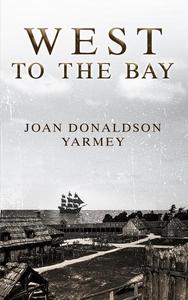
My Dream Job by Joan Donaldson-Yarmey
https://books2read.com/West-to-Grande-Portage-V2
https://bwlpublishing.ca/donaldson-yarmey-joan/
My Dream Job
My desire to travel goes back to when I was in high school. There were so many places and things I wanted to see in the world but I had no idea what job would pay me enough to be able to travel around the world. Then I decided the only way I could see all the countries and their cities, historic sites and scenery was to become a stewardess. Just that name should tell you how many years ago that was.
To help ensure that I would have a better stay in the places I visited, I studied French, German, and Russian so I would know some other languages for when I landed and maybe stayed over in another country. In my last year in high school a job show was held at my high school and I went to talk with the representative from an airline that had a booth there. She was dressed in her uniform and was very nice.
I explained that I wanted to be a stewardess and asked for information. She told me that I had to be a certain height and weight, which I was. She said that all stewardesses had to wear a girdle even though their figures might be perfect. I was okay with that. Then she told me that anyone who wore glasses could not be a stewardess. I was devastated, since I needed prescription glasses but seldom wore them. I went to an optometrist to get contact lenses. This was when they were still made of hard material and my eyes could not adjust to them.
So I gave up my dream of being a stewardess.
I married after graduation and had wonderful children who have given me wonderful grandchildren. After taking some courses I became a writer, starting out with one article and then adding some historical and travel articles. I attended a course on finding a publisher and spoke with the publisher afterwards about an idea I had. He invited me to visit him at his office which I did and we decided I would write two travel books on the province of Alberta. I travelled extensively through Alberta and was amazed at the scenery, history, and sites in my home province. When those books were a success, I did the same in British Columbia, the Yukon, and Alaska. These I called my backroads series.
I began my fiction writing career with mystery novels. I gave my main female character the parttime job of being a travel writer. She always gets involved in some sort of mystery when she is travelling and researching articles for magazines. I called the three novels The Travelling Detective Mystery Series. I hope to one day write a fourth in the series.
I belong to a dragon boat race team and I have taken part in international festivals in Caloundra, Queensland, Australia (spent four week visiting the sites of Queensland and New South Wales then a week in Fiji), Sarasota, Florida, USA, (my husband and I travelled through two provinces and nineteen states on our way there and back home) and Florence, Italy (I did two bus tours, one cruise, and rode trains and stayed in hostels while visiting twenty countries.) I’ve also been to Japan and China with my sister.
So not realizing my desire to become a stewardess, or flight attendant as they are called today, has not stopped me from doing the travelling I dreamed of when I was younger.
I was born in New Westminster B.C. and raised in Edmonton.I have worked as a bartender, cashier, bank teller, bookkkeeper, printing press operator, meat wrapper, gold prospector, house renovator, and nursing attendant. I have had numerous travel and historical articles published and wrote seven travel books on Alberta, B.C. and the Yukon and Alaska that were published through Lone Pine Publishing in Edmonton.
One of my favourite pasttimes is reading especially mystery novels and I have now turned my writing skills to fiction. However, I have not ventured far from my writing roots. The main character in my Travelling Detective Series is a travel writer who somehow manages to get drawn into solving mysteries while she is researching her articles for travel magazines. This way, the reader is able to take the book on holidays and solve a mystery at the same time.
Illegally Dead is the first novel of the series and The Only Shadow In The House is the second. The third Whistler's Murder came out in August 2011 as an e-book through Books We Love. It can be purchased as an e-book and a paperback through Amazon.
i live on a small acreage in the Alberni Valley on Vancouver Island.
Friday, May 23, 2025
Ivy Cottage by Victoria Chatham
Many years ago, on a bright April day with cotton wool
clouds whisked across a clear blue sky by a strong breeze, I first saw Ivy
Cottage. I stood at the entrance of the driveway leading into the garden, where
daffodils danced at the feet of a row of cordoned apple trees covered in
blossoms. The lady of the house sat on the lawn in the sunshine, engrossed with
her spinning wheel, and I felt as though I had wandered through a time-travel
portal.
The term 'cottage' was quite misleading, as this
three-hundred-year-old Cotswold stone and brick property was actually a
five-bedroom house. We made an offer, which the vendor accepted, and in August
of that year, we moved in. The garden had to take care of itself that autumn
and winter, but as it began to thrive the following spring, I discovered many
intriguing things growing spontaneously.
Aside from the fruit trees, there was a large vegetable patch, a raspberry patch, and my favourite—a sprawling wild garden I never touched. Rabbits hid there, foxes used a regular trail through it, and a hedgehog raised her babies there for several years in a row. Bees loved the foxgloves and honeysuckle, while butterflies were drawn to the lilacs and buddleia. Each year, appearing unannounced in a different part of the garden, were poppies, ox-eye daisies, and the delicate and shy fritillaries.
![]() |
| rhsplants.co.uk |
Another annual visitor was the teasel, which appeared in various parts of the garden each year. Known since before Tudor times for its woollen production, the mills in our area purchased locally grown teasels.
![]() |
| thompsonmorgan.com |
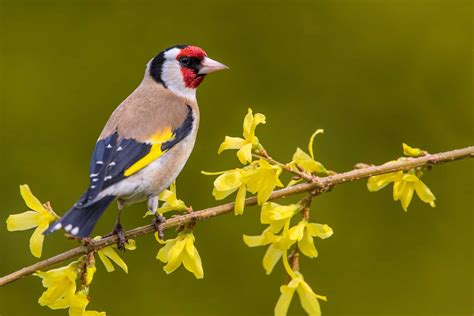
The teasels were dried, and their spiky heads were then used to raise the nap on the fabric. This process was known as ‘teasing.’ In the nineteenth and early twentieth centuries, locally grown commercially harvested teasel crops became a thing of the past due to cheap imported teasels from Spain. My teasels attracted not only pollinators when they came into flower, but once they went to seed, they provided a feast for various birds, particularly
goldfinches.
| a-z-animals.com |
The goldfinches weren’t the only birds inhabiting the garden. We had a noisy wren nesting in an old wall and a robin in the potting shed. Chaffinches and bullfinches, lovely as it was to see them, became spring pests once the fruit blossoms appeared. House and hedge sparrows, blackbirds, and thrushes all came and went, alongside an infrequent woodpecker and an occasional blue jay.
Being a single working mum meant I often didn’t tend
to the garden as much as I would have liked. When the grass grew too long, I
borrowed a neighbour’s goats to trim it. The only issue with this was that
they had to be tethered to a ground peg, resulting in various odd-looking
crop circles. It was either that or have the garden completely stripped.
During the ten years we lived in that house, the vegetable and raspberry patches were expanded, and I cultivated various herbs in reclaimed clay chimney pots acquired from a local demolition yard.
![]() |
| pinterest.co.uk |
However,
none of this brought me the same satisfaction as my wild garden and all its
inhabitants, both flora and fauna.
Wednesday, May 21, 2025
An intro to D.L. Dixen, my "Skidded and Skunked" co-author
I stopped at a bookstore last week and the owners asked an obvious question, "Who is D.L. Dixen and how did she become your "Skidded and Skunked" co-author?"
Our collaboration began with "Prairie Menace" after my long-time cop consultant passed away. Ms. Dixen introduced herself at a library event and after explaining her law enforcement and legal system experience, she offered to proof my manuscripts. From there she advised me on horse/farm issues, she helped create the CJ Jensen character, and her basset showed up as a character in the Pine County series. She's been a key collaborator and editor for several years, so it was only logical that she contribute her writing skills.
Here's the bio she wrote for "Skidded and Skunked": D.L. Dixen makes her home on a small hobby farm with her family, ponies and basset hound, not far from the Pine County border. Her professional background ranges from the criminal justice system to secondary English education. Her professional experiences, coupled with her deep familial Pine County roots, make for good fiction in the Pine County mystery series. Skidded and Skunked is her first mystery.
Reviewers have posted many positive comments about our collaboration. This review is by Julie C. on Goodreads. "This was my whirlwind introduction to the Hovey and Dixen Pine County series. The situations this pair of writers came up with both shocked and amazed me. I can't count the number of wide-eyed moments I had. I am looking forward to getting to know the Pine County crew as the series grows!"
Check out "Skidded and Skunked", the latest Pine County mystery from BWL Publishing.
https://www.amazon.com/Skidded-Skunked-Pine-County-Book-ebook/dp/B0F2GWWSLZ
A Romance Parody. You Were Supposed to Laugh, by Diane Scott Lewis
“How is your sojourn in London, my lady? A sudden urge to travel, had you?” Griffin smiled at the rising anger in her blue eyes.
“How dare you follow me, sir. And drag me into bushes.” Miss Pencavel pulled away from him, chin jutted out. “I told you my wishes in Cornwall. You have wasted your time if you’re here to change my mind.”
“Truth is, I did have business in town, so it’s not a total waste.” He rocked back on his heels, arms now behind his back. His actions were irrational, and totally alien to his usual demeanor. “You intrigue me, Miss Pencavel, such as a wasp might intrigue one. You wonder how close you may hover before being stung.”
He baited her, and enjoyed it. This slip of a girl provoked him, and that was disconcerting. Most females he understood as connivers or simpletons. Miss Pencavel appeared to be neither. Her eyes shone with an innate intelligence. Why had he followed her into the garden—while he had to admit that he’d searched for any sign of her in town—when he had little use for marriage? A wife like her would only get in his way.
![]() |
| Thomas Rowlandson 1780s, "Entrance to Vauxhall Gardens" |
“I assure you, you will feel my sting.” She backed up a step and took another bite of her dessert. “You said cruel things about my mother. Even if they were true, you were still despicable.”
“I must apologize; I should have waited until I knew you better before being so straightforward.” He softened his words as a twig crackled under his buckled shoe. “But are you like your mother, partial to servants and other low-lifes?”
“I might be partial to whoever takes my fancy, a sailor, a groom, a particularly handsome nightsoil man.” She scrutinized him closely. “I’ve heard you have sinister inclinations, not that such things would bother me, being the free-thinking person I am, but I’d rather not be troubled with you.”
Griffin pondered what she really knew. He decided to deride her, to nudge her off-balance. He resisted the urge to brush a stray leaf from her cheek. “Are you already ruined, my girl, is that why you shy away?”
“I have been in various positions where I might have been ruined, but not in that compromising position I know nothing about, and you no doubt insinuate.” She licked her spoon, slowly.
![]() |
| "Beer Street and Gin Lane" by William Hogarth 1751 |
Many reviewers took offence at my fun-poking, but it was not meant to be taken seriously. My book club thought it hilarious.
Tuesday, May 20, 2025
'Crabbed age and youth'...by Sheila Claydon
Popular Posts
-
https://www.bookswelove.com/search?q=dekelver It is 2047, two years since Vancouver was devastat...
-
D.L. (Deanna) Dixen and I have written two Pine County mysteries together and this latest release has possibly the most twisting plot and i...
-
By Gail Roughton Jude Pittman and I have a multi-faceted relationship. She’s my publisher, my writing partner, my friend. Our lives hav...
-
Dear publicist: I am not interested in paying thousands of dollars for your publicity services offering a slew of interviews on nat...
-
It's hard for me to believe that it's been six years since my first romantic suspense novel was published. Family Secrets wasn...
-
We all know about black cats and their associations with “witches” and bad luck if one happens to cross your path. But what about bla...
-
The English language is rich with idioms, odd turns of phrase, and regional colloquial isms. For a foreigner trying to learn English (w...
-
The Curse of the Lost Isle series starts in the time of Charlemagne and the Viking Invasions and ends during the Crusades.Find these books o...
-
I am a Seattleite. I wasn't born there, but when I stepped out of the airport, I knew I'd come home. In the winter, the North...
-
Of all the physical sciences, none seems to defy logic and understanding as does astronomy. Or so it seems to me. The numbers alon...


.jpg)


.jpg)


.heic)