Wednesday, June 26, 2024

A Look at Distant Mountains (Settlers Book 2) Tricia McGill


Find all my books here


My Settlers series was written as a tribute to the magnificent pioneer women who battled alongside their men to open new frontiers in far flung corners of the globe. It was inspired by letters sent from Australia home to Britain by these women who were often torn away from the family and homeland they loved, forced to endure all kinds of deprivation, but faced every struggle with strength and fortitude. In this day of washing machines, supermarkets and homes filled with mod-cons it is difficult to imagine a life without these amenities, let alone to perceive what it must have been like traipsing after your menfolk to settle in unknown parts, often over miles of dangerous territory.

Book Two Distant Mountains carries on from where we left the characters in Mystic Mountains, and tells Jeremy’s (known to all as Remy) story. He has been transported to the settlement of Botany Bay, a town that, although progressing, is still very much a place ruled by the aristocrats and free settlers. Remy makes the mistake of falling in love with the daughter of one of these free settlers who happens to hate convicts, in fact anyone of a lower class. Remy sets out to improve his circumstances but, on the way has to overcome many obstacles before reaching his goal.

While researching this book I needed to delve into the conditions that were suffered by the military along with the convicts in Moreton Bay. Most convicts were sent north from Sydney Town as Moreton Bay was considered so isolated that no convict would try to escape and if he did then would have little chance of survival. It is difficult to comprehend that this settlement became the Brisbane we know today. But over and above all else, Distant Mountains is a story of enduring love.

"Amidst the sweet romance and tenderness, Ms. McGill adds the excitement of spousal abuse, bushrangers, forced marriage, kidnapping, and Remy's imprisonment and torture. She shows that a talented author can take a romance and turn it into so much more.” Brett Scott The Romance Studio.

Buy here from your favourite bookseller: https://books2read.com/Distant-Mountains

 Excerpt from Distant Mountains:

Prologue

Moreton Bay

September 1828

A kookaburra warbled its silly head off. Laughing, no doubt, at the stupidity of man. And the cruelty.

The sun beat down mercilessly as the cat-o-nine tails whirled and cracked. Dear God! Rem thought. What had he done to deserve this agony? What had brought him to this—fixed to this triangle like a carcass nailed to a barn door.

He tasted blood as he bit down on his lip. Bile rose in his throat. He wouldn’t scream. Through the battering pain, he registered the quartermaster sergeant calling out stroke number thirty-six. Blood flowed freely down his back now, soaking his trousers.

The magistrate used the cat for revenge.  Rem’s offence was so piffling it was laughable—if a man felt like laughing, as the bird up yonder did. Fifty lashes were the most the magistrate had been able to impose for a single offence. Thank God.

Through the lancing pain, Rem knew he must not scream, must not blubber and forever be known as a crawler. Hanging onto consciousness by a thread, he sagged against the bloody, filthy bars of the triangle; a frame tainted by the blood of so many men, and now would carry his.

“Cut 'im down!” the scourger shouted, and through his agony Rem recognized his punishment had ended.

Tripping over the hole made by the scourger’s feet during the vile beating, Rem was kept upright by Scab and Salty, the only two men he could vaguely term as mates in this hell. In a flagrant act of disdain, he spat at the feet of the man who had inflicted the agony he now suffered as he stumbled and was half-dragged away. The man who gave him the “red shirt” swore viciously, and before he lost consciousness Rem warned himself to watch what he did in future. These bastards would soon have him back on the frame if he didn’t toe their line.

Chapter One

June 1826

Freedom was sweet.

The air was pungent after a short spell of rain. It was cold, the chill air biting, but Rem reckoned he’d never really feel the cold again. Not in this country, where the sun shone more often than not; where the coldest day only called for an extra layer of clothing. He had almost forgotten the biting winds and bone-chilling cold of London. The thoughts had receded into some dark corner of his mind, along with the memories that still periodically invaded his sleep. Memories of hunger and desperation; days of despair when he had wondered if life was worth all the bother entailed to get through each day.

“Uncle Remy, where are you?”

Rem grinned as he pushed himself onto his elbows. His nephew had sought him out again. Not that he minded; the boy was good company, always ready for a new lark. Seven come September, Tim was mature for his age. Boys grew up fast out here in this new land. Here a lad like Tim learned early on as they all did that he had to work the land; put every ounce of his energy into it to reap the benefits.

“Over here, lad.” Rem watched Tim, hair the color of ripened corn drooping over his forehead, trotting toward the riverbank. One of the sheepdogs, a black and white mongrel, loped at his heels. Tim always had a dog nearby and it would be strange to see him without one of his perpetual companions.

“What you doing sitting out here, Uncle Remy?” Tim squatted on his haunches by Rem’s side. “Mama was getting all of a fluster because you were supposed to be working on the new barn, and the foreman said you’d disappeared.”

“Not disappeared, boy, just taking a break. And, we both know your ma can get herself into a state over the simplest of things. Don’t the air smell good?” Rem put his head back and sniffed appreciatively.

Tim nudged him, sighing. “Air doesn’t smell, silly. The cattle stink, so do the horses after they do a business, but air hasn’t got a smell.”

Rem ruffled the golden hair. Pushing himself to his feet, he hauled Tim up with him. “Come on, let’s go make my sister happy,” he said, swinging Tim easily onto his back. He strode up the hill with his burden, the dog yelping at their heels. The boy gripped him about the middle with his knees and shouted encouragement at his mount.

His sister, Bella, four months along with her fourth child was at this irksome stage. Her husband Tiger was often off with his shepherds, laborers, or field hands, and at these times she liked to know Rem was near at hand.

Rem had been out here beyond Bathurst with them for a year now, and she still often stared at him as if she couldn’t quite believe they were together. He wasn’t surprised by that—he often had to pinch himself to prove it wasn’t a dream. At times he dreaded he would find himself in the hellish hold of the transport ship. Or worse, at Newcastle where he could even now be with the gangs quarrying stone or working down the coal mine. Worst of all he could be with the lime-burners; the convicts who burned the seashells used to manufacture the lime used as mortar. By all accounts, it was the vilest job a man could have.

Tiger could be a hard taskmaster at times, never letting him get off light with any job. Not that Rem would expect to. He would be eternally grateful for Tiger’s intervention on his behalf. Tiger had seen Rem released into his care when the authorities were just about to send Rem off to the hellhole Newcastle had become. If at times he got itchy feet and the tasks became tedious, Rem only had to recall the awful days spent on the treadmill in Sydney before coming out to Tiger and Bella’s property here, west of the Blue Mountain range.

Tiger had built Bella a fine house of stone, with two floors and a veranda that went right around its sides. It sat proudly on the ridge facing the river, outbuildings now springing up in its surrounds. The barn Rem was supposed to be helping to erect was the latest of these buildings.

“Here you go.” Rem helped Tim off his back as they reached the six steps that led up to the front porch.

“See you later,” the boy yelled as he ran off, his dog at his side.

“Where you off to in such a hurry?” Rem called after him. But Tim was already out of earshot, likely in a hurry to escape his mother’s schooling. Not that he would be able to do that for long, Bella was strict about his lessons and set aside at least three hours a day for that activity.

“Remy?” Bella’s sharp call brought him up short as he turned toward the almost completed barn.

“That’s me.” Changing direction, he grinned and mounted the steps. His sister stood by the open door, wiping her hands on the apron covering the front of her plain blue woolen dress. Rem didn’t think he’d ever get used to having such a beautiful woman for a sister. Those around her didn’t notice the limp she’d had since a bolting horse trampled her in Stepney years ago.

Her rich auburn hair formed a loose bun at the nape of her neck, but tendrils had escaped and framed her expressive face. Her green eyes sparked with merriment “Where did you sneak off to again?”

“I was just taking in the air, love. Isn’t it a fine day?” He half-closed his eyes, looking up to the sky, where not a smidgen of sun peeped through the gray clouds.

“Fine?” She made a disparaging sound in her throat. “You’ve got a vivid imagination.” There was a soft chiding note in her voice. His sister knew more than anyone that any day was fine while they were able to walk free and breathe the air of free men and women.

Yes, he was still a convict, with five years to go before he could claim his ticket of leave, but compared to life before Tiger rescued him, this was the next best thing to being able to hold his head up as a free man.

Bella’s nursemaid, Agnes, smiled shyly at Rem as she joined her mistress on the porch. Rosie, the eight-month-old and youngest of Bella and Tiger’s brood, rested on Agnes’ hip. Agnes, seventeen and a plain little thing, had been with Bella and Tiger since they set out on their epic journey across the mountains in 1824.

“Isn’t it a fine day?” Rem asked the girl, knowing she would agree with him if he declared it was as hot as hell, and the sun had blistered his skin. It was flattering to be idolized. Bothersome at times, but nonetheless a wonderful thing to have a female willing to do anything he asked. Some devil inside him often wanted to see to what lengths she would go to please him, although his kind heart wouldn’t allow him to do it.

“It certainly is,” Agnes agreed, as he’d known she would. “'Tis a bit cool, but that’s not to be sniffed at. Beats summer when the sun makes you shrivel.”

Agnes didn’t like the hot weather. She complained it burned her fair skin, brought her out in freckles, made her skin go blotchy, and made her feel weak as a dish rag. Although complained wasn’t the right word to use; Agnes never did anything quite so definite. She was too mousy and insignificant. A small apologetic grumble was about as close to a complaint she dared to venture.

Bella nodded to Rem and went back inside the house. Agnes’s skin turned to the color of a beet as she stared at Rem. Her eyelashes were so light they could barely be seen—this only added to her mouse-like appearance. She jerked the baby higher into her arms, and bobbed Rosie about on her ample hip until the child squealed. As if surprised at what she’d done, Agnes crooned soft words of apology to the baby.

Rem knew he shouldn’t do it, but the girl begged to be teased. Moving within a foot of her, he gave her the smile more than one maid told him was appealing. “How’s the little mother today?”

“I’m fine, and how are you?” She nibbled on her lower lip as her eyes adored him.

Rem shrugged. “Tell the truth, Aggie, I’m bored to my high teeth. There are few chances out here to ease the monotony. I know I should be grateful for Tiger taking me on and bringing me here, but I’m not made for the country life. I miss the noise and bustle of the city. Not that I wish to return to Stepney.” When she shook her head and gave him a look of condemnation that he could be so ungrateful, he hastened to add, “But a bit of excitement would add spice to this dull existence now and then. If you know what I mean?”

“Seems to me the city life only brought you into more strife than a body needs,” she scolded softly.

Rem moved in closer and ran a finger over the blush on her cheeks, chuckling at her huffy response. “True.”

Glancing about, he bent in closer, until he almost touched noses with her. He could feel the heat coming off her rounded body, could practically feel the shiver he guessed ran through her at his closeness. “But there’s strife, an’ then there’s other things the town has to offer.”

“Rem O’Shea, seems to me you don’t know when you’re well off.” She hunched a shoulder when he continued to stroke her cheek, but she didn’t step out of his range, as any city miss would have done. She was a sweet little chit, unworldly and naïve.

Rosie reached out to grab at his hair, and he laughed as he took the tiny fist into his hand and kissed the tips of her fingers, which pleased the child, and made Agnes tremble even more.

“Oh, I know well enough. But don’t you yearn for a bit of excitement in your life now and then, Aggie girl?” He watched with a kind of fascination as the blush fluctuated on her face. What a shame she wasn’t more prepossessing. What a pity he didn’t share her infatuation. That at least would ease the boredom that gripped him at times until he could yell. Of course, he liked to think he wasn’t so fickle all he thought of was a wench’s looks, but her temperament was so bland. Rem liked his women with fire and fervor and a temper to match his own.

“Excitement? I get more than my fair share of that chasing after young Tim, Annie, and this little 'un.” She glanced at the babe in her arms, smiling down at Rosie affectionately. The child pinched Agnes’ nose, making it turn an unbecoming shade of red. “Then there’ll be another one come November, so I’ll have my hands full.”

“Mm, my sister and Tiger certainly are helping to populate this part of the world, ain’t they?” He laughed, chucking Rosie beneath the chin. “But looking after toddlers and tots ain’t my idea of fun, Aggie. I had something different in mind.” He eyed her plain garb, scuffed boots, and mobcap. Her clothes did nothing to enhance her round shape. “Don’t you ever want to dress up and traipse around like the gentry?”

“I’m not gentry, and can’t see the point in yearning after the impossible,” she stated pragmatically, shrugging. “I’m happy to have a good home here with the missus and master. And you should be too.”

Rem sighed and turned to stare where the mountains loomed in the distance, like an impenetrable barrier between him and the excitement he craved. She was right, of course.  He should be happy, but he yearned for so much more out of life than tending sheep and building barns and tilling the soil. Tiger was happy enough building his empire, and Bella was content to stand at his side and bear his children. If only Rem didn’t have to wait another five years to gain his ticket of leave, and his freedom.

Without another word he sauntered off to the barn, hands dug deep into the pockets of his breeches.

* * *

Agnes watched his broad back, her eyes feasting on the strong length of his legs, the width of his shoulders, his head of rich dark red hair that reminded her of burnished chestnuts when the sun caught it, turning it to flame. The familiar yearning weighed heavily on her heart. If only she were even slightly pretty. If only she were more intelligent and bright as a penny, as were most other girls of her age. She’d learned a lot sitting in on lessons the mistress gave Tim every day, but knew she was still as unworldly as when first plucked from the orphanage nearly two years ago by the master, to come here over the mountains with them as nursemaid.

There weren’t many young females around these parts, but the few who had come west with their kin were certainly more fetching than she, with her ordinary brown hair and face that wouldn’t stand out in any crowd, large or small. Her bosom was too big for her body, making her top-heavy, or so it seemed. Her behind stuck out so she looked like one of the ducks waddling about. That the babies fitted snugly on her over-large hips was about all that could be said in her body’s favor. Even if she forced herself into a corset, she doubted she would look any more attractive. No, an ugly duckling she was, never to become a swan.

With a drawn-out sigh, she pressed a kiss on Rosie’s cheek. This would likely be her lot in life. To look after other folk’s children, to die an old spinster out here in the wilds; never to know the joy of nursing her own babe at her breast.

“No use pining for things that will never be, eh?” she asked the child as she stepped back inside and walked along the passage stretching from the front to the back of the lower floor of the house. Entering the kitchen, she put a bright smile on her face.

The family’s second child, Annie, who would be two-years-old in a month, sat on a rug near the stove that threw out a welcoming heat; the rag doll Agnes had made for Annie’s last birthday was cradled in her arms.

The mistress was helping Gracie prepare dinner. The smell of roasting lamb filled the air. Gracie, in her fifty-seventh year, was as cheerful as a rooster surrounded by hens, and never seemed to yearn for things beyond her reach. Gracie came over on the same transport ship as the mistress, and the two were as close as two women could get without being sisters.

“'Ullo dearly,” she chirped. “'Ow’s about a cup o’ tea, eh?” That was Gracie’s answer to all ills.  

Agnes pulled a face. Gracie was unmarried and seemed happy enough with her lot in life. She received an offer of marriage in Sydney, but chose to turn her suitor down in preference of joining the mistress in this part of the world the master was slowly taming.

“Thank you,” Agnes said as the older woman put the steaming cup on the table. Bending, Agnes put Rosie in the cradle. She sat down and sipped the drink, one foot rocking the cradle, her mind on the tall man with shining red hair who held her heart in his capable hands but didn’t want it.


Chapter Two

July 2 1826

Rem stared at Sara Greenwood, unable to take his eyes off this beauty. She was, without a doubt, the most entrancing creature he’d ever seen. With hair and eyes as black as sin and flawless skin like pure porcelain, her face was that of a goddess. A bloom on her cheeks gave her face a vital sheen of good health. How his fingers itched to unpin her silken tresses from their neat coils. He ached to touch that skin to see if it felt as soft and downy as it looked.

She carried her youth and beauty with a proud bearing missing in so many of the young women in the colony; these women brooded and sulked, despairing of their lot in life after being dragged to this awful continent by their fathers against their will. Most had pasty faces they kept well hidden beneath large-brimmed bonnets to shield them from the sun they saw as an enemy to their complexions.

Rem thanked God it was a Sunday, and they allowed him to join the small gathering. The thought he might have missed meeting this goddess made him shudder. Tiger made a habit of inviting all newcomers to the district to his and Bella’s home soon after their arrival. The Greenwoods had recently settled here after living in Sydney for five years. Bella met them briefly on a trip into town, and Rem knew by her remarks she wasn’t particularly enamoured of Edmund Greenwood or his timid wife Eleanor. Rem couldn’t give a damn about them, but was already half in love with their daughter.

“So charmed to meet you,” Sara was saying to Bella and Tiger, who were decked out in the finery kept solely for such occasions.

Extending her long, slender fingers, Sara took their welcoming outstretched hands one after the other. Turning to Rem, she offered the same delicate hand, and he bowed over it reverently. Her scent filled his nostrils, battered at his senses. Like a garden in full bloom, or a bowl of roses. Not very poetic, he knew, but she would forever remind him of a spring day; an English one, where rosebuds sent out their fragrance to entice the bees, and butterflies were entranced by the colours.

Rem realized his breathing was as uneven as his heartbeat. As he straightened, their eyes met, and for one infinitesimal moment Rem felt sure a message passed between them. Could she be as smitten as he?

“We are delighted to meet you at last,” Bella said, and for a moment, Rem wondered what she was talking about. So entranced was he, everything had gone out of his head, except this vision of loveliness.

“How do you find it here in Bathurst?” Bella asked graciously as they all took seats on the porch.

Sara spread the skirt of her blue dress about her knees, her dainty feet clad in black pumps peeped beneath the hem. Those bewitching eyes, filled with a sort of devilment met Rem’s as Bella continued, “I’m so glad the weather has seen fit to hold.” She looked to the sky, where a weak winter sun tried its damnedest to shine through the gray clouds.

“As I’m mighty glad it’s decided not to rain before we’ve had a chance to settle in our house,” Sara’s burly father said, as he settled his large frame on a chair, and huffed. “I must say I’m also glad we brought plenty of help with us to this godforsaken neck of the woods.” He had a perpetual air of grievance about him, as if the world should have tried harder to do better by him.

“'Tis a good life, once you grow used to it, and if you’re prepared to work hard for what you wish to attain, it’s very rewarding,” Tiger said, looking out over his land. It was obvious to Rem his brother-in-law was no more enamored of this man than he was. Edmund Greenwood was brusque to the point of rudeness and loud-mouthed. How did an ugly brutish man manage to sire an angel like Sara? And how did her meek and homely mother ever produce such a beauty? Perhaps she had been adopted. The thought made him smile, and he glanced over at his angel in time to see her watching him, her delicate brows raised.

Turning to Sara’s mother, Bella offered, “You must call on me for any help you need. We lean on each other out here where months can go by without us seeing anyone from the other side of the mountains.”

 The pallid, insignificant woman looked to be about sixty in age, but was more than likely only in her forties. Rem suspected years of living with a boor had etched those deep lines on her face. Her pinched mouth looked forever on the verge of protest. Though, Rem doubted she would ever dare to come forth with a complaint.

“Thank you.” The words came out on a thready whisper. Glancing up like a scared hare, Mrs. Greenwood added, “I didn’t want to come,” earning a wrathful glare from her husband.

“Balderdash!” Edmund waved an arm, his brows beetling, and she seemed to shrivel even more. “You’ll soon get used to it. And with kindly ladies like Mrs. Carstairs here” —he gave Bella a sickly, condescending glance—“you’ll soon acclimatize.”

“I found it very strange when I first arrived in the colony.” Bella smiled at Mrs. Greenwood, and Rem thought, for the umpteenth time, what a lovely woman his sister was. “And please call me Bella,” she invited. “Everyone does. We don’t stand on ceremony here. Being so isolated we have to become friends.”

Rem wondered if these people knew his sister and her husband had both been convicts, sent to the colony by the British Government, same as he had. No doubt they did, for news travelled fast despite the great distances. Gossip was rife among the Exclusives and the Emancipists.

“‘Course you did. We all have to learn to change.” Edmund gave his wife a look that said she would have to change, or accept his wrath. Her hands trembled, and she twined them together on her lap.

“And how do you like living so far from the town?” Rem turned to ask the beauty seated beside him.

She shrugged. Her pouting lips were as soft, full, and pink as the rosebuds she smelt of. His insides ached with the desire to see if they tasted half as sweet as they looked. Jesus, he wanted to ravish her, to strip her and taste every part of the delectable body he knew the wool of her garment hid.

Her eyes slid from his dark red curls to the boots he was glad he’d polished for the occasion. Something deep inside him began to shake with his response.

Barely past her seventeenth birthday, so Bella had told him, and already she wore the look of a woman in control of her life and her responses. How he would like to help her lose her cool control. He made up his mind that would be his driving purpose in life from now on; sure in his conceit he would win her no matter what.

“I would have liked to stay in Sydney Town. I have my governess and companion still, who accompanied us over here, so I will have to bear it. For a while.” She sounded utterly bored, and Rem wanted to stand up and shout that he would take her wherever she yearned to go.

Her father gave her another of his wrathful glares and boomed, “Bear it, will you? 'Tis my belief there’s too many wrong 'uns in the town now. Wanted to stay over there, they did.” He jerked his head toward his long-suffering wife and his beautiful daughter and snorted. “You talk some sense into them, madam.” His smile reminded Rem of a conniving crook.

“I wasn’t too happy about leaving the town myself,” Bella said, giving Tiger the special smile she kept for her husband; one that left everyone else out of the loving and intimate world the two shared.

Rem now knew the full story of how Bella lost her first husband, Dougal, and her second-born son Dougie, on the dreadful journey across the mountains to settle over here. She battled Tiger every step of the way in those days, fighting her love for him. Rem knew that now she wouldn’t consider going back to town, even if Tiger was to give her the option, which Rem knew he wouldn’t. His life was here now, with his family, expanding his empire. Oh, they argued often still, but their fights were the quarrels of lovers; and any onlooker, including himself, always knew the rows were made up as only lovers’ tiffs could be reconciled.

“As with all things, it becomes better once you grow used to the isolation,” Bella continued. “We have quite a few families settled here now. Our small community manages to get along despite the differences in our backgrounds.”

“‘Course they do,” Edmund bellowed, as if no one would dare to argue the case with him.

“I hear you left a manager in charge of your business in town,” Tiger said, successfully managing to conceal the disdain Rem knew Tiger felt for this brash man. Rem guessed this was likely now multiplied after seeing the way Edmund treated his wife and daughter.

“That’s right.” Greenwood preened as he smiled condescendingly. Tiger had told Rem and Bella of how Greenwood arrived in Sydney five years ago as a free man and opened a store stocked with merchandise purchased cheaply at ports of call on the voyage over.

“My emporium is one of the largest and most successful now,” he boasted. Grimacing, he shook his head. “If only we didn’t have to put up with so much riff-raff in the people I’m forced to employ.”

Tiger looked toward the mutton, roasting above a fire next to the garden, Bella’s pride and joy. One of the hands signaled it was ready. “It looks as if the meat is about done.”

They strolled to a table laid with cloth and cutlery, where Rem ensured he sat beside his beautiful enchantress. He saw Bella’s raised eyebrows, but chose to take no notice of his sister’s silent warning.

Gracie began to serve, aided by one of the new women brought from Sydney recently to help with the household chores. They served steaming dishes of turnips, carrots, and potatoes.

“You might be wishing you'd stayed in Sydney, but I can’t tell you how happy I am you're here.” Rem gave Sara his most beguiling smile, one nurtured in the past year. Agnes, usually the recipient of such smiles, tended the children at a smaller table set aside for them. Her antipathy toward the beauty at Rem’s side was blatant. If looks were daggers, Sara would have been dead within five minutes of Agnes setting sight on her. Poor insignificant Agnes.

“I don’t know which is worse, to be candid. I wished we’d never come out to this country of savages, but my father was convinced a fortune was waiting to be made.” She flicked a glance at her father, now boring Tiger with a discourse on trading practices. Tiger’s expression clearly showed his indifference to her father’s monologue.

“And has he made his fortune yet?” Rem didn’t take his eyes from her face. Every move she made entranced him more and more. He couldn’t give a brass farthing for her father’s possessions, but anything that got her talking was worth the effort.

“He’s wealthy, if that’s what you mean. My mother and I are allowed to purchase whatever we need to make us presentable in society.”

“Society?” Rem laughed, glancing about. “Hardly that out here.”

She picked sparingly at the food set before her. “You’re right. We could all walk around in plain clothes and not give a fig for our appearance, and who would know or care? It really is a land of savages.” The poignancy of her quiet statement struck him in the heart.

“I would care.” Rem stared at her hard, and thought, such a hothouse plant should be pampered and spoiled, brought up amongst the society in London, not dragged to a godforsaken place like this. “Never change, sweet Sara. Always stay as beautiful and elegantly attired as you are now, no matter the cost or effort. Promise me.”

“All right. I will promise you that.” Her small laugh made his gut wrench. “Will you show me around the property?” she asked, glancing down the table.

The meal was almost at an end, and the others were still engrossed in a debate on the merits of sheep farming versus trading; Tiger enthusing about the price of fleece on the English market.

She had a way of fluttering her eyelashes that sent Rem’s heart into a spin. Trying not to show his eagerness, and thus appearing like a smitten schoolboy, Rem rose slowly, bowing over her hand. “I would be honored.” He pressed a kiss on her knuckle and was pleased to see her soft cheeks turn delightfully pink.

“Where are you off to?” Edmund bellowed, interrupting their discussion, as she settled her skirts about her with a pat of the hand.

Rem held his breath, expecting her father’s annoyance to deter her, but then she said sweetly, “Rem is going to show me around, Papa,” and gave Edmund a peck on his florid cheek. She smiled demurely at Bella. “And I need to walk after such a splendid meal. Thank you, Mrs. Carstairs. It was most enjoyable. But I shouldn’t have eaten so much.”

“Please call me Bella,” Bella insisted, waving them on their way. “Go on with you, and enjoy your stroll.” Rem grinned at Bella’s meaningful look. A look that clearly stated he was to watch his step with this beauty, or bear the wrath of her father.

Rem knew Greenwood wouldn’t make a scene in front of Bella and Tiger and smiled to himself. “Come, I’ll show you the orchard Tiger planted soon after they arrived here.” Offering his arm, he inhaled her fragrance as she hooked her hand in his elbow.

When they were out of earshot of the others, he said softly, “You smell as sweet as a garden full of blooms.” 

She tapped him on the chest with her fan and smiled, showing dear little dimples in her cheeks. “Hmm.” With a chuckle, she wrinkled her nose pertly. “I’m surprised I don’t stink like one of the horses, considering our mode of transport.”

“There’s no decent lanes or carriage ways yet. It’s difficult for you to be jolted over the stubble in your wagon. Tiger’s working hard at improving that. Soon there’ll be a passable road connecting the properties on this side of the river. You should have seen it last year when I arrived.”

“Is that how long you’ve been here?”

“Eighteen months to be precise. The house was half-built, and we lived in sod huts.” He grimaced.

“Don’t you get bored out here in the middle of nowhere?” she asked as he led her around the almond trees toward where the stone-fruit trees grew. They were well away from the house now, and he looked over his shoulder to see if they could be watched from the table.

“Truth is, bored out of my head, Sara.” With a hand on her back he propelled her to a seat Tiger had positioned for Bella in the shade of what would eventually be a flourishing apple tree. She shivered, and he asked, “Are you warm enough?”

“It is cooler here.” She hugged her arms across her chest.

“Would you like to go back?” he asked, praying she would say no.

“No, would you?” Slanting him a provocative look, she flashed him a wicked smile, her dimples more pronounced.

“I want nothing more than to be here with you.” Rem took off his jacket and draped it across her shoulders. “Is that better?”

“Much.” She shrugged into its warmth. “Now you’ll be cold.”

“Me? Not while I’m this close to you. You set my blood afire, did you know that?” Rem longed to plant a kiss on one of those indentations on her cheek, to explore it with his tongue. He held her gaze and reached for one of her dainty hands.

Her chuckle was charming as she tapped him again with the fan. “Gentlemen aren’t supposed to say things like that to ladies,” she admonished, but he got the distinct impression she wasn’t the least affronted by his bluntness.

“I ain’t a gentleman, Sara. I’m a convict, plain and simple. Does that bother you?” Sitting beside her, he pressed his thigh to her skirts. She didn’t move away, although her look said she was slightly shocked.

“No, it doesn’t bother me. Unless, of course, you intend to act like one and be brutish. What did you do to get transported?” she asked.

Rem shrugged. “Same as most. Not a lot. Pinched food to help my family. Most convicts are just like me, ordinary men and women charged with transportation for petty crimes.” The memories, dulled in the past year, resurfaced. “Papa died in prison, our mum died the year I was sent out here, and one of our sisters died of starvation and the cold.” Rem grimaced as he remembered the awful winters they had to endure; winters with no food, no heat, and the threat of disease a part of their everyday existence.

“How sad.” She seemed genuinely appalled by his plight. “So is Bella all the family you have left?”

“No. We have another two sisters and two brothers still in Stepney, although Carlos, the eldest, will more than likely end up here soon. Likely the others will too eventually. It’s the way of things. A fact of life.”

“Carlos? What a foreign-sounding name. Why would your brother be named such?” Her limpid eyes turned on him inquisitively.

“Our papa was Spanish.” Her eyes widened, and Rem quickly asked, “Does that bother you?”

“Bother me? Why no.” With a careless flick of the hand, she said, “But it does surprise me. Although it shouldn’t really, for your sister’s name, Isabella, is Spanish, is it not?”

“Right.”

“And now that I look at you closely, I can see you do have the appearance about you unlike most of the English men here in the colony.” Her gaze roved over his face. He sincerely hoped she liked what she saw.

“And is my different look distasteful to you?” Rem knew he was seeking compliments from her, but couldn’t help himself. How he yearned for her to be as entranced as he was by everything about her.

“Distasteful? Why of course not.” Leaning closer, she said in a husky tone that set his pulses to racing and his heart pounding at a fierce rate, “You're extremely handsome of face. But I expect you’ve been told so by countless women.” With a sniff, she looked swiftly away.

Rem chuckled, feeling ten feet tall. “A few have assured me I’m not ugly. In truth, you’re the first to tell me I’m handsome,” he lied. “And I can’t say how much it pleases me to know you admire my looks, for I must tell you that I find you the most entrancing woman on earth. You’re beautiful, clever, witty…”

“Stop.” With a laugh, she held up both hands then tapped him on his knee. “You’ll turn my head with your compliments.”

“I only speak the truth.” Rem bent his head to whisper near her shell-shaped ear, “I love you with all my heart. And when I’m out of my term and a free man; then I’ll ask your father for your sweet hand.” He placed a kiss on her knuckle, and a tremor raced over her skin. He hoped it wasn’t just the cool air causing it.  He hoped she was as enamored of him as he was of her. “Will you wait for me?”

Her eyes widened at his impudence, but he knew without being told that his words captured her interest. “What nonsense. How can you speak of love, Remy? You’ve only just met me. How can you possibly have such strong feelings for me on such a short acquaintance?”

“Love knows no boundaries, of time or place. I’ll feel the same fifty years from now as I feel at this moment,” he swore with fervour, cupping her chin with his palm. Strangely, he knew his words were true. He had felt a strong attraction for a few women before, but nothing like this all-encompassing devotion that seemed to fill all his senses.

Buy here


Monday, June 24, 2024

Canadian Authors-Prince Edward Island by Joan Donaldson-Yarmey


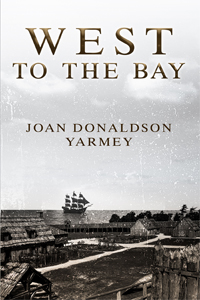
https://books2read.com/West-to-the-Bay-Yarmey


https://books2read.com/West-to-Grande-Portage-V2

https://bwlpublishing.ca/donaldson-yarmey-joan/

     I am a proud Canadian author of over twenty fiction and non-fiction books in my long writing career. But I am just one of thousands of published writers from this huge country. Canada has had a long and illustrious history of producing world renown authors and books going all the way back to the 18th century.

     Frances Moore was born in England in 1724. She was a well-known poet and playwright in England before she and her husband, Reverend John Brooke moved to Quebec City in 1763, for John to take up the post of army chaplain. During her time there Frances wrote The History of Emily Montague, a love story set in the newly formed Quebec province.

     The story is told through the voices of her characters by way of personal letters between the two. This is known as epistolary (of letters) type of writing and it was popular during the1700s in Europe. The Brookes’ returned to England in 1768 and the novel was published in 1769 the London bookseller, James Dodsley. The History of Emily Montague was the first novel written in what is now Canada and the first with a Canadian setting. Frances died in 1789.


Prince Edward Island

Lucy Maud Montgomery was born in Clifton, now New London, Prince Edward Island on November 30, 1874. Her mother died of tuberculosis two months before Lucy’s second birthday. Lucy was put in the custody of her maternal grandparents in Cavendish by her father who later moved to Prince Albert in what is now Saskatchewan.

     This was a very lonely time for Lucy. She spent much of her childhood alone so she created imaginary friends and worlds. Lucy kept a diary and when she was thirteen years-of-age, she wrote that she had early dreams of future fame. After completing her education Lucy moved to Prince Albert and spent a year with her father and step-mother. While there she had two poems published in The Daily Patriot, the Charlottetown newspaper.

     Lucy returned to Cavendish and obtained her teacher’s license, completing the two year course in one year. She went on to study literature at Dalhousie University in Halifax, Nova Scotia. She worked as a teacher which gave her time to write. From 1897 to 1907 she had over one hundred stories published in magazines and newspapers.

     Lucy had a number of suitors over the years and turned down two marriage proposals, one because he was narrow-minded, the other because he was just a good friend. She finally accepted a proposal from Edwin Simpson in 1897 but came to dislike him. She found herself in love with another man, Herman Leard. She refused to have sex with him but they did become quite passionate in their kissing and petting. She finally stopped seeing Herman in 1898 and was upset when he died of influenza in 1899. She also broke off her engagement to Edwin Simpson.

     Ms. Montgomery moved back to Cavendish to look after her ailing grandmother and began writing novels. Her first novel, Anne of Green Gables, was published in June of 1908 under the name L.M. Montgomery and was an instant success, going through nine printings by November of 1909. Lucy stayed in Cavendish until her grandmother’s death in March 1911 and shortly after she married Ewen (Ewan) Macdonald. Ewen was a Presbyterian minister and they moved to Leaskdale in present-day Uxbridge Township in Ontario where he took the position of minister at St. Paul’s Presbyterian Church. The lived in the Leaskdale manse and she wrote her next eleven books while there.

     Lucy and Ewen had three children, the second one being stillborn. Lucy’s second book, Anne of Avonlea was published in 1909 and The Story Girl, came out in 1911. She went through several periods of depression and suffered from migraine headaches while her husband had attacks of a major depressive order and his health suffered. She almost died from the Spanish flu in 1918, spending ten days in bed. She began an Emily trilogy with Emily of New Moon in 1923.

When Ewen retired in 1935, they bought a house in Swansea, Ontario, a suburb of Toronto which she named Journey's End.

     On April 24, 1942, Lucy Maud Montgomery was found dead in her bed in her Toronto home. The primary cause of death recorded on her death certificate was coronary thrombosis. Montgomery was buried at the Cavendish Community Cemetery in Cavendish. In 2008, Lucy’s granddaughter, Kate Macdonald Butler, said that because of her depression she may have taken her own life through a drug overdose.  

     Writing was Lucy’s comfort and besides the nine books of the Anne series she wrote twelve other novels and had four short story collections published. Nineteen of her books were set in Prince Edward Island and she immortalized the small province with her descriptions of the people and community. Each year, hundreds of thousands of people from around the world, come to Prince Edward Island to see the place that Lucy loved so much, and to visit Green Gables, the house and farm where ‘Anne grew up.

     Lucy Maud Montgomery was made an officer of the Order of the British Empire (OBE) by King George V in 1935. She was given a special medal, which she could only wear out in public in the presence of the King or one of his representatives such as the Governor-General. Montgomery was named a National Historic Person in 1943 by the Canadian Federal government. On May 15, 1975, the Canadian Post issued a stamp to Lucy Maud Montgomery, Anne of Green Gables. The Leaskdale Manse was designated a National Historic Site in 1997. Green Gables, was formally recognized as "L. M. Montgomery's Cavendish National Historic Site" in 2004.

     In terms of sales, both in her lifetime and since, Montgomery is the most successful Canadian author of all time.


Milton James Rhode Acorn was born in Charlottetown, Prince Edward Island, on March 30, 1923. At the age of eighteen, he joined the armed forces and was stationed mainly in England. On an ocean crossing, he was injured as a result of depth charges. He returned home and received a disability pension. He moved to Montreal in 1956 where he self-published a chapbook of his poems titled, In Love and Anger. His poetry was also published in New Frontiers, a political magazine, and in Canadian Forum magazine.

     Milton moved to Vancouver in the mid-1960s and helped found the ‘underground’ newspaper, Georgia Straight, in 1967. The newspaper is still in publication. His collection of poetry I’ve Tasted My Blood, was published in 1969 and he received the Canadian Poets Award in 1970. He wrote three more books of poetry and in 1976 received the Governor General’s Award for The Island Means Minago.

     Acorn liked to be a man of mystery. He disguised and altered his background so that biographers and anyone wanting to find out more about him did not learn anything that he did not want uncovered. Because of the many different versions he told of his life it is difficult to know where reality ended and fiction began. He was also considered to be a hostile and quarrelsome man. However, Milton Acorn was deemed to be one of Canada most well-known poets by the early 1970s. Thirteen collections of poetry were published before his death and five more were published posthumously.

     Three documentaries were made about Milton Acorn: Milton Acorn: The People’s Poet (1971; In Love and Anger: Milton Acorn-Poet (1984); and A Wake for Milton (1988).

Milton suffered diabetes and moved back to Prince Edward Island in 1981. He had a heart attack in July 1986 and died on August 20, due to complications from the diabetes and his heart attack.

     Milton Acorn was known as the ‘People’s Poet’. The Milton Acorn People’s Poetry Award was established in his memory in 1987. It consists of $500 and a medallion and is given to an exceptional ‘People’s Poet.’


Sunday, June 23, 2024

Introducing Hester Dymock - A Regence Belles Book by Victoria Chatham


Purchase link:

https://books2read.com/Hester-Dymock

Hester Dymock 

Those Regency Belles Book 1

Victoria Chatham


EXCERPT

Chapter One


April 1818


Hester Dymock stepped outside her family’s apothecary shop and took a deep breath of fresh April air. It still carried the dampness of overnight rain, which made her wrinkle her nostrils as she inhaled.

Washed clean of dust and debris, the cobblestones on Fulhampton’s High Street shimmered with moisture. Today being market day, it would soon be strewn once again with bits of hay and straw, manure, and goodness knows what else. Horse-drawn carts and handbarrows pushed by various vendors already rumbled towards the marketplace. People walked along the street and the pavement, all headed in the same direction.

Ahead of her, two men stood head and shoulders above the crowd.

Hester would recognize the taller of the two gentlemen anywhere. A sigh formed on her lips.

There was no mistaking Lord Gabriel Ravenshall’s muscular build.

Or the way his dark blue jacket moulded itself to his broad shoulders.

When he doffed his tall beaver hat to a woman who stopped and spoke to him, he revealed black hair gleaming like glossy raven’s feathers.

What if she had been beside him? Would he have raised his hat to her? And what might she say to make him laugh as this woman did? Hester wished his courtesy and good humour were for her. A prickly little knot of envy formed in her stomach as she watched them.

Her head might reach the top of his chest if she stood on tiptoe, and she could easily imagine herself secure in his arms. She caught herself with a sharp intake of breath and steeled herself to ignore her shockingly inappropriate thoughts. She shook her head at her foolishness. Girlish dreams were all very well, but at four-and-twenty, she was no longer a girl.

The other gentleman was not as tall but slim and bare headed. Something in the conversation made him laugh out loud, a joyful, carefree sound that made people turn his way to see what amused him. His blonde hair caught the sunlight as he crossed the street.

Intent on watching the unfolding scene before her, Hester nearly walked past the butcher’s shop but checked herself in time and quickly stepped inside. Mr. Barnfield, wielding a wicked-looking meat cleaver, looked up from the ham hock on his cutting block and smiled a greeting.

“Morning, Miss Dymock. And what can I get for you today?”

“Three good chump chops, if you please, and Mama said—”

“More meat than fat,” Mr. Barnfield finished for her. “I know your mama too well to offer you anything else. Otherwise, I’d have her in here chewing my ear off and that I don’t want. Can I get you some pork sausages as well? Fresh made this morning.”

“Thank you, but no.”

The sound of a crash and shouting in the street drew their attention. Hester dropped her basket and rushed outside with Mr. Barnfield close behind her.

Cattle in the holding pens opposite his shop began to bellow. Sheep in the adjacent pen bleated and pressed their fleecy bodies together in a panic.

“What is it?” Hester asked.

Mr. Barnfield’s height gave him the advantage of seeing what was happening. “Looks like a phaeton has knocked into old Grimes’ vegetable stall at the corner of the market.”

As he spoke, Hester heard another crash. She stood on her tiptoes to make herself as tall as possible. Now she could clearly see the scene at the end of the street.

The phaeton’s rear right wheel had caught on the edge of the stall. The young woman handling the ribbons tried to make her horse back up. Hester heard its whinny of distress, saw its bright chestnut neck as it plunged frantically between the shafts. The stall collapsed, sending cabbages, carrots, potatoes, and more vegetables cascading onto the street. Scruffy urchins appeared as if from nowhere, instantly gathering what they could of the unexpected bounty.

The farmer shouted and cursed, still shaking his fist at the driver. The horse charged forwards, the now white-faced young woman sawing desperately at its mouth to halt it. Marketgoers cleared the street, leaping out of the path of the runaway vehicle.

“Stay where you are!” Lord Ravenshall shouted the warning as his friend stepped to the curb.

And then Hester noticed the child.

A small girl held a potato in one hand and scrubbed tears away from her eyes with the other. She seemed oblivious to the danger bearing down on her. There was no way she could escape the horse’s flailing hooves.

Hester’s heart fell like a lead weight as she covered her mouth. She could not breathe, unable to bear what must be about to happen.

A speeding blue form flashed before her eyes.

Her whimper of alarm erupted into a terrified cry as Lord Ravenshall dashed into the street.

He bent low and caught up the girl in his arms. Hester thought him safe but, in one shattering moment, saw the toe of his boot catch on the side of a still-damp cobblestone. He pitched forward.

“Ash! Catch her,” he yelled, throwing the child at his friend as he fell.

Hester barely followed the trajectory of the grubby bundle. The blond-haired man caught it in his outstretched arms. He staggered back under the weight and crashed into the sheep pen, further agitating the frantic animals.

And then the vehicle was upon Lord Ravenshall.

The horse leapt over him, the phaeton lurching behind it, almost pitching the driver from the box. Open-mouthed, Hester watched it charge on down the street, scattering everything in its path. Then the damaged wheel parted from the axle, bringing everything to a halt. One man ran up to help the sobbing woman out of the wreckage while two others cut the harness away from the quivering horse and led it away.

Hester tore her gaze from the disaster and sped to Lord Ravenshall’s inert body, sinking onto her knees beside him. His eyes were closed, his face pale. Blood seeped from a wound on his head, staining the cobblestones, but it only took one glance for her to know his legs were in far worse shape.

The young man whom Lord Ravenshall had called Ash rushed to her side. White-faced, he stared down at his friend, and then his knees buckled like a broken marionette.

“What can I do?” he whispered.

The helplessness in his tone made Hester glance up at him. “We need to get him to my brother’s office immediately.”

“Why should we take him to your brother?” Ash’s dark frown indicated his doubt.

“Jonathan is a doctor.” Hoping no one would notice how badly she shook, Hester used her handkerchief to dab blood from Lord Ravenshall’s face. Who could have imagined that an accident would bring them so close? A shadow fell across her, and she looked up into the anxious face of a burly dark-skinned man.

He crouched down beside her. “What has happened to his lordship?”

Before Hester could answer, Ash spoke up. “Ah, Robert. Good that you are here. Can you lift him?”

“No.” Hester held up her hand to stop him. “That would be the worst thing possible if his leg is as badly damaged as I suspect.” She looked around, then indicated one of the sheep pens. “That wattle hurdle will do. We must roll him onto it.”

“Are you sure, miss?” Robert’s deep, baritone voice rumbled in his chest.

“Yes,” Hester said. “Ash, tell the shepherd whatever you must to get him to give up that hurdle. He must find another way to contain his sheep.”

Ash quickly made his way towards the shepherd. Hester watched as a lively exchange of words ensued. Money changed hands, and when Ash returned with the make-shift stretcher, she instructed him to lay it on the ground beside Lord Ravenshall.

“I am going to turn his body towards me,” she explained. “As soon as you can, push the hurdle firmly beneath him. Are you ready?”

Hester caught the fallen man’s shoulder and hip and rolled him towards her. Instructing Ash to wedge the hurdle firmly against his lordship’s back, she then carefully settled him onto it. He groaned in pain, making her wince, but he did not regain consciousness.

She took his hands and folded them across his chest. He almost looked peaceful, as he might in death, but she shook that image away. Her only intention now was to prevent his hands from dragging on the ground, adding grazed knuckles to his list of injuries. When she was sure he was secure, she looked around for more help.

Hovering uncertainly on the pavement with his delivery boy beside him, Mr. Barnfield watched her, all the while casting anxious glances towards his shop entrance.

“I’d help,” he offered, “but I don’t want any of those little beggars running off with my goods like they did old Grimes’.”

“Don’t worry, Mr. Barnfield, I understand, but could you send your boy along to Mama to have all the doors opened for us?”

Mr. Barnfield agreed to that. With a nod of his head, he sent the boy off. Hester turned to the two men with her. “Robert, please lift at his lordship’s head, and you, Ash, take his feet. The doctor’s surgery is not far away. When I say lift, please do so as steadily as you can.”

Both men readied themselves and, as soon as Hester gave the word, hoisted their charge smoothly.

“This way, gentlemen,” Hester said. “It is but a few doors along the street beneath the sign of the pestle and mortar.”

She hurried ahead of them and found the doors already opened as she had asked. Her mother looked on, concern written all over her face.

Panting from her exertions, Hester rushed past the counter and into the surgery behind the shop.

“Jonathan, thank goodness you are here.” She gulped as she looked at the remains of her brother’s breakfast and several books cluttering the table. “We must clear this mess now.”

“Catch your breath and tell me what has happened.” Her brother guided her to a chair and made her sit.

“It is Lord Ravenshall. I believe he has a broken leg.” Hester steadied her breathing and began to rise as Ash and Robert maneuvered their burden through the doorway.

“Stay where you are, Hester.” Jonathan gently pushed her back into her seat. “Calm yourself, for I am certain to need your help.” He quickly cleared the table as he glanced over the unconscious man. “This way, gentlemen, lift everything onto the table.” He watched as they followed his instructions. “Carefully now. Yes, that’s right. Put him down gently, and please stand back.”

The two men did as he instructed with Robert sturdy and calm, Ash pale and visibly trembling.

“You’d better sit down.” Hester kindly vacated her chair for him.

“Tell me what happened.” Jonathan bent to examine his patient.

Hester quickly described the summary of events for her brother while he continued his examination.

“The head wound is of little consequence, I think,” he finally announced. “He may have a slight concussion, but his right leg is a worry. Hester, remove his shoe. You may have to cut off his stocking as well.”

Hester slipped off the sturdy black leather shoe with its bold silver buckle and handed it to Ash. She hesitated before loosening the knee band of his lordship’s breeches but resolutely caught the top of the stocking and began to roll it down.

Lord Ravenshall shifted his head and moaned. Robert immediately stepped forward and placed his hands on his lordship’s shoulders, holding him steady.

“Well done.” Jonathan shot him a glance. “You have experienced something like this before?”

“A few times.” Robert’s dark face was devoid of expression, but his tone implied much more.

“Are you in Lord Ravenshall’s employ?”

“Groom and second coachman,” Robert replied.

Hester took all this in as she continued to roll the stocking over his lordship’s finely muscled calf, then reached for the scissors her brother held out to her.

“It will go much more quickly if you use these. I’m sure Ravenshall will not begrudge the cost of a pair of stockings if necessary.”

Starting at the toe, Hester snipped at the finely woven woollen fabric and folded it back from the leg it covered. She gasped when she saw the full extent of the damage. The shin was already swollen and flushed a torturous shade of red. Jonathan felt along the length of the leg, nodding to himself as he manipulated the limb.

“Did you hear that grating sound, Hester? A bad but clean break, I think. At least it’s not crushed, which I would have expected in the circumstances.” He palpated the leg, which brought a groan from the unconscious man. “Hm, I suspect the fibula broke as well. At least neither bone has ruptured the skin. Dealing with an open wound would be far worse. Let’s take a look at his right leg.”

Hester repeated the process of cutting the stocking away, shocked that her fingers tingled every time they touched Lord Gabriel Ravenshall’s bare skin. How she wished she could smooth away his pain.

After another inspection, Jonathan reported that the right leg was badly bruised but not broken.

“Thank God for that,” Ash muttered.

“Not necessarily,” Jonathan warned him. “Bruising will pool blood in the soft tissues and can be as painful as a break, but I will apply leeches to prevent the worst of it.”

Ash turned even paler and quickly left the room.

“By the looks of it, it’s left to us to set this bone,” Jonathan mused.

Gabriel Ravenshall groaned again, and his eyes fluttered open.

“What the devil is going on?” he rasped. “Why are you holding me down, Robert? And why are my legs so damned cold?”

He tried to sit up but fell back with a cry.

“Don’t move, sir.” Robert continued to grip his lordship’s shoulders. “You have a broken leg, and the doctor is about to set it.”

“Wonderful.” Gabriel hissed. “I’ll be bound that will hurt.”

“More than I like to say,” Jonathan agreed readily. “But I have some excellent brandy to help dull your senses beforehand, and a good strip of leather for you to bite down on.”

“Where’s Ash?” Gabriel asked.

“Had to excuse himself.” Jonathan grinned. “I’m not sure that he quite has the stomach for what we are about to do. Drink this.”

Gabriel took the proffered brandy and swallowed it in one gulp. “I think I need another of those.”

“Happy to oblige.” Jonathan poured a second glass and watched Ravenshall toss it back. “We’ll leave you to settle for a few minutes and see how you’re feeling. I’d like you quite drunk before we begin, but not so much that you are likely to cast up your accounts.”

Jonathan busied himself preparing splints and bandages, placing everything within easy reach. Twenty minutes later, he administered another glass of brandy, to which he added a few drops of laudanum. When Gabriel’s eyes began to close, Jonathan turned to Hester and Robert.

“As soon as the laudanum takes its full effect, we will get to work. Robert, please stand at his lordship’s head. Put your arms under his and clasp your hands firmly in front of his chest. You will have to hold him very still.”

“I can do that,” Robert said.

“Can you please find Sir Ashleigh?” Jonathan asked him. “If at all possible, I want him here to be ready to place this strap between his lordship’s teeth. If he can’t deal with that, then Mama will have to close the shop for a short while.”

Robert left the room, and Hester’s eyes widened in dismay as she looked at her brother.

“Sir Ashleigh?” she questioned. “Oh, dear. And I have been calling him Ash as if he were known to me. What will he think of me?”

“As things are right now, I don’t think anyone will care,” Jonathan told her.

Robert returned with Sir Ashleigh, who looked only marginally recovered and not at all happy to be there.

Jonathan ordered everyone to their places and moved around the table to where it was easy for him to hold Lord Ravenshall’s thigh.

“I say,” Sir Ashleigh began, his voice wavering. “Beg pardon, but isn’t that the wrong place for you to try and set the bone?”

“Between us, we have to keep him as still as possible,” Jonathan explained. “Robert will hold his torso, and I will hold his leg.”

“Then, who is going to set it?” Sir Ashleigh asked.

“That would be me.” Hester stepped to the end of the table. “Do not worry, Sir Ashleigh, I know what I am doing. Have his lordship bite down on that strap now. Are we ready?”

At a nod from Jonathan, she took Gabriel’s naked foot in her hand, alarmed at how cold it was. She grasped his toes in one hand, the heel of his foot in the other. Taking a deep breath, she looked up at the anxious faces around her.

“Now,” she instructed and pulled.

The howl of agony that escaped the prison of Lord Gabriel Ravenshall’s clenched teeth rang in her ears. She glanced up and saw that he had passed out, his head slumped against Robert’s arm.

Robert and Jonathan held tight.

Sir Ashleigh crumpled into the corner.


Chapter Two


“Robert, Hester, hold firm and fast,” Jonathan ordered as he reached for a roll of bandage. “Hester, lift now and hold steady while I wrap his leg.”

They both followed his instructions, watching Jonathan’s flying fingers as he passed the bandage under and over at almost dizzying speed. Even though he was unconscious, Gabriel continued to gasp and moan with pain. Hester gritted her teeth. She still held fast on his heel and toes, but each time he cried out, her flesh crawled.

“Can you still hold the leg firm?” Jonathan reached for the wooden slats to splint the leg and another roll of bandage.

She nodded and watched him place the splints on either side of the injured leg and begin bandaging again.

“Darn Ash,” he muttered. “I could do with another pair of hands.”

He used his shoulder to wipe beads of sweat off his face and then shouted for Mrs. Dymock. She came bustling in, assessing the situation in one glance.

“Hold these in place, if you please, Mama,” Jonathan grunted.

Without uttering a word, Mrs. Dymock took the splints and watched Jonathan wrap them firmly into place. When he finished, she hurried into the small parlour where she made up a trundle bed.

Robert and Jonathan moved Gabriel from the surgery onto the bed while he was still unconscious.

When had she begun to think of him as Gabriel? Hester reminded herself that he was Lord Gabriel Ravenshall, and she should think of him as such. She stopped wool-gathering and helped Jonathan prepare a frame for the injured leg, first laying a large piece of leather along the slats and covering that with a folded towel.

“What is that for?” Robert asked as they worked.

“It’s a cradle to keep the leg immobile,” Jonathan explained as he and Hester placed the injured leg in it. Taking a strip of linen, he passed it from side to side along the top of the frame, efficiently securing the limb in place.

“Will he have to be kept in it for long?”

“That remains to be seen.” Jonathan checked the slip knots in the bandages to make sure they were secure. “I need to keep him quiet and still, and that will mean using more laudanum than I normally would.”

“When will we be able to take him home?”

Jonathan looked up into Robert’s anxious face. “Not for two to three weeks, I think. Besides, it’s over three miles to Ravenshall Court over a rough road, and I do not want to risk undue damage if he is to walk properly again.”

“But who will look after him?” Robert continued to look anxious. “It cannot be Miss Dymock or your mother. It would not be seemly.”

Jonathan placed a friendly hand on Robert’s arm. “Thank you for being so considerate of my family. I would think it best if his valet came here. Do you think you could arrange that?”

“I’ll see to it right away, sir.”

“You’re a good man, Robert. Where did you learn your skills?”

Robert looked down at his feet, but not before Hester saw a flicker of hesitation on his face. When he finally looked up, his dark brown eyes held a troubled expression. “I saw a lot of things when I was a slave. Most of the time, we only had the women to look after injuries, but I helped where I could and learnt a lot from them. His lordship’s father freed me, and when I asked if he had another position for me, he brought me from Horsley Grange, their plantation in Jamaica. Lord Ravenshall was a good man, as is his son. I will be forever grateful to them.”

“That is a generous endorsement, Robert. Thank you,” Jonathan said. “Now off you go and collect Lord Ravenshall’s valet. Have him bring whatever he thinks necessary for his lordship’s comfort. Being confined to his bed, for now, I would suggest no more than soft clothing, nightshirts, and such. By the way, do you know where Sir Ashleigh is?”

Robert offered up a wry smile. “Probably commandeering a room at the Crown. I believe he intends to visit his lordship daily for as long as necessary.”

Hester smiled at the thought. “Poor Sir Ashleigh,” she said. “He is most embarrassed at what he sees as a weakness, but the sick room is not for everyone.”

“No, it is not,” Robert agreed.

When he left on his mission to collect the valet, Hester turned to her brother. “I cannot imagine what good Sir Ashleigh can do.”

“Oh, I expect he will become something of a verbal sparring partner if I know anything of their friendship.”

“And just what do you know of that?” Hester demanded. “I was never more mortified in my life than when you called him Sir Ashleigh.”

“I know of him more by reputation than anything else,” Jonathan admitted. “He and Gabriel are both four years younger than Gabriel’s brother and me. We only saw them in the summer when Nathan and I were down from Oxford. We did not have a great deal to do with them as they were mere children to us grown men.”

He spoke mockingly and made Hester laugh, but she was distracted when Gabriel coughed and gasped for breath.

“What the hell am I doing here?” he groaned, his voice harsh in his throat. “And what is my leg doing in this wretched contraption?”

“I think you should leave the room, Hester,” Jonathan warned. “When I explain the full extent of his predicament, I suspect his lordship will respond with some rather profane language.”

Hester chuckled and went through to the shop where she found her mother extolling hair powder’s virtues rather than pomade to a gentleman farmer. While Mrs. Dymock wrapped the farmer’s purchase, Hester took a feather duster to the gallipots.

Some were plain, undecorated porcelain. Others were glazed white, decorated with blue floral patterns. She dusted them all and then moved on to the glass medicine and perfume bottles arranged like ranks of soldiers on the shelves. Finishing that task, she picked up a broom and swept the floor, the stiff bristles rasping across the bare planks. She never minded doing small things and preferred doing them before being asked.

“How is Lord Ravenshall?” Mrs. Dymock asked when the farmer left the shop.

“Can’t you tell?” Hester returned mischievously as loud complaints burst from within the parlour. “There appears to be nothing wrong with his vocal cords, but I’m afraid he is going to be with us for a while.”

“And is he going to pay for room and board?” her mother wanted to know.

“I am sure Jonathan will charge a fee suitable to cover everything, Mama.” Hester put the broom back in its place and wiped her hands on her apron. “Now, if you have nothing else for me to do, I’m going to collect some comfrey and prepare a poultice. It’s not called knit bone for nothing, and Jonathan has prescribed its use twice throughout the day and last thing at night.”

“Then you’d better get on with it.”

Her mother shooed her out of the shop. Hester went through into the surgery, which had once been their dining room. Jonathan’s books and crockery now cluttered the dresser’s surface. He could re-shelve the books himself, but she took the dishes through to the kitchen behind the surgery and left them in the stone sink. Collecting her basket and sickle-shaped gleaning knife, she let herself out of the back door into the physic garden.

It drowsed in the afternoon sun like a lazy cat. Warmth held within its stone walls heightened the heady scents of rosemary and thyme, mint, and chamomile. Her skirts brushed against sorrel and sage, feverfew and valerian, garlic, and basil. She headed towards a great clump of comfrey at the end of the path close to the elderberry trees.

Bees tumbled lazily through the lavender and lilac. Large whites and peacock butterflies fluttered from one flower head to another. The chickens in the coop at the end of the garden clucked and crooned as they scratched at grain that she threw in for them earlier that day. There was peace here, as well as the healing properties to be gained from every plant.

When her basket was full, she returned to the kitchen and set the kettle upon the hob. While it boiled, she shredded the leaves into a large earthenware bowl placed on the table. She hummed as she worked, happy because, despite the reason for it, the man of her heart was so close.

She knew hers was an impossible dream, knew that her tenuous connection to Lord Ravenshall could never have an outcome. Mama and Jonathan did not—could not—know of her attraction. She hesitated to call it love. How could it be? She had never spoken a word to him, not even today, when she laid her hands on his prone form. The few occasions when she had seen him in Fulhampton were precious memories that she returned to over and over again.

How could one not be drawn to him? It was not just his looks and stature, but the kindness he showed to everyone, even old Bessy Harding, to whom he gave his arm to help her across the street. He teased and laughed with the street urchins and gave them pennies or bought apples for them.

And he saved that little girl’s life.

A thought drifted into her mind, but before it became fully formed, she was distracted by the sound of the kettle whistling. She took it off the hob and poured the boiling water over the leaves in the bowl. While they steeped, she prepared several cloths, shaking them out to make sure they were large enough for her requirements. Voices in the shop drew her attention, and she went to see if her mother required any help.

Robert had returned, accompanied by a neat, trim gentleman slightly above average height with narrow, intelligent features. The style and set of his clothes marked him as a gentleman’s gentleman. Hester smiled at him as he doffed his beaver hat, revealing a domed, balding head.

“Mr. Jeffries?” She cocked her head to one side as she surveyed him.

“The very one, Miss Dymock.” He inclined his head in greeting.

“I am so pleased to meet you.” Hester immediately liked the man’s manner. “Has Robert explained all that has happened?”

“Indeed, he has. Where is his lordship now?”

“Through here.” Hester led the way and opened the door into the parlour. “I won’t accompany you. My brother warned me the language in here might be somewhat warm at present.”

Mr. Jeffries chuckled as he paused in the doorway. “His lordship has an extensive vocabulary, some of which has been a revelation to me as he can be most inventive.”

Hester returned to the kitchen to find Robert sitting at the table. Her mother had refilled the kettle and set it back on the hob. While it boiled, she took the teapot and cups from a cupboard. Hester removed the cover from the bowl of leaves she had left on the table and tested the temperature.

“This is just right. If you will excuse me, Mama, I will go and apply the first poultice.”

Mrs. Dymock gently shooed her away. Hester picked up the bowl and linen cloths and headed for the parlour. There was no easy way for her to complete her task, but at least Jonathan and Mr. Jeffries would be on hand to assist her.

She entered the parlour, her stomach in turmoil, her heart hammering. Could anyone hear it? Or was it only loud enough for her ears? She swallowed hard, took a deep breath, and advanced towards the figure lying on the bed. There was only one thing of which she was quite sure.

Lord Gabriel Ravenshall was well and truly drunk.


Chapter Three


Gabriel awoke with a start, his heart pounding, sweat pouring from his brow. He steadied his breathing and wiped the sleeve of his nightshirt across his face.

Would this nightmare ever end?

He struggled to sit up, trying as he did so to stack the pillows at his back, but then Jeffries was at his side doing it for him.

“I can manage,” he snapped.

“I’m sure you can, my lord, but why waste your energy when it is far easier for me to do this for you?”

The pillows plumped, and in place, Gabriel sagged back against them, closing his eyes again. There was no arguing with his loyal valet, and, in truth, he had not the strength for it. He laid his arm across his eyes, his lungs sawing with the effort of steadying his breath.

“The nightmare again?” Jeffries’ soft tone was full of concern.

“Yes,” Gabriel admitted. He began massaging his temples.

The vivid dream careered across the insides of his eyelids as if pressed there—the horse with blood-flecked foam curling around its mouth, its flanks streaked with sweat. Behind it, the woman on the box hanging onto the reins, her face white, her expression one of sheer terror.

But what else was he to do other than save that little ragamuffin? He remembered streaking into the road without a thought for his safety, only that of the child. He grabbed her up into his arms and then tripped, tossing her to Ash as he fell. As his shoulder hit the cobblestones, he saw the glint of the horse’s steel-shod hooves, its underbelly, and the harness. Then excruciating pain darted through his head, and he knew no more.

Jeffries handed him a glass of barley water. “You know you could have a measure of laudanum before you settle down to sleep.”

“I know, but I prefer that good brandy which our precious Dr. Dymock now denies me, him and that odious sister of his.”

“Miss Dymock is not so bad, my lord.” Jeffries’ lips twitched into a small smile as he opened the drapes, allowing the morning sunshine to brighten the room. “Her poultices have drawn out most of the bruising from your right leg, and Dr. Dymock is pleased with the way your broken leg is healing.”

Gabriel pulled a face and grunted an uncomplimentary response. Jeffries stifled a grin as he quietly went about preparing the shaving equipment. He laid out brush and paste, razor and strop, and the cooling cologne to soothe the freshly shaved skin.

“I suppose,” Gabriel began, “that you think her something of a saint for achieving that much.”

“Maybe not a saint,” Jeffries paused by the washstand, where he was about to pour water into the basin. “But a young woman of uncommonly sound sense and not unattractive. ‘Tis a wonder she is still unwed.”

Gabriel made no response.

Put quite simply, Hester Dymock confused him. Other young ladies of his acquaintance comported themselves coquettishly, trained by their Mamas to flutter their eyelashes and brandish their fans. He should know, having endured their simpering wiles for the last ten Seasons. He did not trust a single one of them, fearing that once the ring was on their finger, they would turn from sweet and compliant to cold and distant as he knew his mother had done.

That was not what he wanted for himself. Did his mother simply not enjoy the intimacies of marriage? He frowned as he tried to recall any time when she was happy but could not. His attendance at Almack’s Assembly Rooms, route parties, balls, and soirees during the Season was infrequent. His presence at each event only lasted long enough to be polite. Lady Ravenshall, whom he now rarely saw, hoped for an announcement every year, and roundly admonished him with lengthy letters when there was none.

A grim smile crossed his features as he tried to imagine Hester being coquettish. She would not, he was sure, know where to begin. Carrying out her brother’s instructions in a steady, matter-of-fact way, she brooked no resistance from him in the form of his care, either silencing him with a sharp retort or a quelling glance.

Neither of these tactics lasted any time at all or appeared to upset her usual sunny good nature. She smiled and laughed as quickly as she silenced him. She had opinions and voiced them but never intruded on him unless it was time for a treatment with one of her blasted poultices, or one of the herbal concoctions she insisted he drink.

Gabriel frowned as he tried to identify what else it was about Hester that unsettled him. She was not fashionably pretty. As far as he could tell she wore no powder or rouge. Her skin, sun-kissed to gold with a wash of peach-pink over the apples of her cheeks, was clear, her countenance calm. Her eyes were a luminous dark chocolate brown and gleamed alternately with good humour and intelligence. Her dark brown hair was always neat and tidy and twisted into a knot at the nape of her slender neck. Quite a pretty nape it was, too. He saw it every time she bent over to unwrap or rewrap his leg.

And then there were her long, slim fingers tipped with pale, oval nails that skimmed across his skin, sending minute tremors along his nerves. He liked those fingers. Those moments when Hester tended him left him calm and relaxed. Her touch was gentle or, if she thought she might hurt him, she gave a fair warning. Regardless of how she spoke to him, the looks she favoured him with gave him the impression that she cared. Or was that all in his imagination?

“My lord?”

Momentarily startled by his valet, Gabriel looked up. If anyone ever knew where his thoughts wandered, they might think him fond of the girl.

“What?”

“Are you ready to be shaved, my lord?”

Gabriel’s dispirited sigh escaped from his lips like a waning breeze. This part of the day, when Jeffries lifted and dressed him, he least liked. It was as if he was a child again. But it had to be done. Jeffries brought a small table and set it by the bed. On this, he placed the bowl of water he had just poured, then put a towel under Gabriel’s chin.

“And so, it begins,” Gabriel drawled, tipping his head back as Jeffries set a warm, damp cloth over his face.

“Yes, my lord,” Jeffries responded in a dry tone. “You may, if you wish, attempt it for yourself, but I fear for your hide if you do.”

Gabriel would have grinned if not for the copious amount of shaving paste foaming about his mouth. He closed his eyes and gave in to his valet’s ministrations. He would at least be presentable when he saw Miss Dymock this morning. The thought made him frown. When had he begun to care for her opinion? His musings drew a warning from Jeffries to stop fidgeting, and he settled his features into complacency.

At last, he was clean and freshly dressed and, much to his consternation, looking forward to his first encounter of the day with Miss Dymock. What would she subject him to this morning?

“And which cologne would you prefer today, sir?”

Jeffries’ steady, well-modulated tones broke into Gabriel’s thoughts. “Does it matter?”

“Not to me, my lord, but we are low on Trufitt’s Spanish Leather. Maybe an application of the Mayfair?”

Gabriel passed a hand over his eyes. Heaven forbid his only decision today must be with which cologne he was to finish his toilette.

“Surprise me.” But there was no surprise when Gabriel detected the subtle fragrances of bergamot and orange, patchouli and amber. The Spanish Leather cologne was by far Jeffries’ favourite, one he deemed suitable for any occasion. “How much longer am I to stay here?”

“That, my lord, is up to your doctor,” Jeffries replied as he began to put away the tools of his trade in a leather travelling case.

“Damn his eyes,” Gabriel growled, but he looked up expectantly as a knock sounded on the door.

His fears that it was Jonathan vied with his hopes that it was Hester. Ash walked in, dashing both emotions.

“Good Lord, Ash,” he stuttered. “What brings you here so early?”

“Early?” Ash raised an eyebrow. “It is nigh on noon, and I cannot waste any more of my day. I came to ask if I could fetch anything for you before I venture forth on my quest.”

“Quest for what?”

“The young lady who ran you down.”

“Are you mad?” Gabriel asked. “Why would you want to do that?”

Ash flicked up the tails of his riding coat and sat on the chair Jeffries pulled forward for him. “Because I would like to know if the young lady has recovered and if she will sell me her horse.”

Gabriel winced as he sat up straighter in bed. “You are mad,” he announced. “What on earth would you do with that fractious beast?”

“First, turn it out to grass and let it rest.” Ash’s face brightened as it always did when discussing his favourite topic. “And then introduce it to some slow work to assess what I can do with it. I doubt it’s a lady’s horse, but it might suit some single gentleman for a curricle. It was a remarkably good-looking animal, don’t you think?”

“I really couldn’t say,” Gabriel drawled. “I was beneath the damned beast at the time, as you may recall.”

“Yes, yes, of course,” Ash blustered at his friend’s dry admonishment. “Well, I’ll leave you for now but will come later, if I may, and let you know what I discover.”

“Oh, by all means, do.” Gabriel waved a dismissive hand.

“He means well,” Jeffries said after Ash let himself out.

“I know he does,” Gabriel agreed. “But I am bored to death of this bed and having people come to me rather than me going to them.”

“And that is no reason to be at outs with those who only wish you well,” Jeffries gently rebuked him.

Another knock sounded on the door, and this time Hester entered. Gabriel wasn’t quite sure that his heart didn’t give an extra beat when he saw her. He didn’t, however, imagine the hitch in his breath when she smiled at him.

“You look so much better today,” she said. “Or is that simply the results of Mr. Jeffries’ ministrations?”

“The results of everyone’s ministrations,” Gabriel returned gallantly, earning himself an approving nod from Jeffries. “But with what are you going to try my patience today?”

Hester lowered her gaze at his gentle teasing, but he didn’t miss the way the corners of her mouth turned up. “Only your poultice, my lord.”

“Is it vital?”

She looked up at that. Her smile vanished, and a frown formed in the vee between the beautiful curve of her birds-wing shaped eyebrows. “Yes, it is,” she said, “unless you want to lay abed for far longer than is necessary. Your break will mend much more quickly with the application of my poultice than it will without it, I can assure you.”

Gabriel leaned back and rested his arm across his eyes. “Get on with it then.”

Hester moved beside the bed and began to loosen the ties holding the top part of the cradle together. She eased the bandages holding the splints in place and then those around his leg. He almost sighed as cool air flowed over his bare skin. A moment later, he slowly inhaled a deep, steadying breath as her fingers grazed against him.

“Did that hurt?” she asked.

Gabriel swallowed. He couldn’t tell her that no, it didn’t hurt at all or that he craved her touch. He simply shook his head. Hester laid a warm, damp towel across his shin and began to cover it with the crushed dark green leaves.

“What is this mush, anyway?”

“Leaves of the comfrey plant, otherwise known as knit bone,” she told him.

She softly hummed a pleasant melody as she worked. Was that to aid her concentration or to calm him? He was not sure.

“There, I’m finished for now.” She mopped up the moisture that dripped down either side of his leg and then laid another towel over the top of it before tightening the cradle. “We’ll keep this in place for the afternoon, and then I’ll apply another one later this evening after Jonathan examines you. Is there anything I can do for you?”

There were several things that Gabriel thought she could do for him. She might soothe his brow or run her fingers over his lips. He would like her to pull up his shirt and place her hand on his chest over his heart, but none of this could or would ever happen. He swallowed again.

“No, thank you,” he croaked.

“Then I shall leave you for now. Have Mr. Jeffries call me if you do want me.”

Yes, I do want you.

The words roared through his mind, but all he could do was purse his lips and blow out a breath as Hester left the room, leaving him alone. How on earth had this come about? She was pretty, wholesome, and could be charming. Was he simply attracted to her because of the way she looked after him? That must be it. He could not remember a time when any female had cared for him so tenderly. To think anything else would be foolish.

The poultice on his leg was warm and surprisingly comfortable. He began to relax and fell into a light doze and then a deeper sleep. Therefore, he was unaware of first Jeffries checking on him and then Hester, who tiptoed to his bedside and looked down into his now peaceful face. He couldn’t know how she longed to smooth his brow and cup his cheek, or that her conscience would not allow her to take advantage of the situation. After a moment more, she tiptoed away.

A knock on the door interrupted a vivid dream; this a pleasant one rather than the nightmares Gabriel had endured. He rubbed his eyes as Ash stepped in, looking incredibly pleased with himself.

“Mission accomplished?” Gabriel stretched and yawned.

“Oh, famously so.” Ash pulled up the chair and sat down beside the bed as he had done earlier. “Mr. Barnfield—”

“Who is Mr. Barnfield?”

“The butcher,” Ash explained.

“What has he got to do with anything?”

“He hasn’t—”

“Then why mention him?”

“Will you just be quiet and listen?” Ash huffed. “I went to see Mr. Barnfield because he witnessed the whole incident, and I thought he might know the young lady’s name, and I was right.”

“Oh, good.” Gabriel tried to relax, knowing that Ash’s explanation might take some time in the telling.

“She is Miss Virginia Stephens, and her father has some prime young stock. He was quite willing to sell me that chestnut. If you don’t mind, I’ll stable it at your place for now. I think Mr. Stephens was quite pleased to get rid of it. Miss Stephens, it would appear, is as much of a handful as the horse. She harnessed it herself that market day and took off without a bye-the-bye to anyone.”

“And consequently, we all came to grief. What did Miss Stephens think she was doing?”

Ash’s face creased into a frown. “I think trying to prove her capabilities to her father, and the horse suffered because of it.”

“Never mind the horse,” Gabriel blustered. “What about me? I’m the injured party here.”

“Well, she never intended that to happen.” Ash flushed. “Indeed, she is very sorry about it.”

Gabriel raised an eyebrow. “I think this young woman has quite taken your fancy.”

Ash pressed his lips together before releasing a sigh. “She has many good qualities, not unlike Miss Dymock.”

“Do not change the subject.” Gabriel shot his friend a warning glance. “Miss Dymock did not run me down. On the contrary, she has done all in her power to put me on the road to recovery. But what about the child, Ash? What happened to her? You caught her, did you not?”

“I did indeed,” Ash said. “I nearly took a tumble into the sheep pen under the weight of that little baggage. But here’s the thing, I didn’t even think of her after I saw you lying in the road. She probably scrambled away unhurt.”

“Probably,” Gabriel agreed. “But I would like to know, all the same. Perhaps your fountain of local knowledge might know who she is.”

“Oh, you mean Mr. Barnfield.” Ash chuckled. “I could ask him.”

“Please do. Now. Before the day gets any later. I would like to know that I did not suffer in vain.”

As Ash stood up, Gabriel looked up at him. “Perhaps take Miss Dymock with you. I wouldn’t want the child alarmed by an unknown gentleman arriving on her doorstep.”

“Ah, yes,” Ash responded. “A female would be a less daunting prospect, I agree.”

Ash left, and Gabriel quietly fumed.

Devil take it.

If anyone were to accompany Miss Dymock anywhere, it should be him.


For purchase information please visit my BWL Author page:


https://bookswelove.net/chatham-victoria/


Saturday, June 22, 2024

Feedback from the most unlikely sources


As an author, we often rely on Amazon and Goodreads reviews to gauge the popularity of our books. To that, I'd add text messages and emails from friends and readers. After each book is published, I receive an email from a reader in a nearby tiny town. She tells me how she felt about the book (usually positive) then identifies the typo(s) she found. That's right. There are typos. Despite beta readers, editing, proofreaders, and my rereading the book a dozen or more times, there is a typo somewhere. In "Conflict of Interest", I missed typing an "N" on the end of Karyn. Go ahead. Search for it. Without her specific direction to the page, paragraph, and sentence, I couldn't find it. Sigh.

Numerous readers have commented that they find typos in EVERY book. I recently read a book by a very famous mystery author. He used a different last name for one of the protagonists on one page, then changed it back for the remainder of the book. In one of his previous books, at the last second, he switched the caliber of the protagonist's pistol from 10 mm to 40 caliber. He did a global "find and replace" for the 10 and 40 without changing the mm to caliber. Yes, that left his protagonist shooting a pistol with a 40mm projectile nearly 1.5 inches in diameter. That error was corrected in later printings, but there were a hundred thousand hardback books out there with the error.

Another famous author sent his protagonist on a canoe trip down a Minnesota river. At one point, the characters caught and scaled a catfish that they cooked under a sycamore tree. I cringe to point out that catfish don't have scales, and sycamore trees don't exist in Minnesota. Oops. I know that author, and I would gently mention it to him the next time I saw him if I didn't think he'd already been notified by at least one hundred people.

In my case, I blame typos and mistakes on my mind going faster than my fingers. Yes, I'm literally thinking a few words ahead of what I'm typing into the computer. That leads to myriad typos, errors, run-on sentences, dangling participles and more. One of my proofreaders, who I call the sentence structure and preposition policewoman, pointed out that I had SIX prepositions in one run-on sentence. "That's a punishable crime in some states".

My typing gets worse as I approach the end of a book. Dennis Lehane told me he was like a train going downhill on greased tracks as he approached the book's ending. It's true. I can't make the words come off my fingers fast enough. That creates a "target rich" environment of typos, punctuation, and grammatical errors for my proofreaders. It seems to overwhelm them. One found so many corrections I had to resupply her with a dozen red pens every few books. (She admitted uses beyond marking up my manuscripts.)

I go back and catch many of them on the rewrite, but not until my unnamed cop/horse/legal consultant and proofreader has waded through them. I know (most of) the rules. Microsoft catches a lot of mistakes. But they still squeak through for Deanna to catch. (Oops! Did I just identify the unnamed consultant? Darn. She'll berate me over that slip.)

Hopefully, my team and I have minimized the typos, and the excessive prepositions and occasional dangling participle won't detract from the "twisted plot and engaging characters" (that's a quote from an Amazon review).


Check out "Conflict of Interest" on Amazon, BN.com, or your local bookstore. 

Amazon.com: Conflict of Interest (Pine County Book 11) eBook : Hovey, Dean : Books

Hovey, Dean Pine County series - BWL Publishing Inc. (bookswelove.net)


Dean Hovey (BWL Publishing)

Friday, June 21, 2024

The Trials of Eighteenth Century Publication, (or little has changed) by Diane Scott Lewis


To purchase my novels, please click HERE

Take a trip to the past to see how authors in the 18th century struggled to be published. I'm fortunate to have found BWL for my publications.

Georgian authors searched for a publisher at the many booksellers’ shops that huddled in the shadow of London’s St. Paul’s Cathedral. They would cart their manuscript to the Chapter Coffee House in Paternoster Row, where several stationers, booksellers and printers conducted their business.

The author would choose a bookseller, often after local advice, whose imprint he’d seen in newspaper advertisements or on a book’s title page. In 1759, Laurence Sterne, an obscure cleric in York, sent his unsolicited manuscript of Tristram Shandy to Robert Dodsley on the recommendation of John Hinxman, a York bookseller.
Sterne

Sterne’s accompanying letter assured the publisher that his book had both literary and commercial value. Dodsley wasn’t impressed. He refused to pay the £50 Sterne requested for the copyright. The novel was rejected by several publishers, but eventually achieved critical acclaim.

Whether the author approached a bookseller or used the post, his reception was usually chilly.

The arrogance of the bookseller was a common grievance among novelists. Though booksellers like Edmund Curll abused their position and their writers, many in this profession were honest and prudent men. They bore the burden of publication and profit and were inundated with manuscripts, most of which had no commercial merit. The sheer volume of submissions made it hard for them to discriminate. Most stayed with established figures rather than risk their money on an unknown author.

From the booksellers’ perspective, the letters Robert Dodsley received over thirty years showed authors as exacting and demanding in their requests, extolling their works as the perfect creations whose publication was eagerly awaited by the world, and they would “allow them to pass through his firm.”

Aware of the fragile ego and financial status of writers, a few booksellers formed literary circles where authors could slake their thirst with food, alcohol and conversation. Brothers Charles and Edward Dilly, who published Boswell’s Life of Johnson, were famous for their literary dinners.

When an author approached a bookseller, he could also verify the merit of his work if he found a famous author who would publicly endorse it. Dodsley’s literary career was promoted by Daniel Defoe. Despite bickering and competition, writers stood together to brace one another up in this risky endeavor.

Literary patronage—via a rich gentleman or the Court—was another way for an author to find publication, though this was fading by this century. Still, some thought of patronage as prostitution. Poet Charles Churchill proclaimed: “Gentlemen kept a bard, just as they keep a whore.”

Subscription might also secure publication: collect pre-payments for a book not yet published. Dr. Johnson organized many subscriptions for unknown writers that he admired.

Constant rejection drove several authors to self-publish their works, which mirrors the Indie authors of today.


Information garnered from: The Pleasures of the Imagination, English Culture in the Eighteenth Century, by John Brewer, 1997.

Diane lives with one naughty dachshund in western Pennsylvania


Popular Posts

Books We Love Insider Blog

Blog Archive