Tuesday, October 6, 2020

Legend Tripping and the New England Vampire Panic


As I finish the revisions on Erin’s Children, the sequel to Kelegeen, to be released by BWL Publishing, Inc. in December of 2020, I’m already looking ahead to my next historical novel. It will be set in Vermont, moving between the 1830s and 1970s. One of the threads connecting the two time periods is an activity known as legend tripping. For those unfamiliar with this term coined by folklorists and anthropologists, it pertains to the adolescent rite of passage whereby a pilgrimage is made, usually at night, to a location where some horrific event occurred. If the site is rumored to be haunted, all the better!

During the 19th century several New England states, Rhode Island, Connecticut, and Vermont prominent among them, saw the odd phenomenon of what would later become known as the New England Vampire Panic. 

Tuberculosis was rampant at the time, but often not well understood especially in isolated, rural areas. The highly contagious disease ravaged families and, sometimes entire communities.old Tuberculosis, or consumption as it was called in the 19th century, causes the victims to appear to be wasting away. Towards the end, they may cough up copious amounts of blood and complain that when trying to sleep it felt as though someone was sitting on their chest.

These symptoms put people in mind of a supernatural force sucking the life out of the patient. Folklorists and anthropologists believe that in their desperation to save a dying family member, people harkened back to an ancient European superstition, which claimed that a recently dead relative was returning at night to feast upon family members. The only cure for this was to exhume the bodies of relatives who had died of consumption to see if the corpse appeared fresh. If so, they had found the culprit! Removing the heart and burning it, then dismembering the corpse and rearranging it were believed to be the remedy as it prevented the “vampire” from rising from his or her grave.

Excavations have shown this practice to have been employed numerous times throughout New England in the 19th century. Once this became known in the 20th century, the graves of acccused vampires became obvious destinations for legend trips.

Interestingly, those who engaged in this practice rarely, if ever, used the word vampire. It wasn’t until this phenomenon was nearly over that Bram Stoker’s Dracula was published and became popular in the United States. Nonetheless, the notion was similar. Though it occurred mainly in rustic locales, the practice of exhuming and damaging a corpse for the purpose of stopping a vampire was well enough known at the time for Henry David Thoreau to mention it in his journal.

So how does this play into my next novel after Erin’s Children? Imagine a young woman studying for a degree in anthropology with a specialization in local folklore finding out that one of her own ancestors was one of the supposed vampires.


Nineteen year old Mercy Lena Brown of Exeter, Rhode Island aka 
"The Last New England Vampire"


Mercy Lena Brown's grave stone in
Chestnut Hill Cemetery, Exeter, Rhode Island.
Of all the supposed vampires, her grave became
the most popular with legend trippers.


Monday, October 5, 2020

Children in the Age of Chivalry – Part Two by Rosemary Morris

To learn more about Rosemary's books please click on the cover. My novel, Grace, Lady of Cassio, The Lovages of Cassio, Book Two, the sequel to Yvonne, Lady of Cassio, begins in the reign of Edward III. It will be published in October 2021. At heart I am a historian. My novels are rich in historical detail which requires intensive research, some of which I am sharing in this blog. Until children were seven-years old, they did little or no work. They were allowed to play and indulge in make believe, then aged seven, they were sent to court, to be trained by another nobleman, to school or if they were peasants to work on the land. Some peasant children played with rag dolls or balls made with scraps of material or leather. Rich parents gave their young sons and daughters toys which are no longer popular, wooden blocks bones, wooden carts with wheels, clay birds, cymbals, glass rings, hoops, small wooden boats, drums, hoops, jumping jacks, marionettes, quoits, skates, spinning tops and little windmills. Other playthings are still popular, for example, balls, dolls, kites, marbles, rattles, spinning tops and see-saws. Today, fancy dress costumes are available at my local supermarket. Little girls can dress up as fairies, characters such as Cinderella and Snow-white, young boys as Superman, Bob the Builder, knights, and other popular characters. In the medieval era children enjoyed dressing up as knights and ladies. Boys played with rocking horses, toy swords and bows and arrows imitating adult participants in tournaments. Children played games such as Peek-a-Boo, which still amuses babies and small children, Blind Man’s Bluff, also called Hood Man Blind, Hide and Seek, still one of children’s favourite games, which was known as Hunt the Fox or Hunt the Hare in times past, and bobbing for apples or cherries. Unfortunately, violence was a theme in some of children’s pastimes among which were Punch and Judy shows which are still popular. However, I admit that as a child they distressed me. Young children enjoyed cock fights, and fierce fighting on piggyback that introduced them to combat mounted on horseback. There were nursery rhymes and stories mainly passed down by word of mouth to amuse them and, in castles and manor houses there were pets - lap dogs, tame squirrels, mice, caged birds and, if they were not considered witches’ familiars, cats. I daresay children were taught to ride at a young age, and they admired the hounds, and looked forward to hunting with falcons and hawks when they were older. Children were not expected to behave like adults. Medieval literature contains references to memories of childhood. Gerald of Wales described his brothers building sandcastles while he constructed a monastery out of sand.
www.rosemarymorris.co.uk http://bookswelove.net/authors/morris-rosemary

Saturday, October 3, 2020

Ancient Sumer or Sumeria by Katherine Pym


 Available at Smashwords

Amazon

 ~*~*~*~

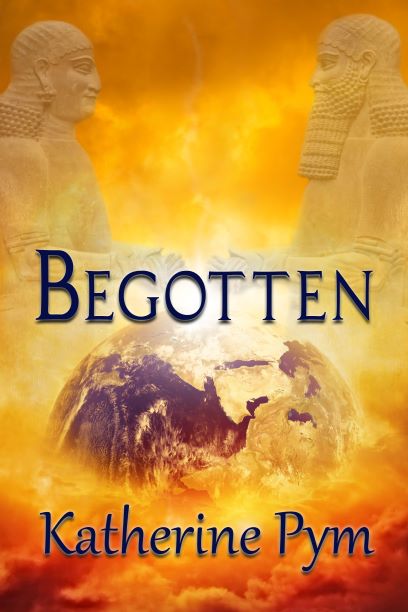
This month my newest novel, Begotten, debuted. Considered historical-fantasy, it begins with the breakup of a planet, a gateway of sorts that transports our protagonists to a new, cleaner planet. The goddess who rules the city-state is gentler than the bull god from the old world. 

Sumer Art

But many who traveled to the new world do not want to give up their god. Elam establishes a territory where the bull reigns, which causes our protagonists grief.

Why did I choose Sumer? It has a lovely history, which is documented in thousands of unearthed clay tablets. It is considered the cradle of civilization that laid between the confluences of the Tigris & Euphrates Rivers. The Garden of Eden has its origins there, along the Gabon River which is now extinct. 

Sumer Life

Sumer established writing, the wheel, a code of ethics. They believed in resurrection. They had a flood, a Moses. Their temple structure dealt with the sacred and the administrative, which is more like our corporate structure than any other current organization. Men had their specific jobs, for which they set down their daily duties which would be added to others’. Then they would be compiled into weekly, monthly, and at year’s end, annual compilation that the governor would address, then sign with his seal of office.

Their firsts for which mankind has benefited (from ancient.eu): 

Sumer Life

“The first schools, legal precedent, a ‘Farmer’s Almanac’, Cosmology, proverbs and sayings, documented domestication of animals, agricultural techniques, time, religion, mathematics, and among others, medical practices (including dentistry).”

The Sumerians were an amazing people, their culture on an equal note as our own. I had to write of the people and its society, an opportunity too good to pass up. 

Excerpt: 

Chapter One

Day of the Cataclysm

A battered reed basket under her arm, Luna stopped her headlong run to market when she reached the temple square. A bas-relief of the bull-god filled the edifice’s façade, the vivid colors dulled by the constant barrage of heat. Once surrounded by a beautiful garden, the remains of withered flowers slumped onto the parched earth. Blackened trees stretched their stark branches toward a metallic sky.

Couples with infants in their arms silently queued at the temple’s great bronze doors. At short intervals, priests admitted a pair as the rest shuffled forward. The smell of burned spices wafted from the vast building before the doors clanged shut.

A flock of birds burst from the garden’s skeletal tree canopy. In distorted chaos, they squawked and flew into each other. Feathers rained onto granite stones worn thin by worshippers.

The ground rolled beneath Luna’s feet. She spread her legs for balance as mews of fear rippled in the hot air. Gasping with terror the earth would break apart, sweat trickled in her heavy black hair, plaited in a mound of thin ropes. She searched for something to hold onto when the rumbles ceased.

Deadly earthquakes came with more frequency, several per day, each stronger than the last. This morning’s had rattled the kitchen with clay pots falling off shelves. Hot coals bounced from the stone oven and rolled across the floor, scorching a table leg.

An agitated couple in the queue caught her attention. The woman held an infant while the man paced in a small circle. They wore the same usekhs as Luna, beads of turquoise and amethyst that draped to the shoulders. The collars showed they were slaves in the same large household as Luna, yet she did not know them.

Sumer Art


~*~*~*~*~

Many thanks to:

Ancient History Encyclopedia: https://tinyurl.com/y5pnbu64

Depositphotos.com

Popular Posts

Books We Love Insider Blog

Blog Archive