Friday, February 8, 2019

Inspiration on a Plate by June Gadsby

Visit June Gadsby's BWL Author Page for information and buy links on all her booiks


Of all the books I have had published, The Raging Spirit is the only one set in a place I have never visited. In fact, not many people have set foot on the Archipelagus of St. Kilda off the north-west coast of Scotland, as wild a place as anyone would like to go. Indeed, not many people have even heard of it.[1]


 Some years ago, my husband had special permission to spend some time on the main island of Hirta with a group of ornithologists, hosted by the Royal Air Force who were, at that time, occupying the essentially uninhabitable piece of our planet, in order to track missiles sent from the island of Benbeccula. 

The islands are famous for their sea birds – hence my husband and his group with their cameras, who had been given permission to camp [2]


and take their own food, but the ornithologists were well looked after, especially with alcohol at the Naaffi,  who were making the most of their short spells. While they were there a submarine arrived and the submariners came onto the island in shifts and had to be carried back to the sub because they were so drunk.

The only other people on Hirta were a group of volunteers from the National Trust who were renovating the old stone houses. The island had been uninhabited since 1930 when the 36 remaining inhabitants were forced to leave.  It is now a nature reserve, the island having been bequeathed to the National Trust for Scotland in 1957 and was designated as Scotland's first World Heritage Site in 1987. It is now possible to visit the island. [3]


Brian’s photographs and the stories he told me of this wild adventure planted the seed of the most exciting novel I had written up to that point. Even now, I feel as though I had been there and the magic of the place will be for ever in my imagination. Writing it as a historic, romantic suspense was no trouble at all, since nothing much had changed since the original population had been evacuated. These hardy people spent their lives climbing the sheer rock faces of the islands, gathering sea birds – in particular the Fulmar, which was their main diet. They had one boat and supplies were brought no more than once or twice from the mainland, as long as the raging sea would allow the boats to approach.

‘THE RAGING SPIRIT’ BLURB: For a woman in 1890 the journey to the wild archipelago off the coast of Scotland, is hazardous. Undeterred, Meredick accompanies her naturalist father on his expedition to the islands, knowing she may have to endure a long stay. But then she meets the renowned Professor Fergus Macaulay and soon has cause to fear him more than the elements. As their boat flounders in savage seas, Meredick is jettisoned overboard. However, she is saved by a young man called Logan, who bears an uncanny resemblance to Professor Macaulay..and Logan’s dark and terrible past is slowly revealed – at great cost to them all.

REVIEWS:

Mr Terence Jennings
5.0 out of 5 stars
This is yet another wonderful book by June
Format: Kindle EditionVerified Purchase
This is yet another wonderful book by June, this is my 3rd, so far, and the picture she paints, really makes you feel you are there with the characters, am so glad Meredith got her man in the end, took me just 3 days to read this, just wanted to keep going to see what happened.

Roberta Grieve
5.0 out of 5 stars
When Meredith accompanies her naturalist father on an expedition to ...
Format: Hardcover
When Meredith accompanies her naturalist father on an expedition to the remote island of St Kilda in 1890 she knows that life will be harsh with few amenities. She is also nervous of her father's employer, the forbidding Professor Macaulay. As the boat nears the island it founders and she is by Logan, a man with a dark past. June Gadsby's descriptions of the island and its dour inhabitants paint a vivid picture of a community cut off from civilization. Tensions build among the islanders and the expedition members and Meredith senses a mystery surrounding Logan. This was book I read almost in one sitting so anxious was I to find out what would happen to Meredith.
At the time when Brian was on St. Kilda only specially invited people were allowed on, but I believe that tourism has now reached these wild and isolated islands. I will never set foot on those rocky shores, but I can still feel the magic of them and the inspiration for The Raging Spirit that was passed to me by my husband.

Thursday, February 7, 2019

Going Away to Write


To purchase this book, click here

March 1, 2019 will mark the first anniversary of the release of my debut novel, Kelegeen.  Much of this year has been spent on a very steep learning curve, one that included educating myself on the publishing industry and, even more so, on marketing. It was obvious I didn’t know what I was doing, so I hired a marketing firm to guide me.  They’ve been extremely helpful, but I still had to do the work of putting my book and myself out there.  It’s been a great experience, one that is ongoing, as I’ve only skimmed the surface.  The problem is it hasn’t left me with much time to write.  My 9:00 – 5:00 day job, teaching online courses for the University of Dayton, and caring for my 92 year old mom who lives with me along  with various other responsibilities and obligations on top of my new marketing tasks has eaten up what little free time I had before this adventure ever began.

When it comes to my writing, the most common question I’m asked these days is, “when will the sequel be out?”  My answer is usually a non-committal “working on it.”  It seems I’ve been in the historical research phase forever.  That’s not just because there’s a large amount of research to be done, but because I’m not finding the time to do it.  I knew something had to give.  An overwhelming desire to get away from every distraction and ensconce myself somewhere that would allow me to laser focus on the sequel drove me to find a solution.

Enter my cousin, Patty.  Patty is retired, her children grown, and her mate fully capable of taking care of their dogs on his own for a week.  Patty is also very fond of my mom and lately has been repeatedly expressing a desire to visit her.  So, in one of my hair-pulling moments of frustration at not having time to research or write, Patty’s genial, smiling face flashed into my mind. 

I texted Patty, laying out my plan before her.  If she could come down for a week (she lives in Vermont) and stay with my mom, I could use some of my vacation time from work and go away to write.  She loved the idea.  Mom loved the idea.  I’m head-over-heels in love with the idea.  It didn’t take long to find a time that worked for all of us, so I quickly booked a weeklong stay at a studio suite in a local hotel. 

Before this month is over, I will have spent a week doing nothing but research and writing.  That entire week will be all sequel, sequel, sequel.  No distractions, no other responsibilities.  No, I won’t be able to write an entire novel in a week, but I do expect to make serious inroads on both the research and the writing.  Once I get that fully underway, I hope to be able to run with it from there on out.

Though I’m all too well versed in Murphy’s Law and the best laid plans of mice and writers, I am hopeful.  As long as all goes according to plan, or at least close to it, my post next month should be all about what an awesome, productive week I had.

Wednesday, February 6, 2019

A Perfect Day For A....Suicide?


It is a Saturday February morning, 8:30 AM, and the crisp cobalt blue sky announces another perfect day for iceboating.
So, reader, I can see that quizzical look on your face: iceboating? Yes. Iceboating is the sport, some say the disease, of sailing at indecent speeds on ice in a wooden fuselage 12 feet long equipped with three steel blades called runners, and propelled by the wind alone.
My friends and I have spent the day before whizzing around on Lake St. Louis, near Pointe Claire, Quebec on ice of mirror-like quality, and I’m hungry for more.

But this morning, I must first check the ice, not so much for thickness but for cracks, as they can develop overnight and catch an unsuspecting sailor’s  front runner blade,  with ensuing disastrous consequences.
As I get out of my car near the lake on Cartier avenue, I zip up my black parka and don my brown fur hat, grab my crowbar  and start out onto the foot- thick ice. A dusting of snow covers the surface and sparkles into a myriad of diamonds in the morning sun.

I’m about 500 yards out and I find a crack, which has refrozen. I begin digging into the crack to see how thick it is with my crowbar when I hear the mournful toll of the bells of St. Joseph’s Church, off to my right.I turn to see pallbearers transferring a coffin from a hearse to a dolly, about to wheel it into the church.

I resume my digging, and shortly thereafter, satisfied the crack is safe, I head back to my car. I stop at one of the local bakeries for hot croissants and head home. After a hearty breakfast, I get my gear together and head back out back towards the launch site, where my friends and I have left our iceboats overnight.
I drive down Lakeshore Road, and moments later I’m about to turn onto Cartier avenue again towards the ice when a police woman signals me to stop. I notice there’s a strip of yellow police tape blocking off Cartier. I lower my window and ask: “What’s the problem?”

“You can’t pass,” says the petite officer.
“Why, what happened?”

“There’s been an accident. Please continue.” She waves me on.
“But I have my iceboat down there. I…”

“No one is allowed to pass.”
“Listen, just let me get my iceboat and I’ll be on my way. It will take me just a few minutes to load it onto my van.”

She seems doubtful at first, but since I look insistent, she grabs her VHF and calls her superior. After a brief exchange, she says: “okay. But make it quick.”She goes to the sidewalk, unfastens the yellow tape and waves me through.
I start driving , arrive at the end of Cartier near the lake, and my jaw drops. Alongside the pier near the ice, there are two fire trucks, one ambulance and three police cars, red and blue lights flashing. A policeman is giving orders to two firefighters, who are busy removing a ladder from their fire truck. Two medics have taken a dolly from the rear of the ambulance and are lifting its sides into place. I look towards the ice and see two firefighters next to a fiberglass toboggan at the edge of the ice. A diver in a wetsuit is standing by, and his oxygen tanks are about to get loaded onto the toboggan by another firefighter.  A policeman is standing by overlooking the whole operation.

I get out of my van and walk up to the policeman: “what’s this about? What’s happening?”
“You’ll have to ask the captain.” He turns and points to a tall man wearing a cap and giving orders to two other officers who have started unrolling a roll of yellow tape.
I walk up to the captain, who looks at me unsympathetically and says: “Oui?”
“I’ve come to pick up my iceboat” I say, pointing to my craft on the ice. What’s all this about?”

He leans over conspiratorially and says solemnly: “ C’est un suicide.”

“What?”
“Yes, a suicide,” he says, pointing out towards the frozen lake.

“But that ice is over a foot thick. And how do you know it’s a suicide?”
“Well, you see, there was a funeral this morning, and the pallbearers saw this guy out there on the ice, digging, digging… and…”

Omygod  I think, as I start to put the pieces of the puzzle together.
“..and when they came back out after the mass, he wasn’t there, so they called us.”

Oboy. “Tell me Capt., did they describe him?” I venture to ask.
“ Yes.  He was wearing a black parka, black pants and…” he stares at me intently,… “and a brown fur hat.” The captain’s brow creases into a frown as he exclaims: “ Oh ! ben tabarnak !!

(For those of you whose French is a little rusty, I assure you these are not words of endearment.)
“I was just checking the ice…” I say, almost apologetically.

Moments later, he’s barking orders at the firefighters and other policemen, and they all retreat towards their respective vehicles, pack up their gear and leave. I try to look sympathetic and not burst out laughing as the captain gets into his car, slams the door and drives off.

It turned out to be a perfect day for…. iceboating.


For those of you interested in finding out more about iceboating, try googling:


Montreal Iceboating Association, Facebook page

New England Ice Yacht Racing Association

International DN Ice Yacht Racing Association


Tuesday, February 5, 2019

Ham House near Richmond Surrey by Rosemary Morris

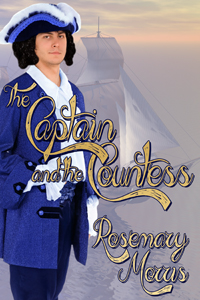
Click on the cover to discover more about The Captain and the Countess.

Built in 1610 for Sir Thomas Vavasour, Knight Marshal to James 1st, and subsequently owned by the Duke and Duchess of Lauderdale, Ham House is now owned by the National Trust.
During my visit, I imagined the hero, Captain Howard, and the heroine, Kate, Countess of Sinclair, in my novel, The Captain and The Countess, taking the air in the magnificent formal gardens, which stretch down towards the River Thames, and treading the floors of Ham House.
I also imagined them in small rooms called closets. There are six closets at Ham House, which are more intimate than the larger ones such as the North Drawing room. One is ‘The Green Closet’ the walls hung with green damask and furnished with display cabinets that contain exquisite miniatures. Another is ‘The Private Closet’ which contains lacquered furniture, where the Duchess of Lauderdale, who inherited Ham House, kept books, tea and valuables.


www.nationaltrust.org.uk/hamhouse

Extract from The Captain and The Countess

Kate, Countess of Sinclair, attired in a pretty nightgown, sat by the fireside in her closet, where she kept money and jewelry in a strong box. Before settling down to work, she glanced around the small room crowded with chairs, a desk, sofa, bookshelves, and her sewing basket, the contents of which she occupied herself on rare occasions.
With impatient fingers, Kate sorted her correspondence: a sheaf of bills, invitations, begging letters, and other communications. After arranging them in four groups, she rose and placed them on her desk, a pretty piece of red-lacquered furniture from China inlaid with mother of pearl.

Five Star Review by N.N. Light

From the moment Captain Edward Howard lays eyes on Kate, Countess of Sinclair, he realizes he must do everything in his power to make her happy. There’s pain behind Kate’s façade and he’s determined to help her in any way he can.
Kate likes Captain Howard immediately, even when he’s forward with her and seems to disregard propriety in search of the truth. The attraction scares her, and she guards her heart against the young Captain’s desire. Her past comes calling and she must choose between what her heart wants and what society expects of her. Will she and Edward have a future or will her past continue to haunt her?
This is the first book I’ve read from Morris and I really enjoyed it. Morris is a historian at heart, and it shows in her writing. I kept pinching myself, to make sure I wasn’t in 18th century England. Every detail, from English customs to costume and speech was historically accurate. The dialogue was spot-on, and I found myself caught up in the emotional tension between the characters.
If you’re a fan of historical romance (especially Pre-Regency), you’re in for a treat with The Captain and the Countess. The writing style of Rosemary Morris is reminiscent of Edith Wharton (The Age of Innocence) and I look forward to reading more from her.

Favorite Character: Kate. I loved everything about her, from the way she carried herself in society to the way she cared for her children to the way she fell in love with Edward. She’s a victim of an abusive husband yet that didn’t stop her from living life to the fullest. A woman after my own heart.

Favorite Quote: “She was a lady without comparison, beautiful, mysterious, and vivacious. After he dined, he would take the air in Hyde Park in the hope of encountering her.”

Rosemary Morris
Best-Selling Novelist

There is a gigantic canvas for a historical novelist to choose from. My novels are set in the early 14th century during the reign of Edward II, in that of Charles II’s niece, Queen Anne Stuart, who reigned from 1702 to 1714, and the ever-popular Regency era.
I chose those periods because each of them affected the course of history. world. If Edward II had won the Battle of Bannockburn, it is feasible that he would have conquered Scotland and, perhaps he would not have been deposed. Had the Duke of Marlborough lost The War of Spanish Succession, and The Duke of Wellington had been defeated by Napoleon at The Battle of Waterloo, the history of Britain and that of Europe would be different. Defeat would also have had far-reaching consequences for the rest of the world.
The more I read about my chosen eras the more fascinated I become, and the more aware of the gulf between the past and present. Those who lived in the past shared the same emotions as we do, but their attitudes and way of life were in many ways very different to ours. One of the most striking examples was the social position of women and children in in bygone ages.
My characters are of their time, not men, women and children dressed in costume who behave like 21st century people.
Research of my chosen eras sparks my imagination. The seeds of my novels are sown, and from them sprout the characters and events which will shape their lives.


Novels by Rosemary Morris

Early 18th Century novels: Tangled Love, Far Beyond Rubies, The Captain and The Countess

Regency Novels False Pretences, Sunday’s Child, Monday’s Child, Tuesday’s Child, Wednesday’s Child and Thursday’s Child. Friday’s Child to be published in June 2019

Mediaeval Novel Yvonne Lady of Cassio. The Lovages of Cassio Book One

www.rosemarymorris.co.uk
http://bookswelove.net/authors/morris-rosemary

Monday, February 4, 2019

A Question of Salt by Katherine Pym


~*~*~*~

Our Earth from Space


I am not a conspiracy theorist but I wonder if our earth has had more incarnations than previously thought. 

Our earth has vast, salty oceans, but what if, when earth had formed and cooled long before the dinosaurs, the oceans were Not salty? What if infant earth had not been saturated with this chemical compound? 

Pangaea
Pangaea
Perhaps, an intelligent species had settled on what is now called Pangaea more than 335 million years ago, and did not require salt to live. 

I put it before you there were other, long ago, well-formed civilizations that had prospered on this earth. There may be past civilization remnants no one will ever see due to massive changes in the environment and our landmasses. Our earth is always moving due to shifts in the tectonic plates, meteorites smashing into our oceans, and volcanoes. 

What if the advanced civilizations prior to the dinosaurs did not require salt to live? Why is science so biased this could never have happened? Because if you don’t see evidence of this, facts and hard data, it could not have been. 

Science realizes now mankind has been around a lot longer than previously thought. Buried cities are being unearthed, one of the most intriguing in Turkey today known as Göbekli Tepe. 7,000 years older than expected (and older than Egypt’s Early Dynastic Period by 8850 years), the city had been buried by its occupants. Why?

Göbekli Tepe dig
When did salt fill the oceans? Was it always there or did something happen that the chemical compound spread its crystal tentacles across the planet, sank into its oceans and penetrated deep in the land? God knows the earth has undergone massive changes over the eons. Maybe, salt came to us from outer space through an asteroid of something. What if the meteorite that killed the dinosaurs was saturated with salt and changed the earth’s entire chemical makeup?

Whatever, we require salt to live but if we ingest too much, it will kill us. Dilemma!

Ancient man learned to barter salt for revenue, goods and services. They learned to preserve food with it, live their lives around it. The Chinese discovered gunpowder trying to dig for salt. Kingdoms were built and destroyed over salt. 

Salt Mine (a nice one)

 A gift from the gods, strange beliefs survive from its importance, i.e., during the Medieval era, women salted their husbands’ genitals to make them more potent. Today, we throw salt over our shoulders. We salt our fish and make pickles with it

We are salt.
But have we always been?


~*~*~*~

Many thanks to: My thoughts and conjecture,
Salt by Mark Kurlansky, published by Penguin 2002
And Wikicommons, public domain

Popular Posts

Books We Love Insider Blog

Blog Archive