Monday, October 3, 2022

Sunday, October 2, 2022

Meet BWL Authors - Diane Scott Lewis and Joan Soggie

Introducing 

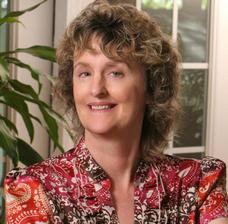
Diane Scott Lewis

Diane is a BWL Author from Pennsylvania

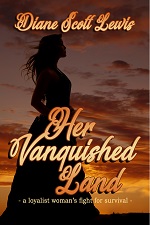
 Diane Parkinson (Diane Scott Lewis) grew up near San Francisco, joined the Navy at nineteen, married in Greece and raised two sons in Puerto Rico, California, and Guam. She's a member of the Historical Novel Society and wrote book reviews for their magazine. She’s always loved travel and history and has had several historical novels published. Her most recent is the Revolutionary War novel, Her Vanquished Land.

Diane lives with her husband and one naughty puppy in western Pennsylvania.

For more on her books visit her website: www.dianescottlewis.org

Diane Parkinson
writing as Diane Scott Lewis - Facebook - Facebook Fan Page - Twitter @DSLewisHF  - http://www.dianescottlewis.org

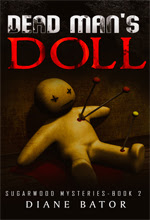
Two of Diane's novels are featured below. Visit her Author page for more https://bookswelove.net/lewis-diane-scott/ 


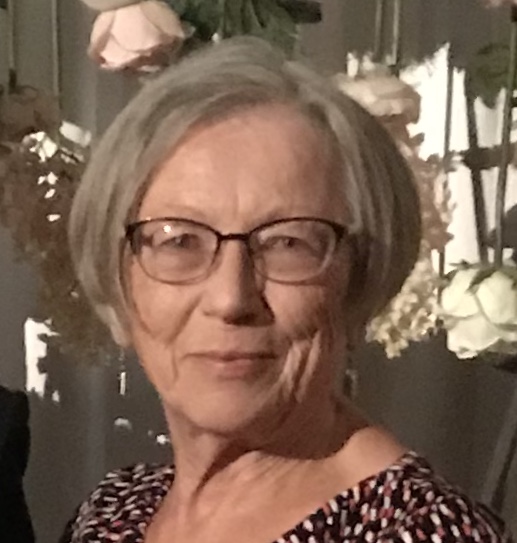
Introducing Joan Soggie

Joan is a BWL Author from Saskatchewan 


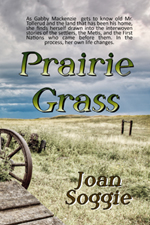
Joan Soggie’s lifelong curiosity about her homeland has led her to explore the native prairie, the centuries-long relationship between the land and First Nations, and her own family’s settler history. Her 2014 non-fiction book, Looking for Aiktow, garnered praise from academics and general readers. “Beautifully told and filled with fascinating stories.” (Rick Book, author of Necking with Louise and Christmas in Canada.)   “The sort of plains history I particularly appreciate.” (Dr. David Meyer, professor emeritus, University of Saskatchewan.)


The prairie and all its creatures are her inspiration. Her family is her joy. She and her husband, Dennis, enjoy travelling and treasure days with their children, grandchildren and great-grandchildren.  Joan Soggie lives and writes in rural Saskatchewan

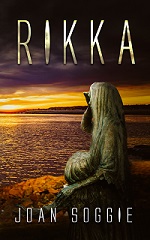
 For more about Joan's novels visit her BWL Author Page

https://bookswelove.net/soggie-joan/


Saturday, October 1, 2022

BWL Publishing Inc. new releases for October 2022

 Visit our website for links to these novels and their BWL Author pages

https://bookswelove.net 

Desperate to save her people from the Marauders swarming her space freighter, Kefira prays for a miracle. Blake Volkov, legendary captain of the Blue Phantom hears her plea and deems her and her refugees worthy of his help. Grateful for the rescue, Kefira finds his price shocking. But despite his glowing wings, handsome looks and impressive abilities, Blake admits he is no angel… although Kefira’s feline bodyguard strongly disagrees.

Meanwhile, an old enemy bent on revenge unleashed an unspeakable evil on the galaxy. Time to face past mistakes… time for innocent blood to flow. Nothing prepared Kefira for the upheaval ahead.

Can Blake find redemption? Can Kefira save her people? Can she ever trust and love again?


Friday, September 30, 2022

Oh Baby: Eden Monroe


Click link to Eden's BWL Webpage

Giving birth to more than one baby at a time is known as a higher-order birth and the more babies there are, the greater the rarity.

The Dionne quintuplets, Émile, Yvonne, Cécile, Marie and Annette, were indeed such a rarity. Born prematurely on May 28, 1934 near Callander, Ontario, all originated from one fertilized egg; “the quintuplets arising through the repeated twinning of the early single embryo”, according to Britannica.com. That means Elzire Dionne was actually carrying three sets of identical twins until Cecile’s twin was miscarried during the third month of pregnancy. The average estimate of spontaneous conception of quintuplets is extremely rare; the average estimate is one in over sixty million births says verywellfamily.com.

Twins are actually the most common multiple birth, and in Back in the Valley, Kane and Jessica Davidson welcomed identical twin boys, Jack and Tommy, during a late March blizzard:

Kane couldn’t speak for a moment and Bea understood, carrying the conversation until he eventually found his voice.

“You have every reason to be proud, and I’ll bet you’ve bought out the entire supply of baby boy cigars at the gift shop too.”

“Not yet,” he said as he wiped tears away with the back of his free hand, “but I’m about to. Oh Mum, I just can’t describe how it felt to hold my boys for the first time. It was the best day of my life.”

Fraternal (dizygotic) twins are more common than identical (monozygotic) twins. Fraternals can happen more than once in a family if the mother is prone to hyper ovulation (releasing more than one egg at a time), but more than one set of identical twins can also be born into the same family, although the chance of that happening are about 12,500 to one.

Nevertheless, the odds were in the Davidson’s favour in Back in the Valley:

“Did you say baby? Not baby, Kane, babies. We’re having twins again.”

“What!” Kane held Jessica at arm’s length so he could see her face. “You’ve got to be kidding me! Are you sure about that?”

“In addition to the exam the doctor did a blood and a urine test and both had elevated hCG. When I was pregnant for the baby we lost, my hCG levels were up, but with the twins it was really high – and now it’s really high again. Dr. Lafferty said there’s a very good possibility that this will be a multiples pregnancy too. Twins, maybe triplets.”

“Triplets! Come on, Jessica. No way. Triplets! We’re fertile, babe, but not that fertile.”

So who is most likely to have identical twins? As set out in verywellfamily.com: “Contrary to popular belief, the chances of having monozygotic twins are most often not related to your family history. If there is more than one set of identical twins in a family, it is probably due to luck or external environmental factors. Some genetic mutations have been identified that increase the chance of monozygotic twins, but these are very rare.


“However, dizygotic twins do run in families. This is mainly thought to be due to genes that increase the number of eggs released.

“Interestingly, in vitro fertilization (IVF) appears to increase the likelihood of having monozygotic twins.”


Markers that could influence fraternal twin (and sometimes triplet) conception include the mother being taller than average; having a higher BMI (body mass index of 30 or more); being thirty years of age or older (more likely to hyper ovulate as you grow older), or family history. Race is also a factor.  

“African-American women are more likely to have twins than any other race. Asian and Native Americans have the lowest twinning rates. Caucasian women, especially those over the age of 35, have the highest rate of higher-order multiple births (triplets or more).” (Beaumont.org/conditions/multiple-birth-about)

Igbo-Ora, a community in Southwestern Nigeria, is known as the twins capital of the world. (reuters.com) There, the incidence of twins is in fact the highest in the world, and diet could be a factor says Jean Carper, author of The Food Pharmacy, Dramatic New Evidence That Food Is Your Best Medicine, and a former senior medical correspondent for CNN in Washington:

“Some authorities, including Dr. Percy Nylander, a professor at the University of Ibadan in Nigeria, suspect that going heavy on yams could promote the birth of twins. That’s because the Nigerian Yoruba tribe he has studied has by far the highest rate of double births in the world – twice that anywhere else. And the Yorubas who eat prodigious amounts of yams, a staple of the tribal diet, have an even higher rate. The theory goes this way: yams are rich in hormone-like substances that trigger the release of other hormones, including one called follicle-stimulating hormone (FSH). This FSH, found in extremely high levels in Yoruba mothers of twins, is thought to stimulate the ovaries to release more than one ovum, setting the stage for double conception. Dr. Nylander also notes that the wealthier Yoruba people who have given up the tribal yam-dominated diet for Western fare have fewer twins.”

Another commonly held theory in Igbo-Ora that accounts for the high rate of twins there, is the consumption of the okra leaf popularly used to make stew “that should be eaten immediately and never stored.” (reuters.com)

Oyenike Bamimore of Igbo-Ora believes she’s living proof that the okra leaf results in the conception of twins. “Because I eat okra leaves a lot, I gave birth to eight sets of twins,” she said. (reuters.com)

However it’s unlikely that okra or yams were the principal diet eaten by the queen of multiple births, and not just twins. We have to step back to the 1700’s to meet the peasant woman who lived in Shuya, Russia. Her name was not recorded, other than she was the first wife of a Mr. Feodor Vassilyev. As set out in www.guinnessworldrecords.com/, Mrs. Vassilyev, through twenty-seven pregnancies, gave birth to sixteen pairs of twins, seven sets of triplets and four sets of quads for a grand total of sixty-nine children. Village records also indicate that when Mr. Vassilyev married for a second time he fathered eighteen more children. No mention was made of additional multiple births.


Thursday, September 29, 2022

About Elizabeth II -- Reminiscence


Amazon

KOBO

Smashwords

Barnes and Noble


 Inevitable that several of us BWL authors will write about the death of Queen Elizabeth, so here's my contribution. I still can't quite believe she is gone, even after ten days of a most Royal sendoff. She's been The Queen for most of my life. I do remember George VI's death, however, as this was also big news at our house. My parents discussed how brave the king had been, during the war, staying in London with his people, throughout the nightly bombing. 

On the great stage of today's (apparently) endless train of planetary disasters, her death doesn't mean much beyond the UK and the remaining commonwealth nations, but how well I remember Elizabeth's coronation, which took place when I was eight. With an Anglophile Mom, I couldn't help hearing--and viewing (for a new wonder, a television had just arrived in our home) an English Coronation, full of glittering regalia and history. 


(Free Image from Pixabay)

The idea of showing this rite to the public had been much debated beforehand--such a break with tradition! Those grainy black-and-white images of a beautiful young Queen inside her fairy-tale golden carriage, riding through gray, battered, postwar London, now all decked out beautifully for the celebration. The procession to the Abbey was followed by film of the mystery taking place inside. This was ground-breaking, this showing of so much of an ancient ritual to the public, but it proved to be a huge hit with the viewing public all over the world.  From now on, television would give those who liked to "royal watch" a whole new tool with which to engage. 

Anticipating the event, The New York Times was suddenly full of articles on the British royal family and also on English history, a news glut on a single subject, from the time of the death of King George VI onward to the crowning of the new, young queen.   From this time, I'd date my ever-increasing, ever-expanding, sixty year passion for learning about human history. 


https://www.amazon.com/Roan-Rose-Juliet-Waldron/dp/149224158X/ref=sr_1_1?crid=2R221JXX8BYFN&keywords=Roan+Rose+Waldron&qid=1664379252&qu=eyJxc2MiOiIwLjg0IiwicXNhIjoiMC4wMCIsInFzcCI6IjAuMDAifQ%3D%3D&sprefix=roan+rose+waldron%2Caps%2C59&sr=8-1

Certainly, at first, this history was of the WASP kind, as that was the brand on offer at my house. I had a scrapbook filled with articles clipped from Newsweek, the NYT, Look, and whatever magazine resources we had that dealt with current events. I was not a tidy kid, so this was a messy affair of white paste and missing bits of text, but I was thoroughly engaged while making it. 

When Mom took me to England after her divorce, I ended up in a country boarding school in Penzance. Here, I found myself regularly singing "God Save the Queen." My 5th form classmates were rather surprised to learn I already knew the words, but, with a Mom like mine, this had been inevitable. I had been taught that "When in Rome, do as the Romans do" so I adapted as fast as I could in all ways. 

I'd had no idea that a person could live on cabbage and potatoes and slices of brown bread and a single pat of butter, but that was what was on offer in boarding school, so I wolfed it down like everyone else. Post-war, even in the early sixties, things were tight and war-time frugality was still the order of the day. In winter, the school was kept at 45 F., and so our wool and flannel clothing was a necessity, not an affectation. We shared a once a week bath--3 girls bathed and washed their hair in the same tub. Therefore, the water was super hot to start, but I was often allowed that first bath by default, because no one else wanted to brave the temperature.

In London, while sightseeing, I saw huge open swathes of emptiness and broken bricks in some places, in others, like around St. Paul's Cathedral, there was an expansive green void on every side, where that huge ediface stood, white and shining, perfectly alone, a miracle of survival during the Blitz. 

.  

When Mom and I transferred ourselves to Barbardos, in what was then the British West Indies, we sang "God Save The Queen" there too. Barbados was part of the old British Commonwealth, and called Elizabeth II "Queen of Barbados," but I understand that this "Island in the Sun" has become a republic (as of November, 2021), and replaced the British Crowned head with a President, while remaining as part of the Commonwealth of Nations. English rule, begun in Barbados in 1627, has ended at last,  and with it, the days of Bajan schoolgirls singing "God Save the Queen."  


--Juliet Waldron


Amazon

KOBO

Smashwords

Barnes and Noble

Popular Posts

Books We Love Insider Blog

Blog Archive