Wednesday, May 20, 2020

Recipes for Cooking Over the Campfire by J.Q. Rose


Terror on Sunshine Boulevard
Paranormal Mystery

Click here to find more mysteries by JQ Rose
from BWL Publishing

Hello and welcome to the BWL Publishing Insiders Blog!

Cooking over the campfire.

Recipes for Cooking Over the Campfire by J.Q. Rose

A few years ago we camped with our daughter Lee Ann and family over the Memorial Day holiday weekend near Stony Lake in West Michigan. Always the "event" planner, she invited our other daughter, Sara, (who is not a camper) and family to join us on Sunday for a fun dinner with Dump Soup as the main entree.

I bet you've heard the folk tale Stone Soup, the story of hungry strangers who convince the townspeople to share a small amount of their food in order to feed everyone. We weren't exactly hungry strangers, and we didn't ask fellow campers to contribute to the soup pot.

Lee Ann coined the term "Dump Soup" because we all brought ingredients to dump into the soup pot. There is NO recipe. That's the fun part. Just whatever is offered is added to the pot. Lee Ann poured in beef broth, beef consomme, and I added mushroom soup as a base for all the other stuff e.g. beans, tomatoes, potatoes, carrots, onions, cans of veggies, etc.


All ready to cook over the campfire.
Lee Ann stirred it all together and placed the pot over the campfire for the men to watch while the ladies took a walk. Of course, we came back to check on the progress of the soup. After an hour and one half over the fire, we gobbled down the soup. It was delicious. The soup must have been good because the kids loved it too, especially with lots of crackers.

Another of our family faves for dinner over the fire is "hobo dinner." I've heard it called foil packet dinner too. We spray the foil with vegetable oil, place bacon on the first layer, hamburger or chicken next, and then add whatever fresh veggies you like to the foil e.g. potatoes, carrots, green pepper, onion, butter, and celery.
Ingredients ready to wrap.
Be sure to wrap the packet tightly so the grease doesn't run out. Then place the foil dinners in the coals or on a grate over the fire. Depending on how you cut the veggies and how hot the fire is, the packets need to cook 30--45 minutes. Chicken may take longer. 
PS--This dinner can be cooked on your grill at home too.
Dinner wrapped in foil packets.
Clean-up is easy. Just wrap up the foil and throw it away. THEN it'll be time to roast the marshmallows to make S'mores! But first, you may want to go for a swim or a hike!

What are your easy go-to recipes when having a crowd over to your house or when camping?

Click here to connect online with J.Q. Rose

Sunday, May 17, 2020

Tests and Interview for Science - Janet Lane Walters #BWLAuthor #Testing group #Sraying home

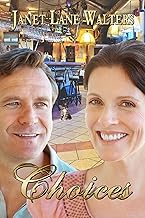
 Choices


About ten years ago, my husband and I were part of a testing group. The group consisted of normal people older than 70 and those with Alzheimers and other such conditions. The last results I have are from 2012. These tests were fun. I used to call it game day and this happened once a month. I will say I went from average to well above average on some of the tests. My husband and I stopped going when he needed dialysis and wasn’t available to do the tests. I went once alone, though.

What does this have to do with a long phone interview I did? The reason I was called was because this goup of researchers at the Nathan Kline Institute were basing their interviews on the Covid virus and the effect it was having on people. They had done a study of younger people and thought they should look at the elderly. They called and asked if I would participate. “I told them yes.

When the interviewer called, the first thing she asked was about my emotional state with having to stay at home and not seeing people. I told her, I was rather unique as I had a career I was pursuing and that I wrote every day, usually from nine to five. That sort of threw her for a moment.

There were about 7 sections of questions with a variety of ways to answer. Some sections were yes and no, some wanted you to rate from one to I believe five on a scale and some wanted longer answers.

When we finished, she said my answers were very different in many areas that both the younger and older people, especially in the section that dealt with death of others and of one’s self. Not sure why the difference unless it’s because I’m rather a realist and I had recently dealt with the death of a loved one. I remember when she asked me if I ever got angry and of course I do, but she said in the last two weeks. My answer was yes. This was concerning my husband’s pension which he arranged that I would receive after his death. I have been filling out papers since the first week in February. The last form I sent in hopefully is the last one I’ll have to do. The kicker was, If you don’t hear from us in 60 days contact us. That makes this the middle of July.

At the end of the session she asked if I would like to play games at the institute again. I said I would since I’m curious to see if or how much I’ve deteriorated in eight years.

Saturday, May 16, 2020

Nature can be so cruel, by J.C. Kavanagh


The animal kingdom often reveals that life is a test of survival of the fittest. Or sometimes, being in the wrong place at the wrong time.

Case in point: my neighbour has a mini-farm housing a good variety of birds. She's got Guinea Hens (think bread box with a clown face), swans, chickens, geese and a pen full of peacocks. All these birds make noise. And eggs. Lots of eggs. Who doesn't love fresh eggs, straight from the chicken? Actually, what doesn't like eggs is more the question. Weasels love eggs, fishers love eggs, racoons love eggs, snakes love eggs, and so does the sly fox.

Clown-faced bread box aka the Guinea Hen

My neighbour's geese occasionally come to visit

Newest adult male peacock visiting my home. I call him Turkwise.


Percy, the one-year-old male peacock, shaking his booty.
Note the still-developing tail feathers.

Percy and his brother, Snickety. 
My Ian feeding the peacock brothers

Percy and Snickety are peacock brothers, approximately one year old in the pictures above, which were taken a couple of weeks ago. Their 'human,' my neighbour, gives them free rein of her property and since her Guinea Hens come to visit me, the peacock brothers have decided that our home is also worthy of a daily visit. The young peacocks are quite domesticated and will run to me the moment I'm in view. If I'm inside, they'll peck on the windows for my attention and my endless supply of bread.

Alas, this is the part where nature can be cruel.

A fox has been seen wandering about our properties. It has a lame front paw and is often seen during the day. My neighbour notices that chicken eggs and goose eggs are disappearing. She reinforces the metal fencing surrounding the pens, ensuring an animal cannot easily dig its way in. Then she lets the peacock brothers out of their pen - the parents and one sibling prefer to stay in the pen but the brothers love their freedom. Out they go and are immediately joined by the newest peacock, a blue and white new fellow who came out of the woods and adopted them. I named him Turkwise, due to his turquoise colour and the fact that my granddaughter pronounces the colour as 'Turkwise.'
Shortly after they are released, the sound of shrieking peacocks fill the air. Peacock feathers drift down. My neighbour runs out in time to see a fox slinking away with one of the peacocks in its mouth. She chases it to one of her outbuildings where she discovers two young fox kits. Mother fox has caught their dinner.

Nature giveth and nature taketh away. Poor Percy.


Stay safe everyone.


J.C. Kavanagh, author of
The Twisted Climb - Darkness Descends (Book 2)
voted BEST Young Adult Book 2018, Critters Readers Poll and Best YA Book FINALIST at The Word Guild, Canada
AND
The Twisted Climb,
voted BEST Young Adult Book 2016, P&E Readers Poll
Novels for teens, young adults and adults young at heart
Email: author.j.c.kavanagh@gmail.com
www.facebook.com/J.C.Kavanagh
www.amazon.com/author/jckavanagh
Twitter @JCKavanagh1 (Author J.C. Kavanagh)

Friday, May 15, 2020

Using TikTok to promote your book


“Another platform for book promotion? Aren’t we swamped already?”

Good question.

TikTok is not for every author, but for some, it could really help in book promotion. To understand how, let us look at TikTok first.

TikTok is the newest and fastest growing social media platform of 2019 and the trend is continuing. It started in China and is the visual equivalent of Twitter. Where Twitter posts are composed of short written prose, TikTok posts are composed of short videos. Users can create videos of fifteen seconds (or string togehter videos into posts of sixty seconds each.) Most users create videos on their phones, edit it using the easy-to-use but professional tools, add music, and download it on to TikTok. Most users use the platform on their mobile devices.

Is TikTok worth it? It depends on the audience for your book. Sixty percent of TikTok users in America are between sixteen to twenty-four years of age. For a young adult title, this is the perfect demographic and can help in author-branding. It is also extremely popular in places like China and India, with five hundred million monthly users in China while about the same number of Indians download TikTok videos every month. Targeting these geographic areas specifically is an option.

By its nature, TikTok is visually driven. Graphic novels are prime candidates for TikTok promotion. . Large companies such as Guess jeans and Chipotle have used TikTok with great success and many more are joining the trend. TikTok is a fun and visually-appealing platform. It doesn’t lend itself to serious topics and is not a place for making sales pitches.

TikTok has made available several marketing tools available. The videos can be linked to websites and the social engagements (likes, impressions, clicks, etc) are measured, allowing a marketer to know how well a campaign is doing. Use of hashtags, games and challenges allow for viral promotion.

TikTok is very easy to use and understand. It is this ease of entry that is its main drawing card. It is not for everyone, but for a product or book with a good fit, it can work well.


Mohan Ashtakala is the author of "The Yoga Zapper" a fantasy and "Karma Nation" a 
Literary Romance. (www.mohanashtakala.com)
He is published by Books We Love Ltd. (www.bookswelove.com)


Thursday, May 14, 2020

A surprising thing about Shakespeare...by Sheila Claydon


Click here for my books at Books We Love


A heroine whose problems are far distant from what the whole world is coping with today...but if you want a happy ending, this is the book to give you one while distracting you from real life!

I know we are all fed up with hearing about Covid19. After all, we are living with it, so we know how it is affecting our lives and the lives of our loved ones, so thinking about something different would be a good thing...except.  Because we are going to have to live with it for a long time to come, maybe now is the time to get a few things into perspective, literary wise.

Did you know, for example, how much of William Shakespeare's writing is peppered with references to the bubonic plague, which was the fifteenth and sixteenth centuries equivalent of what we are living with today. A disease which started with animals (rats and fleas in this case) and which had no known cure. Nor, in those far distant times, any hope of finding one.

Think of Romeo and Juliet, when Mercutio, mortally wounded in the feud between the Capulets and the Montagues, called out 'a plague on both your houses.'  Or when King Lear tells his daughter Goneril, 'Thou art a boil. A plague-sore, or embossed carbuncle.' Then, less malevolently, Olivia, in Twelfth Night, marvelling at the speed with which she has fallen in love, says, 'How now? Even so quickly may one catch the plague? 

There are many more such instances but the one that stands out the most is, again, in Romeo and Juliet, when the friar who was asked to deliver a crucial message to Romeo about the drug that will make it look as if Juliet has died when, in fact, she will only be sleeping, fails to carry out his task. In those far off days, friars had to travel in pairs. Unfortunately the friar's travelling companion was visiting the sick when he went to look for him. This meant that the public-health officers (the searchers of the town), suspecting them both of having been exposed to the plague, put them in quarantine by nailing the doors of the house shut! By the time the quarantine ended it was too late...'I could not send it - here it is again - Nor get a messenger to bring it to thee, so fearful were they of infection.'

It wasn't the plague that did for Romeo and Juliet but the dreadful social disruption it brought, which led to Romeo thinking she was dead, and so committing suicide, only to be copied by Juliet when she heard of his death.

In the year Shakespeare was born the plague killed a fifth of the townspeople of Stratford on Avon while sparing the Shakespeare family, and the fear of plague was something he had to live with throughout his life as it waxed and waned, disappearing for a while and then reappearing without any warning. History tells of the innumerable preventive measures that were used, most of which were useless (Fake News at its best!)

  • Although bubonic plague was caused by the fleas on rats, dogs and cats were killed. Possibly the fleas transferred to them although this is not clear.
  • Dried rosemary, frankincense, or bay leaves were burned in a dish as it was believed that the smoke would clear infection from the air.
  • If there were no herbs available the doctors' favoured replacement was to burn old shoes!
  • In the streets people pressed oranges stuffed with cloves against their noses, which was the closest they got to a medieval mask.

Even in the sixteenth century it was recognised  that the rate of infection was far higher in densely populated cities, so the wealthy people with country retreats would escape to their second homes, much as many people are doing today. In addition, civic officials took measures to introduce social distancing when they realised that crowds heightened contagion.  They also collected data from parish registers so they could track weekly plague-related deaths. When those deaths surpassed 30 they banned assemblies, feasts, sports and any other form of mass gatherings.

As it was considered impossible to become infected during the act of worship, churches were kept open, although anyone suspected of being ill was banned from entering. What was closed, time and time again, however, were theatres, which was economically devastating to Shakespeare, who was not only an actor and a playwright but also a shareholder. It is thought that during the severe outbreaks of bubonic plague that infected the country between 1606 and 1610, Shakespeare, frequently in lockdown, wrote and produced some of his greatest plays. During this time the London playhouses were unlikely to have been open for more than a total of nine months, but somehow he made what must have been a fearful and difficult time work for him.

The only time Shakespeare wrote directly about the plague was in Macbeth. Mostly he merely  referenced it in his writing as an accepted part of everyday life, something to be lived with, feared, but hopefully kept at bay by social distancing, quarantine, and the equivalent of using a mask.

The challenge to us twenty-first century writers is to copy him by putting our own quarantined, socially distanced selves to work, even though we can't hope to emulate his success. And while we are doing that, stay safe.

Popular Posts

Books We Love Insider Blog

Blog Archive