Tuesday, August 2, 2022

How Do You Come Up With All Those Book Ideas? by Diane Bator


Find me at http://bookswelove.net/bator-diane/

Studies tell us that the average human being has more than 6,000 thoughts per day. As writers, it can seem as though we have at least double that since our thoughts are conjoined with those of our characters.

Most writers are constantly taking in, processing, and developing new work whether consciously or not. Even when we’re doing something “mindless” like jigsaw puzzles or online games, there is a part of our brains that just never slow down or become distracted. They’re always working on plot holes and great sentences.

My significant other has grown used to seeing my vacant stare when I have an idea percolating. Or when I suddenly run from the room searching for pen, paper, or laptop then disappear down the proverbial rabbit hole for a while and he’s unable to get my attention even with bacon, wine, or cheesecake. A writer’s mind is a funny thing. We can be swayed by food or drink, but even that might cause sudden fits of writing as we insist, “I have a great idea!” It doesn’t always mean we actually do, but sometime those bursts of creativity can lead to something bigger. A scene, a chapter, or an entire novel.

What I find interesting is having people tell me I think differently than they do, which I used to take as a bit of a slight and wondered what was wrong with me. Recently, I spent a week with my mom who came to visit from across Canada. More than once she gushed, “I have no idea how you keep all those books and ideas straight.”

I suppose it’s the same way you get to Carnegie Hall. Practice! Pen to paper is the best way. Going with the flow of head to heart to hand. While most writers use computers these days, nothing beats the old school sound of a pen scratching paper. If you ever had writers block, give it a try!

So how do writers actually come up with the ideas they write for readers to become absorbed in for hours on end? Truth is, no one really knows. Not yet. The following is borrowed from a great article called The Science Behind What Writing Does to Your Brain - CraftYour Content. (The article is from 2017, but an interesting read!!)

“Expert athletes have trained their muscles to perform certain functions, and expert creatives can do the same with their brain.

Lotze and his team of researchers discovered that, while writing down their stories, the expert writers used an additional part of their brain — the caudate nucleus.

The caudate nucleus is the region of the brain that handles automatic functions, or functions that are practiced over time. For example, the act of handwriting letters on a page. You learned the letters when you were a toddler, traced them, and learned how to write them yourself. After years of practice, it’s now an automatic function. When that region is active, it means there is some form of memory involved.

What kind of memories are expert writers pulling from? It’s kind of hard to know what someone is thinking when their brain is cycling through ideas, sentences, and the many automatic functions it takes to write. Our technology is advanced, but not that advanced.

We could hypothesize that they are pulling memories from sentences they’ve formulated in the past, stories they’ve thought up before, or maybe even techniques they’ve learned about storytelling. But we may never know.

They also discovered that, in the expert writer’s brain, the regions that deal with speech and word formation (known as Broca’s and Wernicke’s areas) are used more frequently in the brainstorming stage compared to novice writers, who tend to visualize in pictures more. This could mean that, before even putting pen to paper, expert writers are already thinking about words or phrases they are going to use to tell their story.

It could also mean that expert writers have trained their brain to see things differently, to be more language oriented, and to visualize not just with the occipital lobe.”

Experiments and lobes aside, I’ve always found it fascinating—from a writer’s perspective—how other people DON’T see stories in everything. How things I find intriguing and inspiring, can be meaningless to the next person. While science keeps trying to explain what makes some of us writers, we just have to keep plugging along to create the stories and the worlds we love.

Intrigued? Here are a few more rabbit holes to dive down and find out more:

·       The Science Behind a Writer's Mind - Craft Your Content

·       Scientists study brains of writers,attempt to make creativity boring » MobyLives (mhpbooks.com)

·       How Writing Benefits Mental Health - NeuroScientia

 Happy Web Surfing!

Diane

http://bookswelove.net/bator-diane/


Meet BWL Publishing Authors - Eileen Charbonneau and H. Paul Doucette


Introducing Eileen Charbonneau


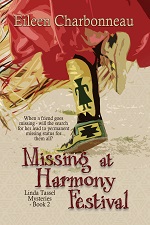
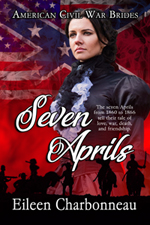
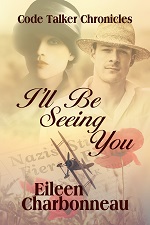
Eileen Charbonneau writes historical novels that the Washington Post has called “provocative…

well told, extremely entertaining tales.” and Publisher's Weekly says shows impressive command of the elements of historical romance..."). 

Eileen's work has won the Golden Medallion, Chatelaine Award and Phyllis A. Whitney Award. Finalist accolades include the Daphne duMaurier Award, Hearts of the West Award, Golden Leaf  and Laramie Award. 

Eileen lives in the brave little state of Vermont, where she and her husband run a small Bed and Breakfast in their 1886 Victorian home.  Eileen loves kayaking below the eagles on the Connecticut River and Maple Creemies. She loves hearing from readers. Her email is eileencharbonneau@gmail.com.  Visit Eileen's website at:   www.eileencharbonneau.com

Visit Eileen's Author Page:  https://bookswelove.net/charbonneau-eileen/


Introducing H. Paul Doucette

Paul is a BWL Author from Nova Scotia 

I was born in Halifax, Nova Scotia in 1948. I left home at age 16 and, after a brief stint in the army, I began a career as a merchant seaman (12 years). This took me to many places in the world. Following that, I entered into a professional career as a transportation /logistics specialist. Somewhere in there I took a few years off and ‘thumbed’ my way across North America and Mexico as part of the ‘Hippie’ counterculture movement. I was also active in the civil rights and anti-war movements.


I have lived and worked in many countries over the course of my life and have gained a knowledge and appreciation for the differences we share as humans. I like to think that this life experience has enabled me to apply a certain perspective to my characters and stories.

.


Visit Paul's BWL author page  https://bookswelove.net/doucette-h-paul/


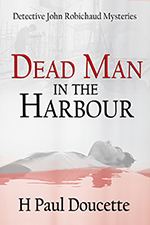
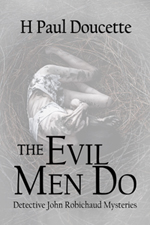
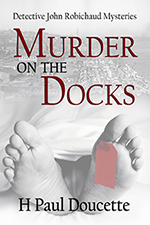
For details and purchase links on Paul's books click the book covers  

Monday, August 1, 2022

New Releases for August 2022 by BWL Publishing Inc.

 NEW RELEASES FOR AUGUST 2022


Check out these new releases at the following author pages


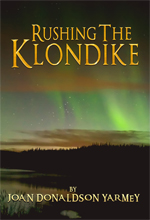
 Rushing the Klondike:  
https://bookswelove.net/donaldson-yarmey-joan/


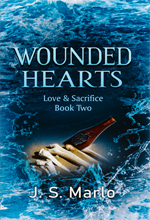
Wounded Hearts:
https://bookswelove.net/marlo-j-s/


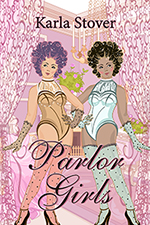
Parlor Girls:
https://bookswelove.net/stover-karla/


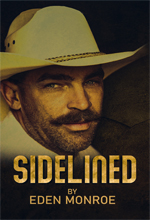
Sidelined:
https://bookswelove.net/monroe-eden/


Sunday, July 31, 2022

The Bottom Drawer by Priscilla Brown


 Cassandra doesn't throw anything away. She operates on the premise that one day there may be a world shortage of safety pins. So she doesn't discard the shoes ruined when  she  tripped on a drain to avoid being run over by Alistair.


During a recent major kitchen renovation, the three drawers fixed under the bench became surplus to requirements. Their contents needed to be re-housed or recycled or headed for the garbage bin. Drawers one and two contained cutlery and teatowels, all neatly packed and transferred to their updated location. But the bottom drawer had always been opened only to drop in items with nowhere else to go, or simply for the ease of a quick storage. Sunglasses mislaid last summer, a packet of nails but no hammer, a screwdriver but no screws, garden scissors with blunt blades, and more 'stuff'', most of which went into the garbage.
 
Having dealt with this bottom drawer, I was on a 'drawer roll' and examined the contents of the bottom drawer of my writing desk. Would I  find the hard copy of a best seller hiding here? No, no attempts at creative writing, but in a folder I found undated magazine clippings of advertisements featuring possible characters. As a writer of contemporary romance, I had to smile at these people wearing clothing and hairstyles from at least twenty years ago. More recycling bin fodder. 
 

In our mid- or late teens,  a girl friend and I started what we called our bottom drawer We stashed items we believed 
would be useful when we married, which we confidently expected to do before long. As far as I recall, we bought cheap items from discount stores and markets. Each of us had a  boyfriend whom we considered as 'steady'. My girlfriend made the mistake of telling hers about her bottom drawer. He took off, never to be heard from again. I didn't tell mine, but I did enrol in a Saturday machine sewing course using provided machines. With fabric supplied by the tutor,we made a cushion cover.  Unfortunately for me, my boyfriend's mother was also a participant. Big mouth me, I mentioned to her that I thought he'd like the colour. Obviously she told her son. End of boyfriend. So much for my teenage bottom drawer.

 
I now have pristine bottom drawers in the kitchen and on the writing desk. How long before they become receptacles for assorted 'stuff''?

Happy reading, best wishes, Priscilla


Saturday, July 30, 2022

Ride Em Cowboy by Eden Monroe


Click here for details and purchase information on Eden Monroe's BWL Author Page


Bulls have long held a thrilling fascination for mankind.

It’s believed that bulls were once part of the ancient Olympic Games, programs that included wrestlers carrying live bulls around the stadium on their shoulders. Bull leaping was a specialty of the ancient Minoans of Crete.

In the 16th century, what would become rodeo as we know it today was putting down roots on Mexican haciendas, where equestrian events called charreadas were hosted, and an integral part of those charreadas was bull riding (jaripeo). Jaripeo was once part of bull fighting and unbelievably, riders would actually ride the bull to death during that event! Eventually that changed to the animal being ridden only until it stopped bucking.

During the 1850’s, the old charreada-style competitions were still very much alive and had expanded to areas of the US southwest. And to change things up a little, steer riding became a fad in the wild west shows of that era. Not only were steers much easier to ride, they were less difficult to handle while transporting them between venues.

It was in 1936 that rodeo cowboys organized themselves and established a standardized set of rules. The result was the Cowboy’s Turtle Association and it not only raised the profile of rodeo itself, but also bull riding. Nineteen forty-five saw that name change to Rodeo Cowboy’s Association, and in 1975 it became the PRCA (Professional Rodeo Cowboy’s Association). Then in 1992 bull riders created their own exclusive organization and governing rules: Professional Bull Riders (PBR), although bull riding is still one of the PRCA’s sanctioned events.

            Called the most dangerous eight seconds in sport and often with big bucks up for grabs, bull riding continues to soar in popularity. Forbes.com calls professional bull riding the “fastest growing sport in America,” but in fact it’s now a worldwide phenomenon (rules and histories vary). Canada and Mexico are at the top of that international list, but there’s also bull riding competition in Belize, The Dominican Republic, the Philippines, Japan and France, among the twenty-six other countries.

In the romantic suspense novel Sidelined, rodeo cowboy Tate McQuaid is a world champion bull rider, tough, sexy and daring. Always keen to best the rankest bulls on the circuit, nothing gets his adrenalin pumping like dynamite on four hooves, where the odds can shift in a heartbeat:

“After what seemed like far too long the loud buzzer sounded, indicating the completion of the mandatory eight-second ride and Tate was about to make his signature flying dismount when his right spur caught high in the flat braided bull rope tied around the bull’s belly. Thrown off balance, Tate was slammed into the arena dirt, now in the dangerous situation of being hung up as the bullfighters fought to cut him loose from the animal. And then in a sickening twist, Tate was slung forward, his head colliding with force against one of Gunpowder’s huge horns. At last he was cut free of the rope, but lay where he’d fallen, not moving.”


It’s not just the riders (both cowboys and cowgirls) who are in the spotlight, the bulls themselves are also rodeo stars. These bovine athletes are chosen for their strength, health, overall agility and age, and they are judged for their performance, power, speed, back leg kicks and front end drops; the harder the ride the higher the score. Even if the rider doesn’t make the full eight seconds, the bull will still be scored on his performance and that will affect his ability to make it to the finals. Consistently high scores just might earn him the title of bucking bull of the year.

Another integral part of the sport is bullfighters. In some rodeos or in other countries, protection and humour are combined in the rodeo clown, including the barrel man.  No matter the title though, they are agile athletes in their own right and routinely put themselves in harm’s way in the arena to come to the aid of the rider should help be needed. This work is now considered an art form and audiences enjoy the opportunity to see them showcase their skills. Nothing short of astonishing, their acrobatics are a definite throwback to the ancient Minoans. At the heart of it all though, the bullfighter’s job is to keep the bull from harming the rider; to distract the animal at the end of the ride so the rider can make a safe exit. Riders owe their life and wellbeing to these skilled rodeo protection athletes.

Aside from the safety of the rider, including protective glove, vest, helmet and mask, there is also the welfare of the rodeo animals, in this case, bulls. Some question the purpose of the flank strap. Americancowboy.com explains that the strap tied around the bull’s flank during the ride “… is a soft cotton rope at least 5/8” in diameter and is used without extra padding like sheepskin or neoprene. Contrary to popular belief, the flank strap is not tied around the bull’s testicles. This rope is to encourage the bull to use his hind legs more in a bucking motion, as this is the true test of a rider’s skill in maintaining the ride. If it is applied improperly a rider may request to ride again, as the bull will not buck well if the flank strap is too tight….”

Spurs are also controversial, although there are strict regulations today for both the type of spur used and how they’re used. It should be pointed out that spurs are used in several equestrian disciplines, not just rodeo.

The treatment of rodeo bulls was what reporter Parla Jankins tackled Sidelined’s Tate McQuaid about during a print media interview. More specifically, what makes bulls want to buck:

 “Rodeo bulls are bred to buck, they’re doing it on instinct,” Tate explained.

Parla laughed derisively. “On instinct.”

“Yes, on instinct, survival by tossing off predators if you go back far enough. We’re talking Texas Longhorns and Brahman cattle, but nowadays it’s their breeding. Rodeo bulls are bred to be aggressive and they have a lot of training on them before they ever see professional competition.

“The American Bucking Bull is an actual breed and is the result of an elite breeding program. Rodeo bulls have only one ride a night and that’s it. Then it’s back to their water and feed. Those bulls are treated well because they’re worth a lot of money and there’s always a vet on hand or on call in case of a problem.  Even their transportation is topnotch. Our bulls are treated like kings.”

“Like kings,” she said, again heavy on the sarcasm, as though still hoping to trip him up.

“Yes, like kings. They’re only allowed to travel so many hours a day in air-ride suspension trailers on thick bedding and they’re given plenty of rest. Their hay is the very highest quality; they get nutritional supplements and vitamins if necessary and some even have chiropractic and acupuncture care….”

 “And when bulls retire from competition?”

“They get busy siring more bucking babies.”

“So the bulls have a pretty good life is what you’re telling me?”

“A pretty good life for a bull.”

“A pretty good life for a bull,” she repeated. “How do you suppose they feel about having sharp spurs jabbed into them by cowboys using them to further their own gain? I suppose you’ll say that’s humane too.”

He sighed. “We do wear spurs because it helps riders get a grip on the animal, but the spur rowels are required to be dull and they don’t scratch the animal.”

“I fail to see how it couldn’t cut them if you’re doing it hard enough to get a grip.”

“It does not cut them because a bull’s skin is super thick compared to a human’s. We don’t beat the bull up, it’s the other way around….”

Rodeo, both past and present, is a huge subject, and this is only a very brief snapshot. With massive respect to all rodeo athletes, professional bull riding is in a class all by itself, according to shockmansion.com:

“The Toughest Sport on Dirt:  Bull riders are the rodeo’s rock stars. Modern day gladiators, challenging 2,000 pound beasts until one of them wins!”


Popular Posts

Books We Love Insider Blog

Blog Archive