Saturday, October 12, 2019

Setting a Novel in Canada -- or Not?


Does setting a novel in Canada limit your readership to Canadians? Over the years, I've heard this question at Canadian writing conferences and other places where aspiring writers gather. Invariably, someone comments that he sent a query to an agent or publisher in the USA and was told Canadian stories don't sell. The implication is that Canada holds little interest for readers outside our country. 

Even Canadians might prefer reading about far away locations. I've been guilty of this, especially when I travel and want to learn about the country I'm visiting. A novel set in my destination gives me a flavour for the place and its history better than a guidebook.

I also recall hearing that a common feature of blockbuster novels is a variety of international settings. Author Dan Brown nailed that formula.  


But others argue that Canada might be exotic to those who live far from here. They cite writers who have found great success with their stories set in Canada. Louise Penny has a US publisher and an international audience for her mysteries that take place in a Quebec village. L.M. Montgomery's classic Anne of Green Gables is beloved across the world. Japanese tourists trek to modest Prince Edward Island to visit Anne sites. 

Readers of Britain's Rough Guide travel guidebooks and tours voted Canada the second most beautiful country in the world for 2019. Wouldn't that mean they'd want to read about people in this beautiful land? If Anne and PEI can charm the world, why not my home province of Alberta?  
Japanese movie poster
I went ahead and set my first novel, Deadly Fall, in Calgary, where I live. This made setting research easy.  My mystery sleuth Paula's drives the route pictured below in the book's opening chapter. I've driven and walked across this bridge numerous times. 


Paula works out in a former church converted to a gym in Calgary's inner city suburb Kensington. In the real world it's a sporting goods store. 


Book #2 of my Paula series, Ten Days in Summer, continued with my Calgary setting. This time Paula investigates a murder against a backdrop of The Calgary Stampede. My research included attending our annual Stampede parade. 


I was really sneaking peeks at the police offers present, since Paula's homicide contact, Mike Vincelli, is on crowd control duty during the parade scene in the book. 


My third novel, To Catch a Fox, is a departure from my mystery series and single Canadian setting. Julie Fox, a Calgary engineer, must travel to a new location, to search for her mother who took off when Julie was a child and hasn't been heard from since. I settled on southern California for the novel's alternate location because it was far enough from Calgary for Julie's mother to get lost in, yet convenient as well as enjoyable for me to visit twice to research. 

Santa Monica beach - Julie jogs along this boardwalk
In some ways, I find it easier to write about less familiar settings since I'm seeing the place with new eyes and am more likely to come up with fresh descriptions. 

At the San Diego zoo, bird of paradise plants are on the lookout, like Julie the pursuing and pursued fox
While I like writing about different places, I'm back to Calgary for my current novel-in-progress, the third book in my Paula series. I love travel, but lean toward writing about places I know well and deeply.   

And for those curious about the other countries that made the Rough Guide readers' list of the world's most beautiful countries for 2019, here they are:

  1. Scotland
  2. Canada
  3. New Zealand
  4. Italy
  5. South Africa
  6. Indonesia
  7. England (UK regions were judged as countries) 
  8. Iceland
  9. United States
  10. Wales (Do the British love their country's beauty best, or have not many travelled elsewhere?)
Calgary in winter - beautiful, eh?


Friday, October 11, 2019

When Memories Come Back to Haunt You by Karla Stover


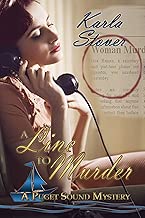
A Line To Murder (A Puget Sound Mystery Book 1)
Murder in Tacoma, Wa.

        
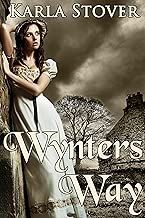
Wynters Way
Historical/Gothic Mystery

Murder, When One Isn't Enough
Murder on Hood Canal


When a product probably not known to many Americans was mentioned in a novel I just finished reading, memories of forty-odd years ago sprouted up like mushrooms after a September rain. The product was Bird's Custard, a necessary ingredient in Nanaimo Bars. And so, I take a historical walk.

According to "foodnetwork.ca," the first recipe for the pastry appeared in the 1952 edition of the Women’s Auxiliary, of the Nanaimo Hospital Cookbook. Some fifteen or so years later, they made an appearance in Tacoma, where I live. The problem was, the recipe going around called for Bird's Custard, not something available here. 

British chemist Alfred Bird created the egg less product in his laboratory because custard calls for eggs to which his wife was allergic. His custard powder became so popular, Bird and his sons went into business, eventually producing blancmange powder, jelly powder, and egg substitute. British soldiers took the custard with them during World War I.

Back to my conundrum; in order to make the trendy new cookie, Mom and I had to find someone going to Canada who would bring a box of Bird's Custard back.

When I saw the custard mentioned in a British novel, it brought back so many memories of Mom and me sharing the recipe and struggling to make our cookies as pretty as the pictures we'd seen.

I'm not sure if women cook much anymore or, if they do, if they have recipe files. When Mom died, I kept hers. Someday, an executor will have to get rid of them, and mine, as well.


Thursday, October 10, 2019

When the Writing Gets Tough, Go Shopping.

Find all my books at Books We Love

When the writing gets tough, go shopping!
           
What better place to search for characters than a mall, where people of all shapes, sizes, colors and styles happily gather. Without interfering in their enjoyment, I can study and choose from thousands of character traits, personality flaws and secrets – free to the discriminating shopper.
            I’ve tried shopping at home with catalogs. It sometimes works for a minor character, but it’s hard to tell if I have a good fit without seeing the actual character in motion. All those idiosyncrasies that make my characters special come out in public – their walk, laugh, voice. Perhaps what I’m looking for is the way they hold their head, cling to a boy friend, or talk with their hands. Too much personality remains unnoticed on a still life, one-dimensional photograph in a catalog.
            So I settle down to window shop.
My first “purchase” is not your stereotypical hero. His belly’s a bit too large; his face beginning to show the first stages of age. Gray threads his hair and his laugh is a bit too loud. But he also has the nicest smile I can ever recall and the kindest blue eyes. His gentle gaze speaks of trust and honesty and I immediately realize I want him in my book. He will make the best “best friend” anyone can have.
I turn my head at the sound of male laughter. Cowboys. Are they real or wannabes? They lean against the railing and I study them as they study girls. I have my pick of sizes, the tallest being well over six foot. If I take a composite of the group, I just might have my hero. Let’s see – a mustache from the third guy; the blonde’s hair; and the tall one’s smile, his lips lifting a little higher on the right than the left.
I like the tall one’s attitude. As I watch, his face never changes expressions. He’s aloof, trying to look disinterested. His thumbs are hooked in the belt loops of his jeans; one boot crossed in front of the other. While his body language might indicate he’s bored with this activity and wants something more exciting, his eyes tell another story. Twinkling green, slight crinkles at the corners, they laugh and mock and never miss a thing.
As though one entity, they turn to follow a group of girls when they pass. Red-blooded, American boys to the core, but I’m still not sure I can use them, so I study their walks. Only one has the rolling gait of a cowboy—someone who actually spends time on a horse. It’s the tall one; the guy with laughter in his eyes and the crooked smile.
I watch them walk away, and he turns and touches his forehead as though tipping his hat. And then he winks at me.
Oh, yes, I definitely need a cowboy in this book.

Developing characters is such a fun part of writing a story. They soon take on a life of their own and often go in a direction I couldn’t have imagined. I found my cowboy in Tenderhearted Cowboy. Joe is on a quest that I never thought he could complete, but with Sky’s help and love, anything is possible. You can read more about them on my website and I hope you grab a copy of this historical romance and get lost in Joe and Sky’s story.

Barbara Baldwin


Wednesday, October 9, 2019

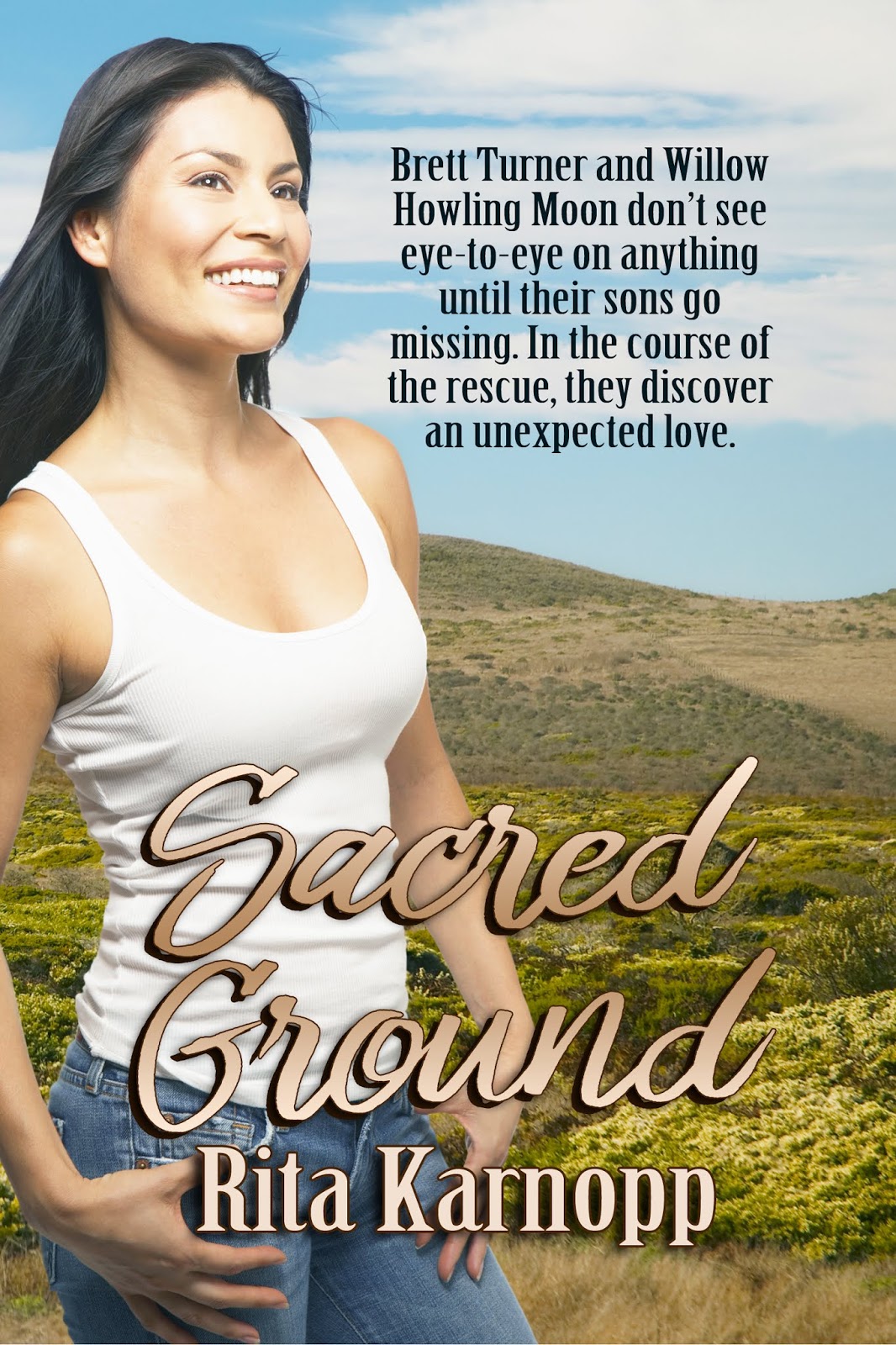
Tips for writing consistently – by Rita Karnopp


Tips for writing consistently – by Rita Karnopp
You’ll never finish a book until you set a deadline.  Once you do that – choose things that will keep you on-track to reach that goal.
 
How can you do that?  Once you’ve set your book deadline – you need to make a couple of important decisions. 


Pick a special place where you are comfortable writing.  A place where other people or distractions are not going to disturb you.  Could be your office – or the upstairs window seat, or even your bedroom.  Make sure you have privacy and those around you respect that.


If you don’t have privacy – have you considered a coffee shop or even a library.  I love writing when my husband and I are camping.  I find a shade tree with an incredible view, a lawn chair and then it’s time for my characters to talk to me.
Make your ‘writing place’ somewhere you can go consistently – and soon the minute you’re in those surroundings – your brain will automatically shift to a writing state-of-mind.

It’s important to set a time-period to write.  i.e. 30 minutes a day / an hour a day/ 3 hours every Saturday and Sunday evenings, etc.  Many writers suggest it should be at least 90 minutes because it can take some time to get yourself into the mood. Many writers say they never write for more than four hours at a stretch.  I let my mood and the characters decide when it’s time to take a break.  I’ve been known to write at stretches of 7 or more hours.  Sometimes only 1-2 hours.  It depends on how it flows. 

Consistency is key to setting a book deadline date.  Figure out what time works best for you to write – and stick to it.  I write best from 8:00pm to 4:00am – yep – and it seems the later it gets (or in reality - the earlier it gets … 1:00am - 4:00am) the more alive my characters become.  I get lost in their story. 


Some writers never write at a certain time – they hold themselves to writing x number of pages each day.  This never works for me, but I know many writers who find this commitment gets their book finished by the deadline date.

For me – demanding a certain number of pages would shift my focus to the number of pages – creating anxiety and frustration.  I would lose my mood and lose concentration on what’s important – my character’s story.

Now is not the time to ask, “Can I write a book?”  Just write.  Let the characters take over and tell you what they want to say, do, react, decide, etc...  It may sound left-of-center – but my characters have created some of the most unpredictable situations – I would never have thought of them myself.

I never stop and read a chapter after I finish it – deciding if it’s good enough or what I wanted it to day.  I re-read my last page from the night before – get back in ‘the mood’ and go from there … staying in that creative state-of-mind.

Be confident in your ability to write your story.  Remember – ideas will come to you as the story progresses.  One day you’ll be blasted with ideas … write them down as they come to you.  Other days things might slow up – you have all those wonderful ideas you jotted down to fall back on.


If I’m struggling and forcing things – I stop.  Yep.  I stop writing.  That night when I go to bed I bring my characters to life in my mind.  I go to sleep running my characters thru scenarios … and literally fall asleep.  The next night when I sit down to write – those sub-conscious ideas spill onto the page – and my characters once again come to life.

Remember, you want to be a writer because you love writing. You love bringing your characters to life from page one to page 451.  Don't take the fun out of it with self-doubts and pressures.

Don’t write in a genre you don’t like – it will show in your story.   Embrace what excites you.  Be enthusiastic and determined to reach ‘the end.’  

Write what you love – and love what you write.  Stick to that rule and your readers will love your stories and you.


Tuesday, October 8, 2019

Criminal expressions - part 1 by J. S. Marlo


I'm fascinated by expressions & idioms. They are colorful and interesting, and they often stump me as many of them cannot be translated word for word in my first language.

I write romantic suspense, so there's always a crime being committed in my stories...and a dead body or two hidden somewhere. I often use expressions and it got me curious to know where they come from. So, here are some of them:

- To cover one's tracks (1898): to conceal or destroy evidence of a shameful or nefarious act. The expression stems from "hiding one's footprints".

- To get caught red-handed (1432): to get caught in the act. It comes from Scotland, and it's an allusion to having blood, which is red, on one's hand after the execution of a murder or a poaching session.

-  To keep one's nose clean (late 19th century): to stay out of trouble, to avoid doing anything shady. It originates from "to keep one's hands clean", an expression widely used in England in the 18th century which meant to avoid corruption. When it crossed the Atlantic, the "nose" replaced the "hand".

- A red herring (18th century): something designed to distract or throw someone off a trail. A herring is a fish that is often smoked, a process that turns it red and gives it a strong smell. Because of their pungent aroma, smoked herrings were used to teach hunting hounds how to follow a trail, and they would be drawn across the path of a trail as a distraction that the dog must overcome.

- A whistleblower (19th century): a person who exposes someone involved in an illicit activity. The term attached itself to law enforcement officials because they used whistles to alert the public.

- The long arm of the law (1908): the far-reaching power of the authorities. It began in 16th century as "Kings have long arms".

- A wild goose chase (1592): a futile search, a useless and often lengthy task. The original meaning is related to horse racing, as a 'wild goose chase' was a race in which horses followed a lead horse at a set distance, mimicking wild geese flying in formation.

- A skeleton in the closet (early 1800s): a dark or embarrassing secret that is best kept unrevealed. It stems from the dissected corpses that British doctors kept hidden for research purposes.

- The third degree (19th century): intense interrogation. In Masonic lodges there are three degrees of membership, and in the third degree, the member undergoes vigorous questioning.

- A cat burglar (1907): a burglar adept at entering and leaving the burglarized place without attracting notice. First used by a reporter to describe a burglar who operated in London.

- A stool pigeon (19th century): a person acting as a decoy or informer. It stems from the use of a decoy bird (often a pigeon) to lure birds of prey into a net.

Now I need to stop googling and go back to writing a special children's book for my granddaughter.

Happy reading!
JS

Popular Posts

Books We Love Insider Blog

Blog Archive