Wednesday, October 12, 2022

Ageism in Writing


Some years ago, I read an award-winning novel about intergenerational family relationships. Every character in the story over age fifty was physically or mentally decrepit, and often both. The author was in her thirties. This was a comic novel and I realized she was exaggerating the characters for laughs. As an official senior citizen, I didn't find it funny. 

Physical and mental problems do tend to creep in with age. Aching joints, dementia, type two diabetes, high blood pressure, clogged arteries, and a host of cancers strike seniors in large numbers. I know several seventy-year-olds who have broken bones from a simple fall. In their youths, they'd have escaped with a scratch, which healed quickly. I find recovery from injuries and medical procedures takes longer now and my body parts don't always completely return to their former normal. "You're only as old as you feel" would be nice, but it isn't quite true. Portraying seniors as no different from fit twenty-somethings only works in science fiction and fantasy -- my fantasy, in particular. 

But I also have many friends over age seventy-five who regularly spend full days hiking up steep hills, over rocky and rooted terrain. And don't try to put something over on my ninety-year-old uncle. He's as sharp as many people decades younger, although he needs a wheelchair.  

Look closely to see a group of seniors hiking - they're specs on the landscape

I think one trick for writing realistic older people is balance. For each character brought down by the trials of advanced age, show another senior in peak form. I wouldn't have minded that award-winning humour novel as much if one character over fifty, and preferably over seventy or eighty or ninety, climbed a mountain, clobbered a skilled opponent in chess, or published a successful humour book. 

It's not easy to avoid ageism in writing. A friend, who is a few years older than I am, once admonished me for a having character in her mid-fifties struggle to rise from sitting on the floor. I'd thought this was realistic, since most people in my seniors' gym glass hoist themselves up awkwardly from the mats. Kudos to my friend for being able to leap to her feet.  

   
My Aunt Edith mastered the internet in her nineties


Tuesday, October 11, 2022

The Problems of Having a Genius in the Family, by Karla Stover


Visit Karla Stover's BWL Author Page to purchase Parlor Girls


     "Ineffectual," "Inept," "A consistent failure." This are just a few of the ways Ernest Hemingway described his brother, Leicester. Harsh comments from a bullying brother, so what could Leicester do to make his mark on history? How about work hard and create and become president of a foreign country--a made-man country built on a platform in the Caribbean Sea six miles off the island of Jamaica which he called New Atlantis.

It's hard to know how serious Hemingway was about his enterprise but perhaps very serious. He used his own money, money earned from the proceeds of his book, My Brother, Ernest Hemingway, and waited for three years after his famous brother's death before launching  the kingdom.

"Anything we build there is legally called 'an artificial island,'" he said of a spot in international waters. Interestingly enough, the ocean floor was only fifty feet down there, an anomaly from its normal 1,000 feet. There he put down a foundation made from used steel, iron and cables, a ship's anchor, a railroad axle, steel wheels, an old Ford motor block, and assorted other scrap metal. Attached to it was an 8 x 30-foot bamboo log platform. He claimed half for Atlantis and half for the United States government, based on the U.S. Guano Act of 1856. To quote Wikipedia, "The Act enables U.S. citizens to take possession of unclaimed islands containing guano for the U.S., and empowered the President to send in armed military to intervene. This encouraged American entrepreneurs to search and exploit new deposits on tiny islands and reefs in the Caribbean and in the Pacific."  Guano was both a fertilizer and a necessary ingredient in gunpowder. Leicester wasn't interested in guano, though. He planned to found an International Marine Research Society on the island. He hoped to raise money for further marine research, to build "a scientifically valuable aquarium in Jamaica, and to help protect Jamaican fishing."

            One of the island's stamp.
The island's flag.


The first residents were Leicester, his wife Doris and their daughters seven -year old Anne and three-year old Hilary and Lady Pamela Bird, a Brit holding two citizenships. A letter from President Lyndon Johnson addressed to Acting President and Republic of New Atlantis inadvertently gave the fledgling republic an act of formal recognition.

     None of his plans came to fruition. In 1966 a storm destroyed New Atlantis and Leicester, who was diabetic, began experiencing bad health. After two operations and fearing the loss of his legs, he committed suicide in 1982. Like his brother, he took himself  out with a shotgun.

Monday, October 10, 2022

What Happens Next? By Barbara Baker


Baker, Barbara - BWL Publishing Inc. (bookswelove.net)

After the release of What About Me? I panic. Do I need to post another ad on social media? Or have I done enough? Do stories and reels attract more viewer traffic than posts? Is Facebook, LinkedIn and Instagram sufficient? Should I try Pinterest or Booktok? Don’t get me going about hashtags. There are so many to choose from. How and when do you know if any of them work? With my first novel, book trailers were in. This time round, they’re old school. It’s hard to keep up with the trends.

I don’t want people to stop following me because they’re tired of hearing about my new release, so I resist all of the above and post a picture on Facebook of a pelican coming in for a rough landing.

Even Google waffles about which is the best approach to increase sales. Have you found the right way to get your book more exposure?  And, as if advertising isn’t frustrating enough, checking views, likes and comments becomes addictive and my thumb aches from scrolling.

I move on to counting down the days until I can check my book reviews. So I don’t drive myself (and my husband) bonkers about what readers are saying, I only check reviews on the 17th of the month. I embrace my vacuum and give the floors a good workout if I’m tempted to peek earlier than said date.

Yes, I realize readers have a life. And when they get to the end of a book, they carry on with that life. Most readers never leave reviews. If they only knew how much they meant to authors, my vacuum wouldn’t be so exhausted and I wouldn’t cringe when I ask them to post a review (the reader, not my vacuum).

When I’m done fretting about what’s next and the fact the 17th of the month is still a week away, a different worry sneaks in. Can I write another story about Jillian and her adventures in Banff? If so, what will be the crack in her world that makes the story unfold?

As I insert a fresh cartridge in my favourite pen and grab a brand-new notebook, words from an editor replay in my head. “You need to be a more prolific writer. You need to get out of Banff and find new characters.” I look up prolific - producing much fruit or foliage or many offspring. I must have picked the wrong definition. I'm done having kids. Grandkids are way more fun.

A tarot card reader told me “Stop playing it safe. Write what you really want to write about.” What the heck does that mean? Is it a coy way of saying get out of Banff? Ditch Jillian? Who are these people and why do they insist on taking up space in my head? They certainly aren’t paying rent and they bring on a wave of imposter syndrome.

Should I even write another book?

The perfect solution to all these chaotic thoughts about writing – a colourful fall road trip. Maybe Jillian will tag along. Maybe she’ll meet someone new and start an adventure somewhere else. Or maybe she’ll only come for a mini-vacation and return to Banff after all. Regardless, road trips inspire me. And yes, I realize I’m procrastinating but is that a bad thing?

For all those celebrating Thanksgiving, have a fabulous feast and enjoy the fall colours. In Calgary we haven't had snow yet and there's none in the forecast. Although I already have my ski pass purchased, I'm loving the unseasonably warm weather. I hope you are too.


What About Me?: Sequel to Summer of Lies : Baker, Barbara: Amazon.ca: Books

What About Me? | Universal Book Links Help You Find Books at Your Favorite Store! (books2read.com)

Saturday, October 8, 2022

Fascinating & Fun Facts about Babies by J. S. Marlo


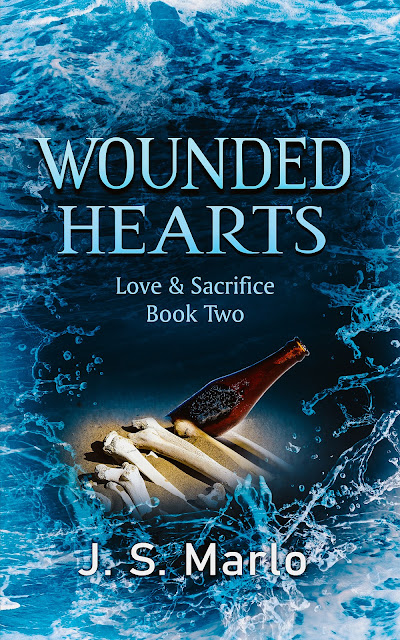
Wounded Hearts
"Love & Sacrifice #2"
is now available  
click here 


Two weeks ago, I was blessed with a second grandchild. Another gorgeous baby girl. I'm counting the days until I get to hold her in my arms.


The new parents didn't know, and didn't want to know, the sex of their first baby. They picked two names which they didn't share until after baby was born. If anyone had any objections, no one would dare to share it once it had already been given to the baby.


While I was searching for the meaning of her name--it means weaver--I stumbled onto fun facts about newborn babies. Whether I believe all of them is different story, but one of these will eventually appear in one of my stories  LOL


- Newborn babies' kneecaps are made of cartilage, not bones. The cartilage will harden into bony kneecaps around six months of age.


- Babies born in May are the heaviest. Apparently someone looked at the average weight of babies born throughout the year, and discovered that babies born in May are 200g heavier than babies born in any other months. That's 7oz bigger. That's actually a big difference.

That being said, I have no idea how many babies were parts of that, but that's a fun fact.


- Newborn babies have no tears. Babies' tear ducts aren't fully developed until three weeks of age, so they won't shed tears in these first few weeks, but it won't stop them from crying.

I wonder if the tear ducts start to develop three weeks after they are born, or three weeks after they should have been born...


- Babies are born with 300 bones. An adult has 206 bones. Over the years, baby's cartilage will harden and bones will fuse together. By the time she reaches early adulthood (20-25 years of age), she will have 206 bones.


- Most babies are born with a birthmark. They are different types of birthmarks. Most of them are harmless, and a few will fade as the child grow, but most birthmarks will be permanent.


- Babies' hair falls out. A newborn tends to lose the hair she was born with and grow new hair over the first year of her life. The new hair may be very different from the one she was born with.

One of my daughters was born with red hair. By the time she was a few months old, she was blond.


- A newborn baby is born with around 70 reflexes.

I'm impressed, and I bet they are faster than mine too LOL


- Babies know your taste in music. Unborn babies start hearing sounds and music at around seventeen-eighteen weeks. By the time they are born, they apparently recognize your taste in music.

The research doesn't say if they also acquire your taste in music, but it may explain why my daughters love ABBA as much as I do.


- Babies are born with taste buds throughout their mouths. By the time they reach adulthood, about a third of these taste buds will remain, and they will be mostly on their tongues.


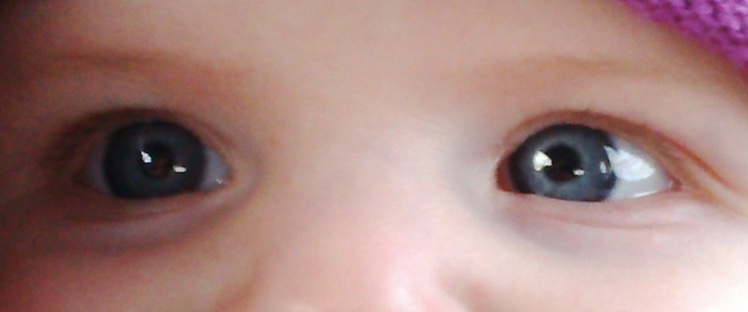
- Babies' eyes change colours.
At birth, a baby's eyes may appear grey or blue due to a lack of pigmentation. Once exposed to light, the eye colour will start to change, but it may take six to twelve months until baby has gorgeous blue, green, hazel, or brown eyes.


- Babies grow fast. Most babies will double in weight the first six months, and quadruple in size the first two years.


Yeah, they grow way too fast. Next thing you know, they start having little ones of their own.


I'm enjoying every moment of grandmotherhood because I know it will be over in the blink of an eye.


Enjoy the small blessings that life brings every day & stay safe!

JS


Friday, October 7, 2022

Autumnal Thoughts by Eileen O'Finlan


Click here for purchase information

Click here for Eileen O'Finlan's website 

There's something about autumn. It's gorgeous, mysterious, spooky, and magical all at once. It conjures up thoughts of trees ablaze in red, gold, yellow, and orange, of Halloween ghosts and goblins, harvests of apples, pumpkins, and winter squash, of simmering soups and hearty stews, the swish of leaves underfoot, and crisp, tangy air. Yet it has a tinge of sadness as well. The year is dying. That lovely, slightly fruity scent in the air is created by the decay of leaves and vegetation.  For many of us in New England, autumn is bittersweet. It is stunningly beautiful, but also the harbinger of the long, cold winter that's surely on its way.

Getty Images

Autumn is a special time of year for me. Each of its months brings a different emotion. In September, I mourn the loss of summer's warmth and freedom. By October, I've usually made my peace with summer's departure, and I'm ready to embrace autumn in all its beauty and bounty. And in November, I'm consumed with the coming holidays.

The high point in my current work-in-progress takes place in a Vermont October. Working all of that month's enchantments into the story is both challenging and rewarding. Since I am close to that point in the writing now, at least I won't have far to look for inspiration. A glimpse outside my window will do.

Getty Images

Popular Posts

Books We Love Insider Blog

Blog Archive