Wednesday, July 12, 2023

Brontë Land


In May my husband Will and I spent a delightful day in Haworth, West Yorkshire, UK. We visited the home of the famous Brontë writing family, followed in the footsteps of siblings Charlotte, Branwell, Emily, and Anne, and enjoyed lunch and snacks in cafés with views of the picturesque dales.

Curators of the Brontë Parsonage Museum say the village of Haworth and the surrounding countryside would be recognized by the Brontës today. We took the train and bus from Leeds and walked up the steep high street to the centre of Haworth village. 


Our first stop was the Brontë Parsonage Museum, which is full of artifacts and descriptions of the family's history and the sisters' writing. As children, the girls and their brother Branwell loved making up stories for his toy soldiers and creating imaginary worlds and adventures for their characters. Charlotte named her favourite soldier after the Duke of Wellington, who defeated Napoleon at Waterloo in 1815, the year before Charlotte's birth. The siblings would walk around the dining table developing their tales, which speaks well for the value of writing groups and walking as stimulation. As they grew older, they acquired portable writing desks so they could write in different parts of the house. 

                                           Emily's portable writing desk                                                  

The family history was a sad one. Maria Branwell Brontë died the year after her youngest child, Anne, was born. Four years later her two oldest daughters died, probably of tuberculosis contracted at boarding school. Her son Branwell became a painter and struggled with addiction. He died at age thirty-one. Emily died three months later, at age thirty, and Anne died the following year, age twenty-nine. Charlotte married her father's curate and lived to age thirty-eight, when she died of complications from pregnancy. Her husband remained in the house with her father, Patrick, who died at age eighty-four, having survived his wife and six children. All except Anne are buried in the neighbouring church, where Patrick served as rector for forty-one years. Anne died while recuperating from tuberculosis in coastal Scarborough. Charlotte had her buried there to spare her father yet another funeral. 

                              Brontë burial site in St Michael and All Angel's Church, Haworth 

After the museum, we boosted our mood with lunch on a café patio overlooking the Yorkshire dales. Then we walked up to the moor behind the Brontë home and followed a favourite path of the siblings. We didn't mind that it wasn't Brontë-esque rainy, windy, and cold. Actually, one museum display featured an academic's chart that shows sunshine appears in more Brontë novel scenes than readers tend to remember. 


Then it was time for an afternoon snack in another café's garden. 


The Brontë Parsonage Museum hosts talks, children's programs, and other events through the year. I wish I lived in Leeds so I could attend events like Women of the Wild, which will be held this September. I have a slight personal connection to Haworth. My aunt's family came from the village and my aunt inherited Charlotte's umbrella, which she later donated to the museum. Unfortunately for us, the museum keeps it in storage along with other personal items and clothing, which they only bring out for special exhibits. But my aunt would be glad to know the umbrella was home in lovely Haworth. 
 

                Haworth village viewed from the moor. My hair suggests the day was a tad windy.   


Tuesday, July 11, 2023

And The Search Continues by Karla Stover


By The Same Author:

Parlor Girls                                     An Everleigh Sisters (world famous madams) bio.

Wynter's Way                                    A Gothic Novel

Murder" When One Isn't Enough    A Puget Sound / Hood Canal murder mystery

A Line to Murder                             A Tacoma, WA / Puget Sound murder mystery

Visit Karla's BWL Author page for book and purchase information


            Last week a friend stopped by and brought me some carrot cookies. She made them because I am known for disliking vegetables. I can eat some of them raw but almost none that are cooked. Of course, corn, potatoes and onions don’t count. The cookies were okay, but I didn’t ask for the recipe. However, I decided to make cookies for her using an unusual ingredient---in this case, vinegar. Vinegar cookies are about my favorite, right up there with molasses cookies, both recipes passed down from my grandmother. I did, however, get to thinking about when and where this recipe originated so while they baked, I headed for that fount of all knowledge, Google. The first thing that came up was a recipe and information about Resurrection Cookies. They contain one teaspoon of vinegar representing the vinegar given to Jesus to quench his thirst while on the cross. Not what I wanted; I plowed on and stumbled on this: “Vinegar has played an important but little-emphasized role as a food adjunct in man's development of his civilization.” Apparently the Babylonians were known to use it. 

Here’s something else I learned: “Vinegar and water has been a refreshing drink from the time of Roman soldiers to modern athletes who drink it to slake their thirst.” Hmmm. I thought the athletes’ drink of choice was Gatorade.

Soldiering on and dropping down the Google page I came across Vinegar Pie. Aka Desperation Pie. It seems in the 19th century, when some ingredients for flavorings were hard to come by, cooks used vinegar and made pies similar to Chess pie.

In the Polish Housewife’s cook book I found Grandma’s Vinegar rolls with a caveat that the family’s heritage is German.

Google was getting me nowhere, so I hopped over to Yahoo. There I found winkfrozendeserts.com which told me that: "Recipe Size: The amount of vinegar needed [in chocolate chip cookies] may vary depending on the recipe size. As a general rule, for every cup of flour used, you can add 1 to 2 teaspoons of vinegar." Chocolate chippers are considered to be the King of Cookies, but who knew they needed vinegar? Well, according to Lillian, writer for thetakeout, they do. As she spent most of 2020 mastering various recipes, the cookie seemed to taunt her saying, “You want me.” So she uncled under and began the search for the perfect chocolate chip cookie recipe. I found her search and recipe on duckduckgo.”  In total,” she said, “I made 20 batches of 20 cookies, or 400 cookies. “And 400 cookies later, I found exactly what I was looking for: a recipe that I can follow to the letter to produce perfect chocolate chip cookies time and time again.” Eleven ingredients of which, forth from the bottom is one teaspoon of apple cider vinegar. Sadly, for those of us who are metric challenged, the amounts require conversion.

However, back to my vinegar cookies. I thought sure the recipe would be in my grandmother’s copy of the Wartime Edition of the American Woman’s Cook Book with “Victory Substitutes and Economical Recipes for Delicious Wartime Meals,” but it wasn’t. I did learn that when entertaining in a maid-less household, “The hostess will find great convenience in the tea-wagon,” and how to measure my table cloths for “the placement of the monogram.”

Vital knowledge for the contemporary homemaker.

And so my search continues.


Monday, July 10, 2023

Pedal the Highwood Pass – Kananaskis Country / by Barbara Baker


Every June, before Hwy 40 is open to vehicles for the summer, my husband and I ride the road from the Peter Lougheed Provincial Park to the Highwood Pass (highest paved pass in Canada). David and I take off earlier on our x-country bikes because we haven’t crossed over to road bikes or electric bikes yet like our friends have.

 
Do I love this ride? I’d be a liar if I said yes. But I do love parts of it. Like near the beginning where there is a downhill. The scenery is breathtaking. I love the feeling of accomplishment when I get to the top. And the descent is a thrill. But the grueling uphill makes me want to swear. A lot.

After the initial downhill, I check my odometer. 5.3 km. Only 11.7 km to go. Insert a big sigh.

There’s lots of bear scat on the highway. I scan the blooming dandelion filled ditches for movement. The jagged peaks of the Eastern Slopes make the plate shifting events more visible and there’s little snow on top because it’s been an unseasonably hot spring.

“Drink lots of water,” David reminds me.

I nod and force myself not to look at the odometer until the next corner.

Our friends pedal with us for a few minutes of chatter.

“If it’s cold at the top, don’t wait for us,” I say.  “Just photoshop us into the group picture.”

Off they go. Part of me wishes I hadn’t said no to the e-bike for my 65th birthday. I was adamant I didn’t want one until I turn 70. I’m not quite so adamant right now.

When I see more bear scat, I run the bear rule scenarios through my head. If it’s a grizzly, don’t look them in the eyes. They feel it’s a challenge. If it’s a black bear, look tall, speak with confidence and make slow movements to retreat. If it’s a momma bear of any type and I’m between her and the cubs, kiss my ass goodbye. The visual of me kissing my ass goodbye makes me chuckle. The bear scenario – not so much.


My eyes peek at the odometer. 12.3 km. If I round down to 11, I have further to go but if I round up to 13, who will pedal the extra .7 km? I chastise myself for checking the distance again.

A group of road bikers zip past and say, “Good job.”

I force a smile and glance at David. “Would this really be faster if I was on a road bike?”


“Yup.” 


“But this is the only time I ride on a road.”

“Yup.”

“I need a break.” I quit pedaling and coast to a stop. “My crotch and toes are numb.”

It takes a few seconds to get the prickles out of my foot before I can set the other one on the pavement. We both do our own version of stretches, eat a granola bar and wash it down. Off we go again. Only 3 kilometers left and a short flat stretch ahead. I stand and pedal until the uphill starts.

I start to count the pedal rotations to see how many it takes to make a kilometer. But I get lost around 276. Don’t look at the odometer. Focus on the line in the middle of the road. The hill is endless and after yet another corner, at the top of the hill, I see a sign. I KNOW that sign.

Tiny people wave. Crank. Crank. Do it. Just do it. Don’t stop now.

And there we are, in time for the group photo. 

After a quick sandwich, I put on all my warm layers, get one last picture taken and start the thrill of the downhill.

                                               
                                 2017                                                                    2023

I feather my brakes when I get to 52 km/hour. There’s no time to take in the scenery now as tears run down my cheeks.

You can contact me at: bbaker.write@gmail.com

Summer of Lies: Baker, Barbara:9780228615774: Books - Amazon.ca

What About Me?: Sequel to Summer of Lies : Baker, Barbara: Amazon.ca: Books


Saturday, July 8, 2023

More Interesting Facts about Authors by J. S. Marlo


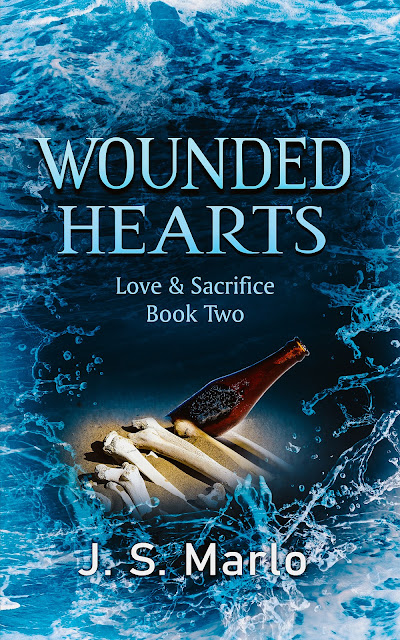
Wounded Hearts
"Love & Sacrifice #2"
is now available  
click here 


    Last month I talked about Authors' quirks. This month I'll go through some interesting facts about authors according to the Guinness World Records 2023.
    

    Most published author: L. Ron Hubbard had 1084 works published between 1934 and 2006.


    Youngest author: Saeed Rashed AIMheiri from Abu Dhabi (4 yrs & 218 days old). His book 'The Elephant Saeed and the Bear' is about an elephant who sees a polar bear.


    Oldest first-time author: Bertha Wood was 90 yrs old when she started writing 'Fresh Air and Fun: The Story of a Blackpool Holiday' which was published in 2005 on her 100th birthday.


    Oldest female author: Louise Delany was 105 yrs old when her second novel 'The Delany Sisters' Book of Everyday Wisdom' was published. Her co-author & sister, Elizabeth Delany, was 103 yrs old.


    Oldest male author: Jim Downing was 102 yrs when the final draft of his novel 'The Other Side of Infamy' was accepted for publication.


    Wealthiest author: J. K. Rowling, author of the Harry Potter series, is the first billion-dollar author.


    Most translated author: Agatha Christie's books were translated 7236 times in 103 languages.


    Most filmed author: William Shakespeare with 1121 writing credits on film and television productions.


    Author with the most pseudonyms: Konstantin Arsenievich Mikhailov has 325 pen names
    

    So, it's never too late or too early to start writing, in any languages. Some authors actually make money, lots of money. And when it comes to pseudonyms, there's apparently no limits. That being said, some days I can barely remember my own name, let alone my pen name. If I had 325 pseudonyms, I would probably have an identity crisis.
    

    Happy Reading & Stay Safe!
    J.S.


Friday, July 7, 2023

The Joy of The End by Eileen O'Finlan


Click here for purchase information

Two of most writers favorite words are "The End." That's not because we don't like writing. Most of us love it. It's because "The End" represents that the first leg of a very long and often arduous process is finally finished. It can take months or even years to be able to type those words. For those of us who write in genres that take a tremendous amount of research before a single word of the story gets written, it may be even longer. 

It is not, however, truly the end for the author. The first draft is just the beginning. Once those glorious words have been typed, the author enters the next phase of the writing process - revisions. The first draft is only that, the first of what could eventually be many drafts before the book is finally done. I completely rewrote Kelegeen at least three times before it was truly finished.

Recently, I typed "The End" on the first draft of my current work in progress, an historical novel to be titled The Folklorist. Upon seeing those words appear on the screen, I felt as though a huge weight had been lifted from me. I would not have been surprised to find myself floating around the room (okay, I would have been surprised, but maybe not that much). 

I knew perfectly well that it was not really the end. I'm now slogging through revisions, fixing problems, looking for any issues with pacing or continuity. Given that The Folklorist has a dual timeline, something I've never written before, it is especially challenging. But I'm up for a challenge, and, honestly, I've been delighted to find that the timelines held together on the first draft much better than I expected. 

So if there's still so much more work to do after the first draft has been completed, why is typing "The End" such a big deal? It's because of what it represents. An entire body of work has been completed. The author who likely had plenty of doubts, writing crises, writer's block, and general hair-pulling moments liberally sprinkled amongst times of pure writing joy, can finally say that a complete story has been written. The obstacles were overcome. "I did it!" may ring through the air.

Yes, there will be things to fix, add, delete, whatever. But a whole story emerged despite the times it threatened to keel over and die. And that is a feeling to which very few things can compare.


Popular Posts

Books We Love Insider Blog

Blog Archive