Saturday, April 12, 2025

Jane's Walks Take Over the World

                                       Please click this link for author and book information

Next month I'll do something I haven't done before -- lead a Jane's Walk. My route will explore part of Calgary's Tuxedo Park neighbourhood, the primary setting for my historical mystery novel, A Killer Whisky. Heritage Calgary lists six Tuxedo Park sites with heritage value along our twenty-minute stroll. My favourite is a continuous row of workers' cottages built in 1912-13 and lovingly preserved. I imagined my the protagonist of my novel set in 1918 living in one of these homes.  


Jane's Walks take place in numerous cities every spring to commemorate the May 4th birthday of American-Canadian journalist, author, and activist Jane Jacobs. When I studied urban planning at Concordia University in the 1970s and 80s, Jacobs was the heroine of my professors. She wrote and acted against the dominant approach to urban renewal of the previous decades -- tear down old buildings and replace them with concrete blocks, clear slums, and build expressways through neighbourhoods without regard for the residents. Jacobs espoused the opposite. "Downtown is for people," she wrote. She advocated for community life on the streets, mixed land use over suburban sprawl and separate residential and commercial zones, and grass-roots city planning. 

Jacobs rose to prominence in the 1960s during the fight to prevent New York City's Greenwich Village from becoming a high-rise development. She was instrumental in stopping the Lower Manhattan Expressway, which would have cut through the city's SoHo, Little Italy, and Chinatown neighbourhoods. At a public hearing for the latter, she was arrested for inciting a riot. The charge was later reduced to disorderly conduct. 

Hardcover edition, pub. 1961, possibly the most influential book ever on urban planning and cities. 

In 1968, Jacobs moved with her husband and three children to Toronto, Canada, where she became a leader in the movement to stop the Spadina Expressway. "Cities should be built for people not cars" was a prevailing theme of her work. After her death in 2006, the city of Toronto declared May 5, 2007, Jane Jacob's Day and offered two dozen free neighborhood walks, which became nicknamed Jane's Walks. The following year, the event spread to eight cities and towns throughout Canada, and by 2016, Jane's Walks were taking place in 212 cities in 36 countries and six continents.  

For this year's Jane's Walk Festival Weekend (May 2-4, 2025) over 500 cities around the world will be participating. When I applied to lead a walk, I had no idea the event was this huge. To find out if your city is involved, you can search the Jane's Walk website. 

Walks are led by volunteers and free, although you generally need to register as they fill up. Anyone with a proposal and enthusiasm can apply to lead a walk and will probably be accepted. Despite my research on Tuxedo Park, I still have a fair bit to prepare for the walk. Last weekend, a few friends and I did another field trip to the neighbourhood. We plotted the best route for the walk, determined the best places for me to stand for my talks, and discovered some additional points of interest.

In the spirit of Jane Jacobs, Jane's Walks go ahead, rain, shine, or snow. I'll be ready for them all.  


Thursday, April 10, 2025

Factoids about Writer's Quirky Habits - by Barbara Baker


I’m sitting at my desk procrastinating about whether I should do housework or wrestle with Jillian and her next chapter. While I ponder away, a downy woodpecker hurries up the tree outside my window and a squirrel tries to get into my bird feeder. I watch him for a few minutes as he preforms his aerial antics.

Procrastinating wins again and, as always, Google is full of facts and details which are often entertaining and intriguing. Since I feel like less of a procrastinator when I research writerly information, I selected authors as my topic – quirky habits of authors.

  • Did you know Agatha Christie ate apples in the bath? Nothing weird about that. She apparently envisioned the plots of her 66 detective novels and 14 short story collections while she chewed on apples in the comfort of a warm tub. Why apples? Google had no idea which surprised me. But Christie would line the edge of her tub with the cores while she plotted away. Weird or not, she’s got a fabulous track record so it worked for her.


  • French romantic writer Victor Hugo would order his servant to hide all his clothes, including what he was wearing. Why? It prevented him from procrastinating about writing. Interesting. Apparently, Mr. Hugo would leave the house to frequent a local brothel, and it affected his ability to meet his writing deadlines. When his clothes were hidden, being naked prevented him from leaving home. With no place to go, he would write. Go Hugo. Wouldn't working in the nude today bring a whole new element to a Zoom meeting?

  • Author of the DaVinci Code series, Dan Brown, hung upside down to process his book ideas. He would wear gravity boots and suspend himself from an exercise frame. Current day practice calls it inversion therapy. He felt the blood rushing to his head kept his creative juices flowing. His other quirk was to use an hourglass to track his writing time. When the hour was up, he’d do a round of push ups, sit ups and stretching exercises before writing again. Quite the energetic fella.


  • Virginia Woolf, considered to be one of the most important modernists 20th century authors, would stand at a tall desk while she wrote. Her sister was a painter, and she stood while she painted. Woolf felt her own work might seem less important if she sat while she wrote, hence she stood. Woolf’s nephew suggested it was a case of sibling rivalry. A bit of competitive spirit under their roof.

  • Irish novelist, James Joyce wrote while he was lying down on his stomach. He would wear a white lab coat and use an oversized blue pencil. Odd maybe. But he had bad eyesight. The white lab coat reflected light better on the page and the large lead on the pencil helped him to see what he was writing. My elbows hurt just imagining writing in that position.

  • Haruki Murakami would wake up at 4 AM to write. He’s the author of Norwegian Wood and other famous books. Haruki enjoyed writing in the quiet of the morning because there were fewer distractions. He would sit at his desk and write for five to six hours. No hanging upside down or lying on the floor. No apples in the room. And he wore clothes. This is one I can relate to.

Enough with factoids. Jillian and I need to spend some time together. Either she needs to get on my page, or I have to figure out what page she wants to be on. Regardless, I know it will be a test of wit, will and focus. Hopefully I can get to the focus aspect sooner than later.

FYI – I found the first crocus blooms on March 19th.


Baker, Barbara - BWL Publishing Inc. (bookswelove.net)


Tuesday, April 8, 2025

Unusual Murder Weapons by J. S. Marlo


Undeniable Trait
is available now!
Click here


Way back when, I used to crochet and knit a lot, but then life got busy and needles, crochets, and yarns ended up in a bin in the "clutter" closet. A few years ago, my granddaughter showed interest in crochet, so we dug out the bin, and as she started learning, I restarted long forgotten projects, like blankets and stuffies.

In one of my crochet groups, I came upon this pic (I don't need a license to carry my 9mm). Come to think of it, a crochet would make a great weapon. It's small and light, and looks relatively harmless, but plunged with enough force at the right place, it could hurt someone and cause serious injuries. 


Not only did it inspire me in my current in-progress story, but it prompted me to search for unusual weapons used in real-life murders.

These are some of the things killers used to beat their victims to death:

- bowling ball

- guitar

- jar of pickles

- loaf of pumpernickel bread (apparently, the bread was hard)

- lid of a toilet tank

- Xbox game console

- kitchen spatula

- prosthetic leg

- dessert spoon (the victim was elderly, but it's still a bad way to die)

- chess board

These are some of the things killers used to stab their victims to death:

- high heels

- umbrella

- cork screw

These are some of the things killers used to strangle their victims to death:

- pair of sweatpants

- guitar string

Almost anything can become a deadly weapon, so why not a 9mm crochet?

I intend to keep using my crochets to make blankets, but if I were under attack, I would probably favour a 4mm over a 9mm LOL 


Stay Safe! Hugs!

JS


Monday, April 7, 2025

A Gift From A Book by Eileen O'Finlan


I grew up hearing lots of family stories from my mom about her youth in Bennington, Vermont. She often spoke fondly of a neighbor named Carleton Carpenter. She was very close friends with him when they were kids in the 1930s and '40s. After high school they went their separate ways - she to college, then a teaching career, marriage and family and he to New York and later Hollywood to act on Broadway and in movies. If you don't recognize his name, you will certainly remember his famous co-star Debbie Reynolds with whom he appeared in several movies.

About seven or eight years ago, I found out that Carleton Carpenter had written a memoir called The Absolute Joy of Work: From Vermont to Broadway, Hollywood, and Damn Near 'Round the World so I purchased a copy for my mom knowing that she would be interested in reading about the life and career of her old friend.


I got to thinking how great it would be if I could reconnect these two childhood friends now both in their nineties. It took some doing, but I finally managed to track down an address for Mr. Carpenter and wrote to him explaining who I was and why I was writing. I didn't tell my mom that I was doing this. I didn't want to disappoint her if it didn't work out.

Before long, I got a letter back. Well, two letters actually. He wrote one to me thanking me for contacting him and another letter to my mom. I'll never forget how surprised and delighted she was when I explained what I'd done and gave his letter to her. He also included his phone number. So began the renewal of an old friendship through letters and phone calls in which they caught each other up on all that had happened in each of their lives during the decades since they'd last seen each other.

Carleton Carpenter passed away on January 1, 2022. By then my mom was in a nursing home due to Alzheimer's Disease. I chose not to tell her since she spent most of her time living in her childhood and to her, he was once again her neighbor and playmate. Mom passed away in December of 2023.

Recently, while looking through my book collection, I came across the copy of The Absolute Joy of Work that I'd bought for my mom and decided to read it. The first part of the book is about his childhood in Bennington, Vermont. Mom had underlined the names of people and places that, obviously, she remembered from her own childhood there. 

Reading this part of the book was not only interesting in and of itself, but it also gave me an added connection to my mom. I love the stories she told of growing up in Vermont. I've been trying to keep them alive in my memory. My mom had a fascinating life and I would like to fictionalize her reminiscences for a future novel. She was the last of her siblings to pass so there is no one left to ask about that time and place. I must rely on only what I remember her telling me. 

Seeing the places in the book that my mom had marked have added to my cache of knowledge about the time and place of their childhoods. It was an unexpected gift as I felt as though Mom was speaking to me again, telling me more about her stories, sharing more details of her past, and letting me know that she's never truly gone from my life.

I consider books among the greatest gifts in life. Sometimes, they bestow their treasures in the most unexpected ways.


Sunday, April 6, 2025

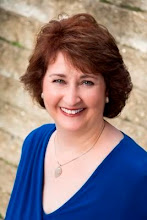
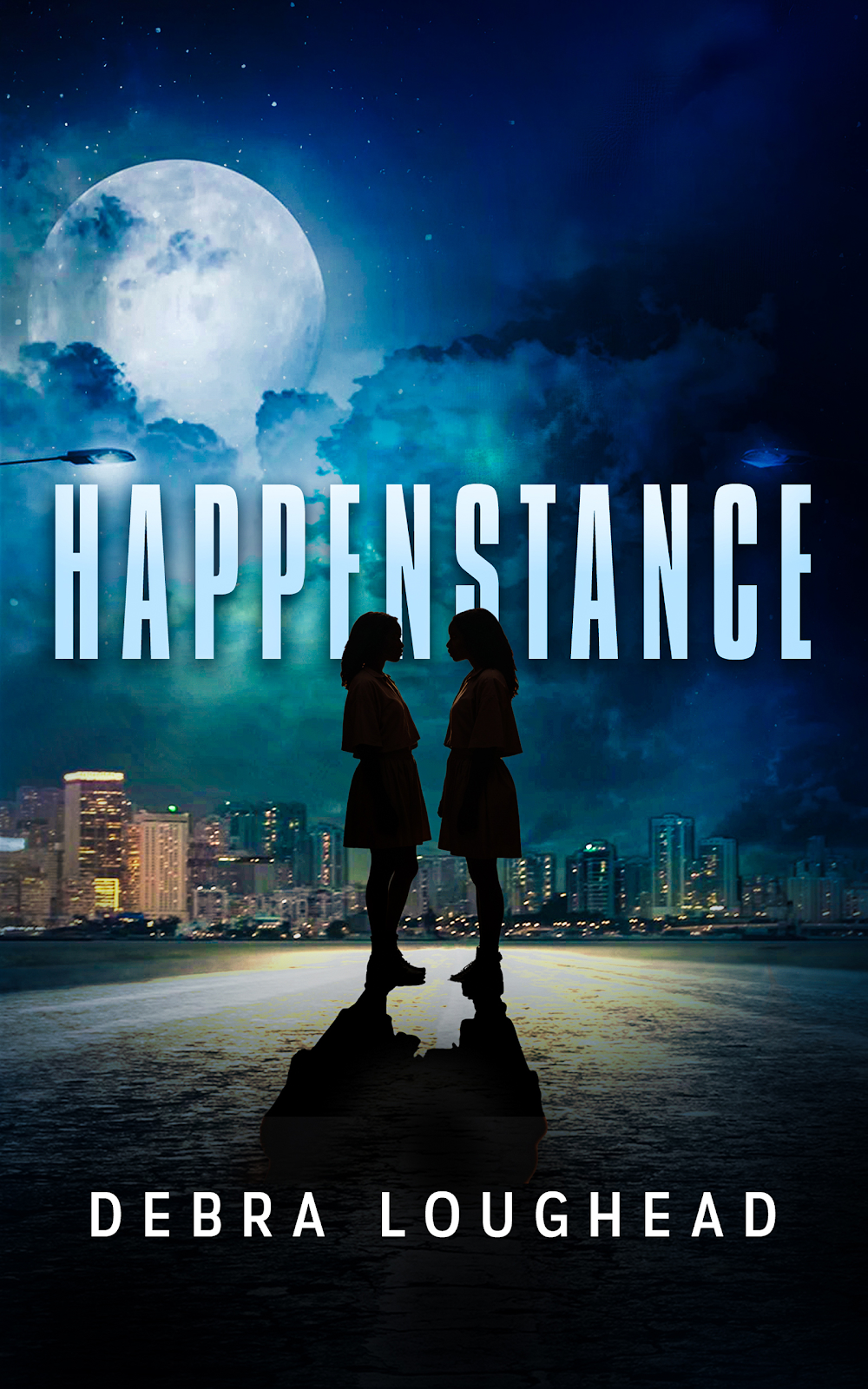
The Long and Short of it- by Debra Loughead


Not so very long ago, about six years or so, I had a notion to give up my writing career temporarily if not altogether. After four fulfilling decades of creating stories for young people as well as short stories and poetry for a wider audience, I felt as if I were aging out. As if I should step back and make room for newer, younger voices who, perhaps, had more to say than I did and could tell it better. (I’ve always been plagued by self-doubt, as so many writers are.)

I did so reluctantly, but also because my brain was tired and I thought I at least deserved a vacation from living inside a protagonist’s head twenty-four seven. Because it’s not just the sitting down and writing part. You have to live with your characters nonstop, waiting for them to make a move that you never expected as you travel along on their journey; they often wake you at night, and you scribble some notes about them, bleary-eyed by the light of your cell phone.

It’s a huge commitment to complete a novel, and a mix of elation and exhaustion.

So I did it. I took a five year hiatus from writing. During that time I had enough going on to keep me preoccupied. For one, I started a ‘vintage’ journey, since ‘old things’ have been my passion for almost as long as writing has. One of my very first published pieces appeared in the Toronto Star back in 1992 and it was, in fact, entitled ‘Old Things’. The essay was about the value of vintage, and how we should try to respect and cherish venerable pieces from the past that have led rich and functional preloved lives. I’ve always been a collector and conserver of ‘old things’, and wanted to take a step it further.

I started my new life chapter by collecting vintage bits and pieces, enjoyed scouring thrift and antique shops buying cool stuff, until ultimately I was drowning in a surplus of old things. That’s when it was time to pursue another dream of mine. I started an Etsy shop called Happy Old Glass. And I opened a vintage booth at a place called Arts Market in Toronto. I set up shop in a frigid January 2020…and well, who can ever forget what happened in March of that year. Everything was shut down and luckily the landlord ceased requiring rent payments for the many months of closing, reopening and closing again. But it all came back eventually and I continued on my vending adventure.

At first I revelled in the relief. It felt so liberating to be freed from that persistent and unabating surge of words and sentences pummeling your brain while you walk around in a constant daze having conversations with all the characters that have usurped your thoughts. 

But it wasn’t long before my resolve began to falter. Something was missing from my life, something deep and innate and, well, actually restorative. As much as I was able to feel good about my little shop’s motto of ‘reduce, reuse, recycle’, a backlog of unwritten stories and burgeoning words was building up in my brain, practically begging to be unleashed. Although it was less of a burden without the ‘encumbrance’ of a story weighing on my mind and following me everywhere, I was missing the relationships I’d once committed to with the creation of a fictional someone who kept my imagination company all day.

A writer’s got to write, there’s no doubt about it. The pressing urge to commit words to a page is ever present. No matter what you’re doing to distract yourself, there’s always a niggling little voice in your head that keeps trying to lure you back to that chair in front of your computer screen. One that keeps whispering story ideas to your subconscious mind. One that keeps on prodding you, goading you, admonishing you for not even trying. The writing muse is like having a personal trainer living in your brain, constantly badgering you to do better.

So I finally gave in to that mercurial muse of mine because she just would not quit! I’ve closed up my Arts Market booth, but I’m hanging onto my Etsy shop for the time being because I have to try and sell some of the plethora of vintage merch I’ve accumulated over the past five years. Somewhere there’s a story in all this. I’m sure of it, and maybe someday I’ll get to it, since novels about antique hunters are all the rage. Yes, I’m back at my desk again, reviewing novel manuscripts both in progress and completed. And it’s such a relief to unburden myself of all those excess words that were beginning to clog up my brain. It’s almost given me a modicum of hope, as if my well-deserved brain vacation has helped to rekindle that flame.

I’ve always believed that writers never retire. It’s almost impossible, since our buzzing brains just won’t ever allow it. The muse seldom takes a holiday, even when we do!


https://bwlpublishing.ca/loughead-debra/


Popular Posts

Books We Love Insider Blog

Blog Archive