Friday, July 15, 2022

Introducing Paul Doucette, a historical mystery author from Nova Scotia Canada


Hello,

            Allow me to introduce myself to this community.

             My name is Paul Doucette. I was born in Halifax, Nova Scotia in February of 1948. It was a time when the city was still pretty much as it was during the war years of the 1940s, in other words, a rough and tumble port city.

            I left home in 1964 to enlist in the Army at age 16. After serving for just over a year, I was honorably discharged and returned home. It was then that I embarked on a career as a Merchant Seaman that spanned 12 years. This gave me my first experiences with the world and its many diverse cultures. When I retired from the sea, I joined a German company with offices throughout North America as a Freight Forwarder but soon advanced to become one of a specialized group of experts handling industrial logistics worldwide (simple put I was responsible for the logistics of moving such projects as nuclear reactors/oil refineries from one country to another).

            Over the course of these careers I have worked and lived in many countries including, China, Russia, the Caribbean, most of North America, Mexico and parts of Central America. During this time, I also managed to acquire three years of university at Saint Mary’s and Dalhousie Universities in Halifax as a mature student. I majored in Philosophy and Anthropology.

            In the early 1990s I returned home and that was when I met my future wife. Unfortunately, she passed in 1997 and shortly after that I took permanent retirement. It was at that time that I decided to explore and develop my artistic side which I had suppressed in deference to work.

Briefly stated, I pursued a new career as a photographer, specializing in large format black and white landscape and architectural images. During this time I acquired a certification from the Nova Scotia College of Art and Design in Photography. Unfortunately, about the time my work was beginning to be recognized my eyes began to present issues resulting in my no longer practising the craft.

            I continued on this path of discovery by diving into another artistic field that I long wanted to explore: Creative Writing. I have always been an avid reader of fantasy and mystery novels, so following the advice of an English Professor I had to write ‘what you know’ I opted for mystery fiction since I could develop stories set in familiar places where I travelled or lived and apply my knowledge of people, languages and histories. You see, it was my intent to write with an ear to dialects of ordinary peoples in their settings and to present those settings with a sense of both place and time.

            I believe I have succeeded in that goal with my Detective John Robichaud series, which is set in Halifax during WWII. I also have two other series written under the same method: Matt Murphy PI set in 1960s Greenwich Village (where I have visited many times) and Paul Jarvis set in the Pacific during WWII.

            I am the author of the Detective John Robichaud Mysteries. I currently live in Dartmouth, Nova Scotia.


Wednesday, July 13, 2022

Writing for Young Readers


Remember the books you loved as a teen?  How they stayed with you like friends all your life? What were they? A beloved series?  A great classic? 

The first book I ever finished in one day was a Nancy Drew Mystery...The Secret at Shadow Ranch. Wow, too many cliff-hanging chapters to put down, even though it had cost me a month of weekly shopping trips for my Aunt Cece in order to buy!


Only a couple of things bothered me about intrepid Nancy and her sleuthing... one: there were never any characters who looked like me featured prominently in the stories and two: Nancy never aged! I was expecting her to get older, but there she was still fresh-faced and sixteen many many adventures later.  Now, I would add three: that she got conked on the head too many times (poor Nancy...amazing that her brain still worked so well!).


Inspired by my love of books like the Nancy Drew series, I have now written my own ... the Linda Tassel Mysteries, featuring a bridge person like myself and inspired by a friend from my Georgia days, Linda is a member of the Snowbird Cherokee people on her mother's side.  She teams up with Buffalo New York transplant Tad Gist to solve mysteries. They meet as high school students. They grow older together as their friendship deepens and turns to love.

It's a great privilege to write for young people... I love thinking that I may be contributing toward decisions to become lifelong readers. 

I hope you'll enjoy my series. The first, Death at Little Mound, just received a first place in the Murder and Mayhem Mystery Awards! The second, Missing at Harmony Festival was published last month. 


Tuesday, July 12, 2022

Orangeman's Day in Northern Ireland by Susan Calder


Happy Orangeman's Day -- or not. 

July 12th is a holiday in Northern Ireland, commemorating the victory of Protestant William of Orange over Britain's Catholic King James II at the Battle of the Boyne in 1690. Ulster Protestants celebrate the day with marching band parades; Catholics escape the noise and traffic snarls to beaches in the southern Republic of Ireland. 

A month ago, my husband Will and I took a bus tour through Belfast, Northern Ireland. Union Jack Flags, red, white and blue banners, and posters of Queen Elizabeth II decorated homes and businesses in Protestant neighbourhoods in celebration of her majesty's recent Jubilee weekend. Our tour guide said people would leave the decorations up another month for Orangeman's Day. The splashy displays ceased abruptly when we crossed into Catholic neighbourhoods.

Will in front of a Belfast mural

During The Troubles in Northern Ireland from the late 1960s to late 1990s, Orangeman's Day was often marked by riots and violence. Protestants would provoke conflict by marching into Catholic neighbourhoods. During that thirty year 'irregular war' that killed more than 3,500 people, I wouldn't have considered a holiday in Belfast, but I didn't give it a thought this year. We stayed in the Europa Hotel, which experienced 36 bomb attacks during The Troubles and was called the most bombed hotel in the world. Since then, the renovated hotel has gone high tech with 'smart' elevators and window blinds. 


                                 View of at least three pubs from our room at the Europa Hotel 

Our tour bus stopped at the peace wall that divides the predominantly republican, nationalist, Catholic Falls Road area from the loyalist, unionist, Protestant Shankhill Road area of West Belfast. These peace lines are supposed to be removed by 2023, but they've become popular tourist attractions. Former IRA members conduct black taxi tours of the walls, complete with their versions of The Troubles and the current political situation. I found this image an unsettling reminder that the conflict isn't over.  
   

This was brought home to me even more in Londonderry or Derry, depending on your political view. Ireland's second largest city is located close to the Irish border and is about 75% Catholic (Belfast is roughly 49% Catholic). A local guide gave us a tour of the Derry walls, built in the 1600s as a defense against Catholic attacks. He said that during The Troubles Catholics, who lived largely across the river, weren't allowed into the city gates. It's hard to believe this is recent history. 


Aimed at the Catholic side of the river

Since the Catholic and Protestant neighbourhoods rise up from the river banks the city's political divide is visible. Recently there has been some merging. Our guide said he grew up on the boggy Catholic side, but now lives in Protestant (London)Derry. During The Troubles, he knew people who had never ventured to the opposite side of the river. Since 2011, a pedestrian Peace Bridge has connected the two divides. Some suggest the bridge' s 'falling-over' design reflects the shaky peace. Our guide noted that Brexit has refueled the push for a unified Ireland. He pointed out a section of sidewalk damaged by a car bomb, the first since the 1998 Good Friday Agreement that ended The Troubles.      

                                                           Peace Bridge, Londonderry/Derry 
   

Monday, July 11, 2022

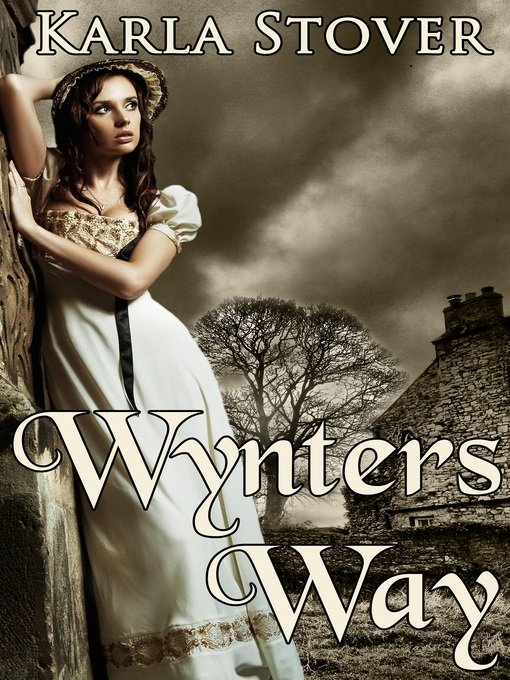
I Always Judge a Book By Its Cover by Karla Stover


I buy more books, now, than I used to but when I do go to the library or look at the best-sellers lists I get every week, I always consider the cover, first. To this day I don't like the Harry Potter covers and wouldn't have read the books if a so many diverse people hadn't recommended them. I have no idea how publishers choose cover designs. I checked a couple search engines with various combinations of words but couldn't find anything except designs to buy, and one person's blog on the best covers of 2020. Here's the site; you can check it our for yourself but I thought the covers were terrible. https://blog.reedsy.com/best-book-covers.

According to a psychic friend of mine who reads charts at various location, since I am a Capricorn I want perfection in what I read and I am critical if there are mistakes. I also have a Leo rising so I love drama in my reading. Somewhere along the line Saturn, aka The Cosmic Cop, comes into play with Gemini and it all combines to mean I want a well-written, believable mystery. Probably why I avoid cozies. 

I can spot the cover of a cozy from half way across the room (only a light exaggeration). Their book jackets are generally made up of bright tertiary colors and can be almost cartoony-looking. They often have animal pictures on them---mostly cats, or food or drinks. The women don't look real. That being said, I saw an Amish cozy today with a real person on the book jacket.

I get books suggestions almost daily via email. Book Adrenaline ( BA )is a regular. They send me pictures and synopsizes of  mystery books that I might want to read and that are available to download for practically nothing. Sometimes I try to find one at the library because I don't have an e-reader. Today I looked at three emails received on three different days, and BA's suggestions. This time, the dust jackets, again for the most part, were made up of primary colors with a few secondary colors thrown in. If there was a figure, it tended to be realistic. What I looked at had the titles in bold writing such as round-hand calligraphy or modern brush calligraphy. A cozy will likely include something such as Samantha font or Old English calligraphy somewhere on the cover, i.e. in the title or author's name.

Obviously, the purpose of a book jacket is get a buyer / reader to pick up the book, but that wasn't always the case. "Before the 1820s, most books were published unbound and were generally sold to customers either in this form, or in simple bindings executed for the bookseller, or in bespoke bindings commissioned by the customer." At this date, publishers didn't have their books bound in uniform "house" bindings, so there was no reason for them to issue dusts." Customers would often make their own dust jackets out of wall paper, fur or leather. But throughout the 19th century, if a book did have a removable cover,  it was often tossed away, either in the book store or by the purchaser. Some historians say this custom lasted until World War I. Unbelievable.

In the post-war years, however, the dust jackets, often decorated in art deco styles, became collector's items. Imagine a dust jacket being worth more---a lot more---  than the books they covered. One famous example is the jacket of a first edition copy of The Great Gatsby.  Without the jacket, the book runs to $1,000 but with the jacket and depending on its condition, the value runs from $20,000 to $30,000 or even more. The importance of the book, i.e. To Kill a Mockingbird, The Maltese Falcon or Catcher in the Rye, for example and overall condition is key to the value. For some lucky book buyers inflation has affected even reprinted books in a good dust jacket. I looked at a list (only one) of best book jackets ( one person's opinion, )and they weren't cute, in fact, they were a bit grim.

Now, in addition to looking for reading material at the library, I have been considering any old dust jackets I have. Nancy Drew, anyone?

Sunday, July 10, 2022

Road Trip by Barbara Baker


Going to Lethbridge, Alberta. Those familiar with Alberta geography might say ‘why’. Others might suggest putting rocks in my pocket. Both are valid statements.

First stop, Head-Smashed-In Buffalo Jump - a UNESCO World Heritage site west of Fort MacLeod. The site preserves and interprets over 6,000 years of Blackfoot culture. According to the legend, a young boy wanted to see what it looked like when buffalo fell over the cliff. After the carcasses were removed, they found the boy’s body. The buffalo piled so high they smashed his head into the face of the cliff.

As I read the plaques along the trail, I try to imagine what the first buffaloes felt when they realized going over the cliff was inevitable. Or would a buffalo realize their demise was imminent?

The views across the plains are endless to the east and west. The lemon-yellow buffalo bean leans in the breeze and mixes with the wild rose scent as the landscape runs into the snow-covered Rockies.

After a quick lunch stop, we head for our destination. Lucky for me, there is road construction outside Lethbridge and it’s at the best vantage point for a picture of the train trestle referred to as the High Level Bridge. I jump out of the car, dash to the edge of the ridge, snap a few pictures and am back in my seat before the flag person waves us on.

I came here to learn about fossils. As a newbie rockhound with a ‘still shiny’ rock hammer, I’m keen to have fossil names roll off my tongue. If they didn’t have so many syllables it would be a lot easier – Brachiopoda, Articulata, Pachyrhinosaurus. I can remember red rock is pomegranates, but it took me a few times to realize ‘never take me for granite’ is rockhound humour. Also…faults, plates and shifts sound impressive if I could just remember the right sequence which creates the seam I stand on.

The specific type of rock I want to find is called Ammonite. To be honest, unless it’s stamped on the rock ‘I’M AN AMMONITE’, I’m not sure I’d recognize a fossil. But I love being outside and like shiny things so I’m game to see what I can find.

            Spring run off hasn’t started which makes it easy to walk along the wide banks of the Oldman River. With safety glasses on, I smash rock in the bank and watch it crumble. Nothing. I crack boulders as a pair of adult geese and 18 goslings float by. They make me thankful I only have three kids.

Bald eagles scout out their next meal as I roll stones over.

Trails run up the banks and into the river valley. A couple mountain bikes zip by. A fisherman with the biggest smile waves a large whitefish at us. More rock smashing and then around the corner, I see a cliff. Even in my newbie rockhound status, I can tell the layers in the face are different. Too bad it’s across the river. Apparently, people have found shark teeth in the sediment.

I did not find any Ammonites but am pleased with the lava rock (almost light as a feather) and worm fossils I uncovered. A fun and educational road trip with great food along the way and, of course, red wine.

Where are you going? If you could go anywhere, where would you end up?


Summer of Lies: Baker, Barbara:9780228615774: Books - Amazon.ca

Summer of Lies - YouTube

Smashwords – About Barbara Baker, author of 'Summer of Lies'

Barbara Wackerle Baker | Facebook

Barbara Wackerle Baker (@bbaker.write)

         bbaker.write@gmail.com


Popular Posts

Books We Love Insider Blog

Blog Archive